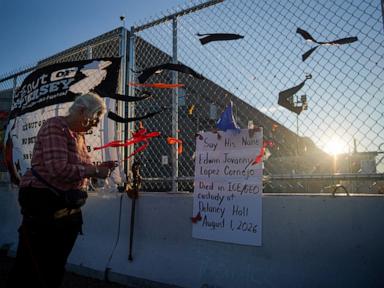
Paperwork moves slowly. Mortality does not.
In the fluorescent-lit corridors of bureaucratic processing, time behaves strangely. Days stretch into weeks through stamped forms, docket numbers, and administrative holds. But inside a human body fighting for breath, time is merciless. It ticks away with every labored contraction of the chest, every frantic pulse, every silent plea for an intake of clean air.
Just hours before a man drew his final breath inside a detention facility, a legal lifeline was dispatched. A habeas corpus petition landed in the system. It was not merely a collection of legal arguments. It was a cry for urgency. It explicitly detailed severe medical conditions that required immediate, specialized intervention outside the sterile, unequipped confines of a cell.
The petition warned of what was coming. The system kept processing anyway.
The Weight of a Docket Number
We talk about institutions as if they are made of concrete and steel. They are actually made of waiting.
Imagine sitting in a room where the air smells faintly of industrial cleaner and stale coffee. You are hundreds of miles from home. You speak a language that the guards only half-understand, or perhaps you speak English perfectly, but your words bounce off a wall of institutional indifference. Your chest hurts. A dull, persistent ache radiates down your left arm. You tell someone.
They write it down on a clipboard. They tell you to drink water.
This is the baseline reality for thousands caught in the machinery of immigration detention. Every year, civil detention facilities hold individuals not because they have been convicted of a criminal offense, but as an administrative measure while their legal status is adjudicated. Yet the conditions often mirror, and sometimes exceed, the harshness of maximum-security prisons. Medical staff are stretched thin. Resources are rationed. Triaging an illness often means waiting until a symptom transitions from uncomfortable to catastrophic.
When attorneys filed that emergency habeas petition, they were trying to bypass the administrative sludge. A writ of habeas corpus is an ancient legal remedy designed to challenge unlawful detention. When someone’s health deteriorates to the point where continued confinement threatens their life, detention ceases to be merely restrictive. It becomes fatal.
The lawyers knew it. The medical records showed it. The petition laid bare a vulnerability that could no longer be ignored.
Except it was.
The Anatomy of an Avoidable Tragedy
To understand how a life slips through the cracks of a federal or contracted facility, you have to look at the architecture of accountability.
When an individual enters custody, a transfer of responsibility occurs. You surrender your autonomy. You cannot choose your doctor, you cannot check yourself into an emergency room, and you cannot seek a second opinion. You are entirely dependent on the competence and responsiveness of the facility operating around you.
When that system fails, the consequences are catastrophic and irreversible.
Consider the diagnostic timeline in many detention centers. A detainee reports chest pains or severe respiratory distress. The complaint triggers a chain of command. A nurse evaluates the patient. A requisition form is filed. An off-site medical consultation must be approved by a supervisor or a distant corporate contractor. Days pass. By the time authorization clears, the condition has escalated past the point of non-invasive treatment.
In this specific case, the legal filing did not unearth a hidden mystery. It shouted what the medical charts were already whispering. The individual suffered from underlying health conditions that required vigilant, specialized oversight. Confinement in a standard holding unit was not just uncomfortable; it was a slow-motion hazard.
The petition was an emergency brake pulled on a runaway train. But the train was moving too fast, bound by a stubborn momentum that prioritizes processing over preservation.
The Silence After the Gavel
Silence is the loudest sound in a government office after a death occurs.
When the news broke that the detainee had passed away shortly after the petition was filed, the standard press releases followed. They are masterpieces of linguistic gymnastics. They speak of "medical emergencies," "swift responses by on-site staff," and "full investigations underway." They offer condolences wrapped in bureaucratic armor.
They do not capture the panic in the lawyer's office when the phone call comes through. They do not capture the shattering of a family thousands of miles away who were waiting for a court date, not a death certificate. They do not capture the terrible irony of a legal system that moves fast enough to deport, but moves too slowly to save a life.
We are left to grapple with a haunting timeline.
Document filed. Life fading. Hours ticking. Death recorded.
The distance between those milestones measures the gap between our stated values and our operational reality. We maintain a system designed to process humanity at scale, yet we consistently fail to protect the individual human beings caught inside its gears. Every missed diagnosis, every delayed authorization, and every ignored petition chips away at the foundational premise that due process includes the right to survive the process.
The paperwork is filed away now. The case is closed. The docket number is archived.
But somewhere, in another sterile room under the hum of fluorescent lights, another person is clutching their chest, waiting for a system that moves too late.


