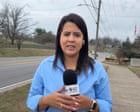
Manuel Duran walked out of a detention facility in 2018 after 15 days of state-sanctioned silence, but the chill he left behind in the Nashville press corps remains. The arrest of a working journalist while he was wearing a press badge and filming a protest was not a clerical error or a simple case of a missed visa renewal. It was a targeted strike on the bridge between the government and the immigrant community. When Immigration and Customs Enforcement (ICE) took custody of Duran, they didn't just detain a man; they effectively shuttered a newsroom that was asking questions the local establishment found inconvenient.
The mechanics of the arrest were clinical. Duran, the founder of Memphis Noticias, was covering a protest against local law enforcement’s collaboration with federal immigration authorities. Despite identifying himself as a member of the media, he was tackled and detained by Memphis police. While the initial criminal charges of disorderly conduct and obstruction were dismissed almost immediately, the handoff to ICE was already in motion. This "hand-off" represents the most dangerous intersection of local policing and federal immigration enforcement, a gray zone where constitutional protections for the press seem to vanish. You might also find this connected coverage interesting: The $2 Billion Pause and the High Stakes of Silence.
The Collateral Damage of 287(g) Agreements
To understand why Duran was held for over two weeks, one has to look at the bureaucratic machinery of the 287(g) program. This agreement allows local law enforcement to act as a funnel for federal immigration agents. In Tennessee, this program has turned routine police interactions into life-altering deportation proceedings.
Critics and legal scholars point out that when a journalist is caught in this funnel, the Fourth Estate loses its eyes and ears in the very communities that need oversight most. Duran had spent years reporting on the conditions within detention centers and the impact of local police policies on Hispanic residents. By removing him from the street, the authorities removed a primary source of accountability. As highlighted in detailed articles by TIME, the effects are worth noting.
The 15 days Duran spent in custody were a masterclass in procedural stalling. Even after a court dismissed the local charges that served as the pretext for his arrest, federal authorities maintained that his previous deportation order from 2006—issued when he failed to appear for a hearing he claimed he never received notice for—was sufficient grounds to keep him behind bars. This use of "zombie" deportation orders allows the government to bypass the standard due process usually afforded to individuals on American soil.
The Cost of Professional Persistence
The narrative often pushed by enforcement agencies is that an individual’s immigration status supersedes their professional status. This is a false dichotomy. In the United States, the First Amendment does not ask for a passport before it protects the right to gather news.
Duran’s detention was a signal sent to every non-citizen or naturalized journalist in the country. The message was clear: your press badge is not a shield if your paperwork is in question. This creates a tiered system of journalism where only those with "perfect" backgrounds can safely hold power to account.
The financial and psychological toll on Duran was immense. While he sat in a cell, his publication went dark. Small, independent outlets like Memphis Noticias operate on razor-thin margins. A two-week absence doesn't just disrupt a news cycle; it can kill a business. This is the quiet censorship that happens in the shadows of the immigration system. It isn't a red pen through a manuscript; it is a set of handcuffs on the person writing it.
The Failure of Local Oversight
Nashville and Memphis officials often distance themselves from the actions of ICE, yet the initial arrest is almost always a local affair. In Duran’s case, the Memphis Police Department’s decision to arrest a journalist for "disorderly conduct" while he was performing a professional duty is the original sin of the entire saga.
When local police treat journalists as participants in a protest rather than observers of it, they trigger a chain reaction that they know—or should know—leads to federal detention. There is no world in which the officers on the scene were unaware that handing a high-profile Latino journalist over to the sheriff’s office would result in an ICE detainer.
This brings us to the core issue of transparency. If the police can effectively deport their critics by using federal agencies as a "clean up" crew, the very concept of a free press in the American South is under threat. The 15 days of Duran’s detention were not just a personal ordeal for him; they were 360 hours where the public was denied information about how their government was operating.
A Precedent of Interference
The release of Manuel Duran did not come because the system realized it had made a mistake. It came because of a massive, coordinated effort by civil rights organizations and legal teams who saw the detention for what it was: a retaliatory strike. The Southern Poverty Law Center and other advocacy groups had to fight through layers of federal bureaucracy just to keep Duran from being deported before his case could be heard.
If the government can move a journalist across state lines—Duran was moved from Tennessee to Louisiana—they can effectively outrun the legal protections meant to save them. This "diesel therapy" is a common tactic used to disorient detainees and separate them from their legal counsel. For a journalist, it is a way to ensure they are too busy fighting for their own life to report on the lives of others.
The legal battle that followed his release highlighted a terrifying reality. The government argued that because Duran was "in the country illegally," he had fewer rights to free speech. This argument, if allowed to stand, would create a massive blind spot in American democracy. If millions of people living in the U.S. are served by journalists who can be silenced at will by immigration agents, then those millions of people are effectively living in a news desert, regardless of how many cameras are pointed at them.
The Strategy of Intimidation
We have to look at the timing. Duran had recently published several pieces detailing how local law enforcement was working more closely with ICE than they publicly admitted. In the world of investigative journalism, there are no coincidences of this magnitude.
Intimidation works best when it is visible. By arresting Duran in front of his peers and the community he served, the authorities demonstrated the consequences of "aggressive" reporting. It wasn't just about stopping Duran; it was about ensuring the next person thinks twice before picking up a camera at a protest.
The 15 days he spent in the Etowah County Detention Center and the LaSalle Detention Center were designed to break his resolve. He reported being kept in conditions that were meant to dehumanize. This is the "how" of the story: the process is the punishment. You don't need a conviction to ruin a journalist's career; you just need a detainer and a slow-moving court system.
The Fragility of the Shield
The Duran case exposed the fragility of the shield law protections in Tennessee and across the nation. Most shield laws are designed to protect sources, not the physical liberty of the reporter. When the state uses the administrative law of the immigration system to bypass the criminal law of the justice system, the standard protections for the press are rendered useless.
This is a loophole big enough to drive a deportation bus through. If the state wants to silence a reporter, they don't charge them with libel—which is hard to prove and carries the burden of "actual malice." Instead, they find a technicality in their residency status and let the administrative machinery do the work.
The 15 days were a test. The system tested how much the public would tolerate and how quickly the press would rally around one of its own. While the eventual release was a victory, the fact that it took 15 days, thousands of dollars in legal fees, and an international outcry shows exactly how lopsided the power dynamic has become.
Beyond the Release
Manuel Duran’s eventually secured his U.S. citizenship years later, but that does not retroactively justify his treatment. The focus on his eventual "legal" status ignores the fundamental violation that occurred while he was a working member of the Nashville and Memphis media.
If we accept that a journalist’s right to report is contingent on their citizenship status, we are accepting a state-controlled press. It allows the government to choose who gets to tell the story and who gets to be the story.
The next time a journalist is detained during a protest, the clock won't just be ticking for their release. It will be ticking for the community's right to know what is happening in its own streets. The 15 days of Manuel Duran were a warning. The question is whether the industry has the spine to ensure it never happens again by demanding a total decoupling of local law enforcement and federal immigration agents at the scene of First Amendment activities.
Advocate for the passage of clear, local ordinances that prohibit the arrest of credentialed media during public demonstrations, regardless of federal status.