The Field-Ready Lie
Defense contractors love to promise plug-and-play lethality. The latest industry narrative insists that making tactical radar smaller, lighter, and easier to configure solves the counter-drone crisis on the front lines. Slap a sleek metamaterial ESA (Electronically Scanned Array) onto a rugged tripod, give a two-hour briefing to an operator, and congratulations—you have secured the airspace.
It is complete fantasy.
Making software interfaces intuitive for a front-line soldier does not change the brutal physics of radio frequency propagation. It does not magically resolve signal degradation in heavy clutter, nor does it eliminate the massive infrared and RF signatures these active emitters broadcast to enemy direction-finding assets.
I have watched defense procurement officers burn millions on miniaturized radar platforms, only to discover that making a sensor easier to deploy simply speeds up the rate at which operators get geolocated and targeted by artillery.
Simplifying the user interface of an active radar without fundamentally altering its operational doctrine is not innovation. It is marketing painted in flat dark earth.
Active Radars Are High-Risk Beacons
To understand why "field-ready" radar is a dangerous misnomer, you have to look at how modern electronic warfare actually operates down in the dirt.
An active radar functions by flooding an environment with electromagnetic radiation and listening for the faint reflections bounced back by small targets like quadcopters or loitering munitions. Radar manufacturers brag endlessly about beam-forming speed, low power consumption, and SWaP-C (Size, Weight, Power, and Cost) optimizations.
Here is the dirty reality: * radar is a lighthouse in a dark forest.*
[ Active Radar Emitter ]  ===( High-Power RF Pulse )===>  [ Target / Drone ]
         ||                                                       ||
         || (Direct Line-of-Sight Wavefront)                      || (Faint Echo Return)
         \/                                                       \/
[ Enemy Passive ESM / Direction Finder ]               [ Radar Receiver ]
(Detects emitter instantly at 2x the range)
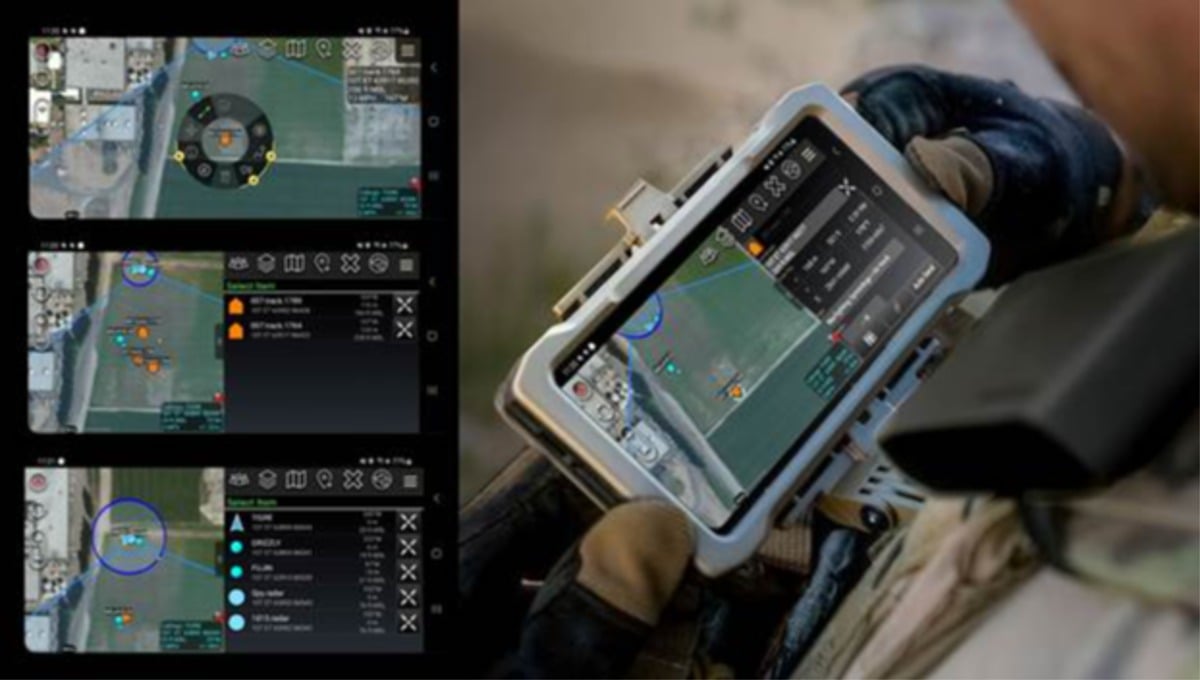
While your field operator is admiring the clean UI on their ruggedized tablet, an enemy Electronic Support Measures (ESM) suite miles away has already picked up the main lobe—or even the side lobes—of that radar. Passive detection range routinely outstrips active detection range.
By making these systems lighter and encouraging tactical units to scatter them across the forward edge of the battle area, defense tech companies are giving troops a false sense of situational awareness while lighting them up on enemy targeting grids.
The UI Trap: Usability Does Not Equal Capability
The primary claim surrounding simplified radar hardware is that it democratizes airspace defense. If an infantryman can set up a radar array in under five minutes, the argument goes, unit-level protection scales exponentially.
This premise is completely flawed. It confuses usability with tactical effectiveness.
The Illusion of Simplicity
- False Positive Avalanche: Drones do not fly in vacuum chambers. They fly alongside birds, wind-blown debris, dynamic cloud cover, and urban noise. Truncating target classification parameters into simplified "red light / green light" interfaces delegates complex signal processing decisions to hardcoded presets.
- False Sense of Security: An easy interface leads operators to trust the screen blindly. If a low-RCS (Radar Cross Section) wooden or fiberglass drone glides through a blind spot or takes advantage of ground clutter, an operator conditioned by "simplified UI" will assume the airspace is clear.
- Neglect of Passive Integration: Oversimplified radar platforms disincentivize cross-domain sensor fusion. If the radar screen is easy, units rely on it exclusively, ignoring radio-frequency sniffers, optical trackers, and acoustic sensors that emit zero signature.
The Metamaterial Mirage
Much of the excitement in the C-UAS (Counter-Unmanned Aircraft System) radar space revolves around Metamaterial Electronically Scanned Arrays (M-ESAs). Traditional Active Electronically Scanned Arrays (AESAs) rely on thousands of expensive transmit/receive (T/R) modules, making them heavy, power-hungry, and exorbitantly expensive. Metamaterial architectures replace these T/R modules with phase-shifting elements controlled by digital logic, slashing production costs and weight.
M-ESA technology is a genuine engineering achievement. But viewing it as a standalone anti-drone silver bullet misses the operational point.
| Sensor Feature | Traditional AESA Radar | Metamaterial (M-ESA) Radar | Passive RF / EO-IR Systems |
|---|---|---|---|
| Manufacturing Cost | Extremely High | Low to Moderate | Moderate |
| Physical Weight & SWaP | Heavy, Fixed/Vehicle | Light, Man-portable | Variable, often very light |
| LPI Capability | High (Advanced Frequency Hopping) | Moderate to High | Infinite (Zero Emissions) |
| Lethality Risk to Operator | High (Strategic Target) | High (Tactical Target) | Zero (Passive Listener) |
| Primary Failure Mode | High Maintenance | Active EW Targeting | Dynamic Frequency Hopping Drones |
Metamaterials solve the manufacturing cost problem. They do not solve the fundamental physics problem of active RF emissions. Dropping the price tag of a target does not change the fact that it remains a target.
What Actually Works: The Multi-Layer Passive Doctrine
If field-deployable active radar isn't the magic cure for drone hunting, what is?
Stop treating radar as the tip of the spear. Active radar should be the last sensor you turn on, not the first.
1. Passive RF Detection as the Outer Perimeter
Drones must communicate with operators or GPS constellations unless they operate on full, autonomous optical navigation. Passive RF detectors listen silently across standard control bands, mapping the airspace without broadcasting a single watt of energy. They give zero location data away to enemy ESM.
2. Optical and Infrared Cueing
Once passive RF detects anomalous spectrum activity, pan-tilt-zoom (PTZ) electro-optical and thermal cameras slew automatically to the vectors provided by passive RF. They confirm the target visually, determine payload status, and track trajectories—all while remaining electromagnetically invisible.
3. Micro-Blink Radar Activation
When active radar must be used—such as tracking fully autonomous, radio-silent drones in poor visibility—it must operate on strict emission control (EMCON) protocols. Systems must execute micro-blinks: transmitting ultra-short, highly focused directional bursts, updating the fire-control solution, and instantly going dark before enemy direction-finding algorithms can triad the location.
"A radar system that runs continuously in a high-threat peer combat environment is not a surveillance asset. It is a suicide note."
The Hard Truth Defense Contractors Won't Tell You
Why does the defense industrial base keep pushing easy-to-use active radar arrays as the primary solution to drone threats?
Because hardware is scalable, software UI updates look great in PowerPoint presentations, and selling discrete, tangible boxes to procurement officers is vastly easier than training forces in disciplined, multi-domain spectrum management.
Selling a "foolproof drone-hunting radar" creates a comforting illusion of control. It assures commanders that money can buy a dome of absolute domain awareness.
It cannot.
The moment you face an adversary equipped with sophisticated signals intelligence, your lightweight, easy-to-use active radar becomes the brightest target on the battlefield. True air defense requires multi-sensor fusion, disciplined emission control, and the uncomfortable recognition that physics does not care about user experience design.
Turn off the radar array. Start listening before you illuminate.