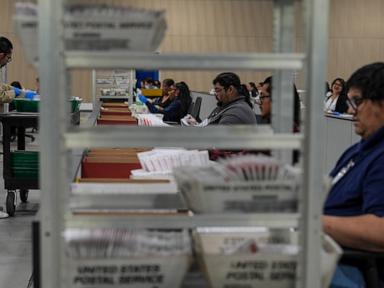
A dangerous administrative precedent is quietly unfolding at the United States Postal Service. The independent agency is actively attempting to reshape how American elections are conducted by rewriting the rules of mail delivery based on an unconstitutional executive order. A coalition of nine Democratic governors, led by Illinois Governor JB Pritzker, formally demanded that the Postal Service immediately withdraw a proposed regulation that would effectively give the federal government unprecedented control over who can vote by mail. The conflict centers on a highly controversial "citizenship list" directive issued by President Donald Trump in March, which has already been struck down by a federal judge.
Despite that clear judicial roadblock, the Postal Service has refused to scrap its draft rule. This bureaucratic inertia reveals a deeper, more troubling reality. The nation's mail service is being weaponized as an enforcement arm for immigration and election policy, fundamentally altering its core mandate of moving mail from one destination to another.
The legal standoff escalated rapidly following the publication of the Postal Service's proposed rule in the Federal Register in early June. Under the guise of standardizing ballot processing, the regulation seeks to compel states to hand over absentee voter registration data to federal authorities. This information would then be used to construct a centralized federal database linked to individualized tracking barcodes. If a state refuses to cooperate with the directive, the Postal Service would grant itself the unilateral authority to withhold or refuse delivery of that state's mail-in ballots.
This is not a minor administrative tweak. It represents a sweeping consolidation of electoral power within the executive branch of the federal government, overriding the explicit constitutional authority granted to individual states to manage their own elections.
The Constitutional Hijacking of the Post Office
To understand how a logistics network became an ideological battleground, one must look closely at the legal framework governing American elections. The U.S. Constitution explicitly vests the power to determine voter eligibility and regulate the time, place, and manner of elections with state governments, subject to alterations only by Congress. Nowhere does the founding document grant the executive branch, or an independent corporate entity like the Postal Service, the right to adjudicate who receives a ballot.
The proposed rule relies on a astonishingly fragile legal defense. In its regulatory filing, the Postal Service cited just two broad sections of the Postal Reorganization Act of 1970 to justify its sudden oversight of federal elections. These statutes outline the agency’s general duty to provide reliable, efficient, and economical services. Transforming that basic operational mandate into a justification for verifying citizenship rolls is an unprecedented stretch of legal logic.
Furthermore, the operational burden this places on the agency is entirely disconnected from reality. The American Postal Workers Union has fiercely resisted the plan. Postal employees are trained to sort, transport, and deliver letters based on postage and addressing standards, not to act as proxy immigration officers or validation agents for state voter files. By forcing letter carriers to check delivery rosters against a federally mandated, algorithmically generated citizenship list, the regulation introduces a catastrophic point of failure into the mail stream.
Barcodes and Bureaucracy as Tools of Exclusion
The technical mechanisms embedded within the draft rule are particularly insidious. The regulation dictates that all mail-in ballots must comply with rigid, mandatory specifications, including a highly specific physical design, official logos, and automated compatibility features. Most crucially, every single ballot envelope would be required to feature an Intelligent Mail Barcode tied directly to a voter’s verified name on the federal list.
This technical requirement creates a functional trap for local election offices. If a county clerk prints ballots that fail to meet these exacting layout guidelines, or if a eligible voter's name is mistakenly left off the federal database due to a clerical typo, the Postal Service would be legally authorized to reject the shipment. The potential for systemic disenfranchisement is vast.
Proponents of the executive order argue that these strict measures are necessary to prevent noncitizens from voting. However, decades of empirical data show that this premise is completely hollow. A comprehensive report published by the Brookings Institution confirmed that instances of mail ballot fraud are virtually non-existent, averaging roughly four cases per 10 million ballots cast. State-level audits conducted by both Republican and Democratic election officials have consistently yielded identical findings. The problem the administration claims to be solving simply does not exist.
What does exist, however, is a clear pattern of utilizing administrative bottlenecks to restrict access to the ballot box. By creating an artificial layer of federal approval, the rule gives partisan actors inside the executive branch a dial they can turn to slow down or outright block mail delivery in specific geographic regions.
A Pattern of Operational Attrition
This is far from the first time the mail service has been leveraged for political ends. The current crisis echoes the severe operational disruptions that occurred under Postmaster General Louis DeJoy, when high-speed mail sorting machines were aggressively dismantled across the country. In states like Washington, facilities lost up to 40 percent of their letter-sorting capacity within a matter of weeks, causing massive backlogs of first-class mail, vital medications, and election materials.
The strategy remains identical, even if the tools have shifted from physical mechanics to digital databases. The goal is to introduce friction into a system that millions of Americans rely on to exercise their constitutional rights.
When the Postal Service acts as an independent logistics provider, it functions beautifully. When it is forced to act as a political gatekeeper, the entire machine grinds to a halt. The nine governors who signed the protest letter recognize that allowing this rule to stand sets a devastating precedent. If the executive branch can successfully order the Post Office to stop delivering ballots based on an unverified federal list, there is absolutely nothing stopping a future administration from ordering it to halt the delivery of other essential goods, or targeting specific zip codes based on political demographics.
The Judicial Backstop and the Path Forward
Fortunately, the courts have signaled an unwillingness to tolerate this administrative overreach. A federal judge has already issued an injunction blocking the core components of the March executive order, declaring it an unconstitutional infringement on state sovereignty. Yet, the Postal Service’s refusal to withdraw its corresponding rule indicates a deeply entrenched bureaucratic defiance. The agency filed its regulations during a brief legal window when a separate lawsuit failed to secure an immediate stay, and it appears determined to keep the machinery of restriction ready for deployment should the legal winds shift.
Civil rights organizations and state attorneys general are already preparing next-stage legal challenges to ensure the draft rule is permanently struck down before the upcoming election cycle. The battle is no longer just about voting rights. It is about preserving the fundamental integrity of a public infrastructure asset that belongs to all Americans, regardless of party affiliation.
The Postal Service must return exclusively to its core operational mandate. It must refuse to build databases designed to track and exclude voters, and it must abandon the unconstitutional notion that it holds veto power over state-certified election mail. The mail must move, and the ballots must be delivered, without a federal barcode determining the validity of an American citizen's voice.