Western critics love to trap African musicians in a museum. They slap labels like "eternal" or "ancestral" on anyone playing an instrument from the continent, as if the artists are static statues preserving a dead past.
It's lazy. It's also exactly what people get wrong about Fatoumata Diawara.
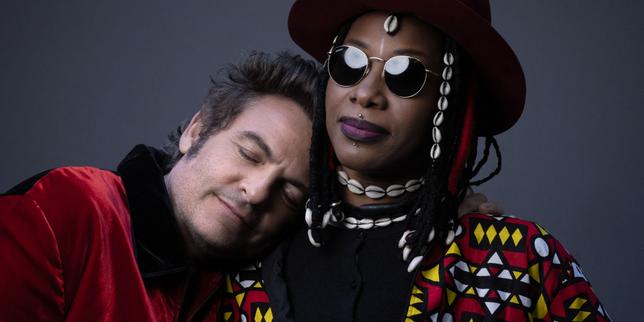
With the release of her fourth studio album, Massa, a funk and folk project crafted with her longtime co-conspirator Matthieu Chedid (known as -M-), she isn't just channeling old spirits. She is reinventing the entire sonic landscape. Diawara doesn't belong to a folklore exhibit. She's a modern guitar hero, an outspoken activist, and a relentless innovator who bridges Bamako and London without losing an ounce of her raw grit.
If you think her music is just acoustic campfire folk, you aren't paying attention.
The Myth Of The Predictable Griot
People hear the Wassoulou rhythms in her music and assume she's following a script. They think she's a traditional griot, bound by bloodlines to sing praises of ancient kings.
That's a complete misunderstanding of her history.
Diawara wasn't born into a lineage of hereditary musicians. She grew up in Abidjan, Ivory Coast, before being sent to Bamako, Mali, to live with an actress aunt. Her journey into art started with acting, not guitar lessons. She starred in Cheick Oumar Sissoko’s 1999 film Genesis and Dani Kouyaté’s Sia, le rêve du python. She was a physical theater performer with the famed French troupe Royal de Luxe.
Music didn't come from a family obligation. It came from survival.
When her family tried to force her into an arranged marriage with her cousin, she didn't comply. She ran away. At 19, she boarded a plane to Paris, escaping a life someone else wrote for her. That's not the story of someone who blindly worships tradition. That’s the story of a rebel.
When she picked up the guitar, she did it because male guitarists kept telling her how to sound. They wanted her to be soft. They wanted her to sound like Sade or do easy reggae covers because of her dreadlocks. Buying her own guitar was an act of defiance. By teaching herself the chords, she took control of her own narrative.
Breaking Out of the World Music Box
The global music industry loves borders. They created the "World Music" category to bundle anything outside Anglo-American pop into one neat, easily ignored corner. Diawara spends her career smashing those walls down.
Look at her track record of collaborations. This isn't someone hiding in a regional bubble:
- She lent her vocals to Damon Albarn's Gorillaz on the hit track "Désolé."
- She traded electronic beats with Disclosure on "Douha (Mali Mali)."
- She joined forces with Lauryn Hill for "Black Woman" on The Harder They Fall soundtrack.
- She partnered with Epiphone to release her own signature SG guitar, making history as an African woman with a custom instrument from a major global brand.
Her latest work on Massa proves that her artistic marriage with Matthieu Chedid wasn't a one-time gimmick like their 2017 Lamomali project. It is a deep, ongoing creative alliance. Chedid understands her funk sensibilities. He knows how to back up her fierce Wassoulou vocal delivery with electric energy that sounds alive, not polished for academic archives.
Why Massa Matters Right Now
Massa hits differently because it's deeply personal. Diawara uses this record to look inward, confronting grief after the loss of her father, exploring the complexities of motherhood, and talking about betrayal.
The songwriting skips the vague metaphors that safely insulate listeners from uncomfortable realities. She sings in Bambara, but the emotional urgency doesn't need a translator. In a musical environment where acoustic music is often treated as background noise for coffee shops, Diawara makes folk music feel heavy. It has a physical weight.
Her voice isn't just pretty. It's often weary, thick, and intentionally unpolished. She records when her vocal cords are heavy from touring because she prefers the honest friction of a tired voice over a perfect, sterilized studio take.
The Fight Against Cultural Erasure
You can't talk about her music without talking about her politics. When northern Mali fell to extremists who banned music, Diawara didn't stay quiet. She organized a massive collective of Malian musicians to record "Voices from Timbuktu," fighting back against the literal silencing of her culture.
She speaks openly to young African women about bodily autonomy, female genital mutilation, and the right to say no to arranged marriages. Her stage presence reflects this defiance. She wears traditional cowrie shells and towering headdresses, but she couples them with a screaming electric guitar. It is an assertive statement: African traditions aren't museum pieces. They are dynamic, flexible, and powerful enough to anchor a modern rock show.
If you want to understand where global music is actually heading, stop looking at Western pop charts that recycle the same three trap beats. Listen to Massa. Go back to her 2018 record Fenfo or her 2023 album London Ko.
Listen to the way she commands a stage with nothing but six strings and a story. Stop treating African artists like historical artifacts. Fatoumata Diawara is shaping the future of rock, folk, and electronic music in real-time. Your best next step is to pull up her live performance on YouTube, turn the volume all the way up, and listen to an artist who refuses to be boxed in.