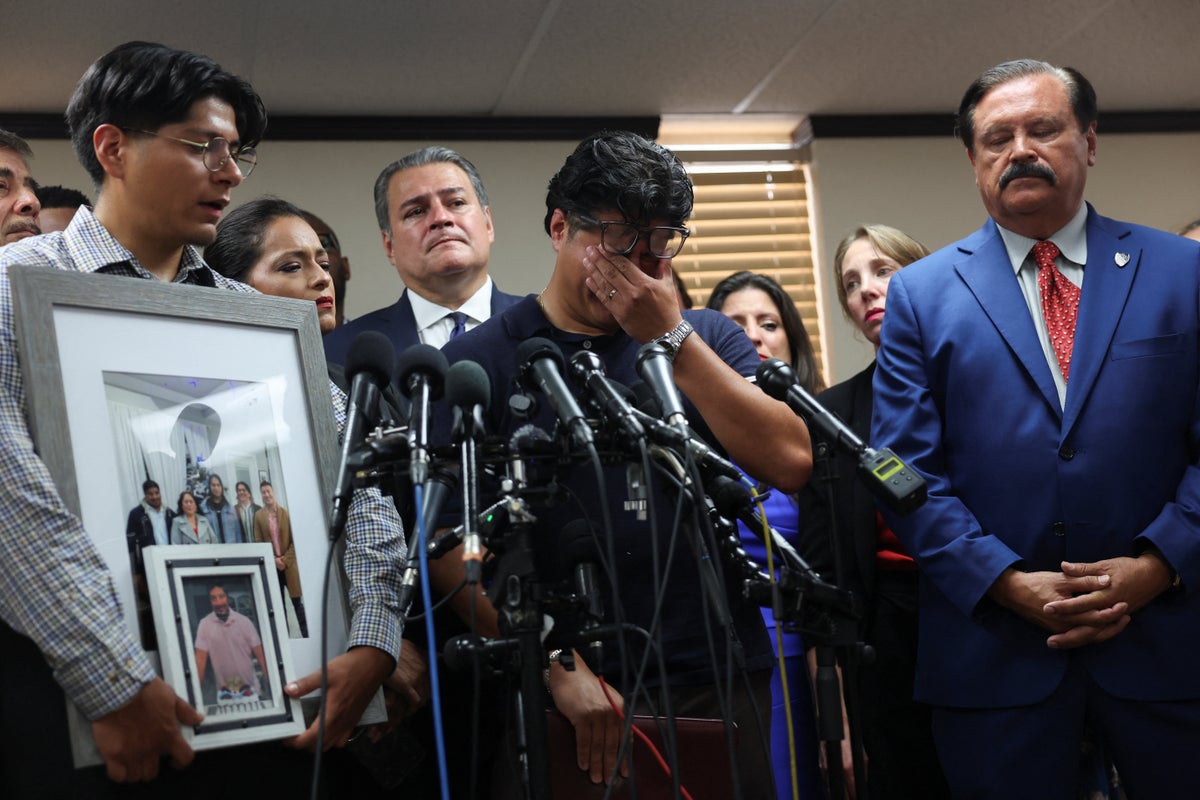
The outrage machine is running its usual play. In the wake of the tragic fatal shooting of Lorenzo Salgado Araujo by an Immigration and Customs Enforcement officer in Houston, mainstream media commentators have predictably latched onto a narrative of a coordinated, malicious deep-state conspiracy. The current consensus claims that ICE is actively pressuring the surviving passengers—witnesses to the event—into self-deportation as a deliberate cover-up tactic inherited from past administrations.
It makes for a dramatic headline. It fits neatly into a pre-packaged partisan worldview. It is also a fundamental misunderstanding of how federal bureaucracies, statutory mandates, and immigration mechanics actually function.
What the current coverage labels a targeted intimidation campaign is something far more mundane and systemic: the friction of overlapping federal jurisdictions and rigid statutory obligations. When we attribute bureaucratic inertia to a mastermind conspiracy, we ask the wrong questions, miss the structural realities of enforcement, and offer solutions that achieve absolutely nothing.
The Myth of the Strategic Cover Up
The core argument circulating in newsrooms is that detaining the three passengers who were in Salgado Araujo’s vehicle is an extraordinary measure designed to isolate witnesses and force them out of the country before they can testify.
I have spent years analyzing federal enforcement operations and the mechanics of administrative law. If there is one absolute truth about federal agencies, it is that they are rarely competent or agile enough to pull off the hyper-coordinated, immediate cover-ups attributed to them.
When an incident of this magnitude occurs, the immediate consequence for any undocumented individual on the scene is dictated by existing statutory mandates, not a sudden, whispered order from management to hide evidence. Under federal law, immigration officers who encounter individuals without legal status during an enforcement operation are legally bound to process them. They do not have the broad administrative discretion to simply release undocumented passengers on a whim because an incident occurred, especially when an active investigation into an alleged assault on a federal officer is initiated.
Imagine a scenario where a local police officer pulls over a vehicle, a violent altercation ensues with the driver, and the passengers are found to have active warrants. The police do not release the passengers to preserve them as untainted witnesses for a civil rights lawsuit; they arrest them because the law requires it.
Labeling the detention of these passengers as a novel or targeted strategy ignores the baseline reality of immigration enforcement. It is not a tactic. It is the default setting of the machine.
Bureaucracy Over Malice
The competitor narratives lean heavily on the idea of pressure. They argue that holding these men in detention centers, isolated from their families, is a psychological play to break their resolve.
To understand why this perspective is flawed, look at the competing institutional incentives inside the Department of Homeland Security and the Department of Justice.
- The Federal Bureau of Investigation: The FBI’s Houston field office immediately took the lead on investigating the potential assault on a federal officer.
- DHS Office of Inspector General: This body is simultaneously investigating the use of deadly force by the ICE agent.
- ICE Enforcement and Removal Operations: This branch handles the administrative processing of the detained individuals.
These entities do not operate in a vacuum of flawless coordination. They are separate fiefdoms with conflicting priorities. The FBI needs the passengers' statements to piece together whether Salgado Araujo’s van actually rammed a federal vehicle. The OIG needs their accounts to determine if the agent fired in self-defense. Meanwhile, ERO is bound by standard operational procedures regarding detention and bond hearings.
The administrative isolation the witnesses are experiencing is the result of these agencies grinding against one another, not a unified strategy to deport them. In fact, deporting key witnesses in an active investigation into a fatal shooting would create a logistical nightmare for the FBI and DHS OIG, both of which require accessible witnesses to close their files. Fast-tracking a self-deportation would active draw intense scrutiny from federal prosecutors, destroying the very institutional self-preservation these agencies are accused of chasing.
The Reality of Witness Protections and Legal Realities
The loudest voices demanding justice are entirely ignoring the legal mechanisms available to non-citizen witnesses of crimes or federal incidents.
If the federal government truly wanted to scrub these witnesses from the map through forced self-deportation, they would have to bypass established legal safeguards that defense attorneys use daily.
The S Visa and U Visa Frameworks
Federal law provides specific pathways for individuals without legal status who are witnesses to criminal activity or critical incidents:
- The S Nonimmigrant Status: Specifically designated for alien witnesses and informants who possess critical reliable information necessary to a criminal investigation or prosecution.
- The U Nonimmigrant Status: Available to victims and key witnesses of certain qualifying crimes who have been helpful to law enforcement.
- Administrative Stay of Removal: A discretionary tool used by ICE or immigration courts to pause deportation proceedings specifically because an individual is tied to an ongoing legal matter.
If civil rights organizations and legal representatives want to protect these three detained individuals, the path forward is utilizing these exact mechanisms, not demanding that ICE ignore its statutory detention mandates. The barrier to these protections is rarely a dark political directive; it is the sheer speed of the administrative pipeline and the lack of immediate legal intervention.
The Flawed Premise of the Self Deportation Narrative
The term self-deportation is thrown around as a dirty word, a psychological weapon wielded by enforcement agents. In reality, what commentators call pressuring someone to self-deport is simply the presentation of a bleak legal reality.
When an undocumented individual is placed in removal proceedings, they face a choice: spend months, sometimes years, in administrative detention fighting a case with a low probability of success, or accept voluntary departure. Voluntary departure allows an individual to leave the United States on their own accord, avoiding the severe multi-year or permanent statutory bars to re-entry that come with a formal order of deportation.
When an immigration attorney or an enforcement officer explains these two paths to a detainee, they are outlining the law. Framing this explanation as an illegal pressure tactic ignores the structural incentives built into the immigration code itself. For many detainees, avoiding a formal deportation order is a rational choice based on long-term family calculations, not the result of being bullied in an interrogation room.
The Cost of Misdirecting Public Scrutiny
Focusing the conversation on a phantom intimidation strategy distracts from the actual structural flaws exposed by the tragedy in Houston.
By hyper-focusing on the treatment of the witnesses as a political conspiracy, critics miss the systemic failures that actually matter:
- The Use of Unmarked Vehicles: Family members noted that Salgado Araujo may have evaded the stop because he feared his tools were being stolen by criminals in unmarked cars. The lack of clear, identifiable law enforcement markers during targeted enforcement operations is a legitimate operational flaw that creates lethal misunderstandings.
- The Transparency Deficit: The refusal to immediately release body-worn camera and dash-camera footage to local authorities and families breeds distrust. This isn't a strategy to deport witnesses; it is a defensive reflex common to all police bureaucracies shielding themselves from liability.
- Jurisdictional Hoops: The fact that local law enforcement and the Harris County District Attorney face immense friction when trying to review evidence held under federal control slows down accountability.
When the narrative centers on an imaginary playbook of forced self-deportation, the actionable solutions—like mandating clearly marked vehicles for daylight administrative stops or establishing independent local oversight for federal firearm discharges—are pushed to the sidelines.
The hard truth is that the immigration system does not need a secret, malicious directive to produce terrible outcomes. It does so automatically through the routine execution of its everyday rules. Until the public stops chasing conspiratorial ghosts and starts dismantling the actual administrative machinery, the cycle of outrage will continue to yield zero structural change.