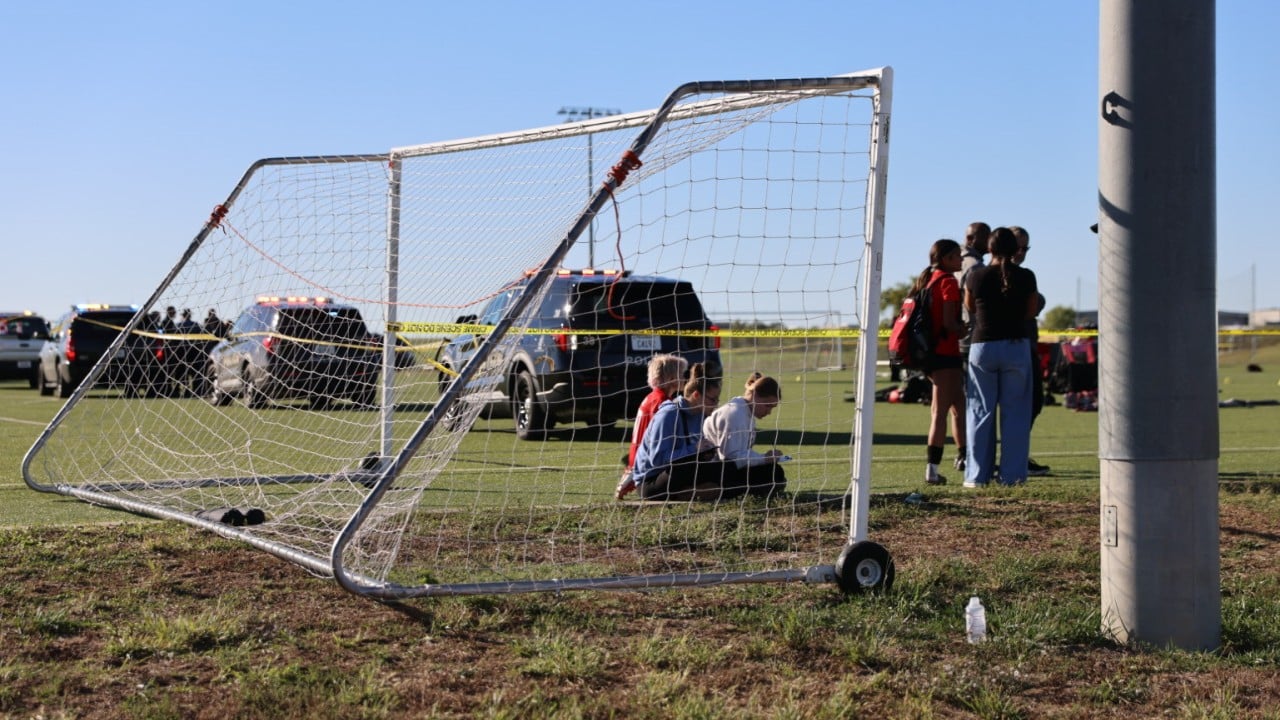
Two dead. Ten injured. A truck tears across a Kansas field during a youth match.
Every wire story reads the same way. Shocked neighbors. Grieving families. Vows that nothing like this should ever happen again.
And then comes the lazy consensus. Blame a rogue driver. Call for harsher criminal penalties. Slap up a few decorative posts or a chain-link fence around the perimeter. Move on until the next headline hits.
That consensus is lazy. Worse, it is deadly.
When a vehicle breaches a sports complex during a youth match, treating the event as a freak anomaly or a simple criminal act lets municipal planners, park boards, and facility operators off the hook for basic physical engineering. A perimeter boundary that relies solely on human restraint or a four-foot chain-link mesh is not a barrier. It is a suggestion. A pickup truck or light commercial vehicle carrying kinetic energy scales linearly with mass and quadratically with velocity. A flimsy fence offers zero resistance to several thousand pounds moving at highway or even parking-lot speed.
I have spent years auditing physical security and site-safety designs for public venues, school campuses, and municipal recreation complexes. I have watched city councils blow millions of dollars on high-definition cameras, perimeter lighting, and "No Vehicle" signage while ignoring the ground right under the spectators' folding chairs. Cameras record tragedies in crisp 4K. They do not stop a two-ton frame from crossing grass.
To understand why these tragedies keep catching communities off guard, we have to look past the headlines and examine the physical mechanics of vehicle intrusion, the legal theater of municipal compliance, and the hard trade-offs of protecting open public spaces.
The Lazy Consensus Around Freak Accidents
Standard news coverage frames vehicle-into-crowd or vehicle-into-field incidents as unpredictable bolts from the blue. A driver loses control, suffers a medical event, panics, or acts with malice, and tragedy strikes where children were supposed to be safe.
Because the human story is immediate and devastating, coverage naturally centers on the driver's intent, the victims' names, and initial police briefings. What gets buried is the site layout. Many youth football and soccer fields sit directly adjacent to access roads, gravel drives, overflow parking lots, or uncurbed park lanes. Parents pull up close to unload gear, coolers, and tents. Delivery vans and maintenance trucks share corridors with foot traffic.
Calling every breach a freak accident confuses rarity with unpredictability. A specific crash at a specific time may be hard to foresee down to the minute. The vulnerability of an unshielded field next to vehicular access is completely predictable. Risk engineers evaluate hazards using two variables: likelihood and consequence. Even when a breach is statistically uncommon on any single afternoon, the consequence at a youth match—where children, siblings, coaches, and spectators sit in low-profile chairs with minimal sightlines to approaching traffic—is catastrophic.
When municipalities treat vehicle intrusion as an act of fate rather than a predictable failure of hostile vehicle mitigation and site separation, they design for normal days instead of worst-case failures. A driver does not need malicious intent to cause mass casualties on an unprotected field. A stuck accelerator, a sudden medical episode, or confusion on a poorly marked access road produces the exact same physics.
What Perimeter Engineering Actually Means
In physical security and civil engineering, terms get tossed around loosely. People say "bollards" when they mean ornamental cast-iron posts that snap on impact. They say "barriers" when they mean low curbs a crossover can mount effortlessly.
Let us define the terms precisely.
Hostile vehicle mitigation (HVM) refers to structural measures—such as crash-rated bollards, reinforced walls, earth berms, or engineered ditches—designed to stop or deflect a moving vehicle before it reaches a vulnerable target. In the United States, crash ratings for vehicle barriers have historically been governed by standards such as ASTM F2656 (formerly DOS K-ratings) and related impact classifications developed through organizations like ASTM International and counter-terrorism/force-protection research bodies such as the U.S. Army Corps of Engineers Protective Design Center.
A crash-rated bollard is not a pipe set six inches into dirt. True impact resistance requires proper steel gauge, deep concrete footings or reinforced foundation beams, engineered spacing so compact cars cannot slip between posts, and structural transfer of impact loads into the ground without ripping out of the soil.
Compare that to a standard municipal park setup:
- Decorative or light-duty posts: Often hollow steel, aluminum, or wood set in shallow concrete. A pickup truck shears them off at the base with minimal speed loss.
- Chain-link or split-rail fencing: Defines property lines and keeps stray balls or pets in check. Does nothing to arrest vehicle momentum.
- Unprotected grass embankments and curbs: Standard rolled or vertical curbs under six inches high are routinely mounted by passenger vehicles at low speeds, especially on wet grass or gravel.
Imagine a scenario where a youth complex has a gravel access lane running parallel to two fields, separated only by a three-foot-tall wooden split-rail fence and a shallow drainage swale. On a sunny Saturday, cars park along the lane to drop off players. If a vehicle veers left at 25 miles per hour, the split-rail fence splinters into toothpicks in milliseconds. The vehicle enters the sideline zone where players warm up and families sit, with almost zero deceleration from the boundary itself.
That is not a failure of morality. That is a failure of boundary design.
Are We Asking the Wrong Question About Youth Sports Safety?
When a tragedy happens on a youth field, the immediate search reflex is predictable: How can we make sports fields completely safe from rogue vehicles?
That question sounds noble, and it is also the wrong starting point.
"Completely safe" does not exist in physical reality. Every public space involves trade-offs between protection, access, cost, and usability. If you ask how to make a field 100 percent immune to any vehicle under any circumstances, you end up with a sterile concrete bunker that fails every practical test of community recreation.
A sharper question is: Where are vehicles and vulnerable people sharing space without physical separation, and which high-exposure zones warrant engineered protection first?
Think about how people actually search and argue around these events. Here are the questions everyone asks—and the blunt answers they rarely get:
"Should every youth sports field have heavy steel bollards around the entire perimeter?"
No. Putting crash-rated bollards around every square foot of every park field in the country is financially unrealistic and operationally messy. Many municipal fields span acres of open parkland with maintenance paths, mowing access, and emergency vehicle gates.
Instead of blanket installation everywhere, risk-based placement targets choke points: where parking lots meet pedestrian walkways, where access roads run parallel to spectator sidelines, and around high-density gathering areas like concession stands, bleachers, and team benches.
"Do security cameras and perimeter gates prevent vehicle attacks?"
Cameras help investigators after the fact; they do not physically block a moving truck. Gates only work if they are actually closed, locked, and rated against impact—and even a closed gate is useless if a vehicle drives around it across open turf or a low curb. Physical standoff distance and rated barriers do the stopping. Surveillance is strictly an investigative and monitoring layer.
"Why don't cities just ban cars near youth fields?"
Banning cars sounds simple on paper until you account for reality. Many youth complexes are neighborhood parks or school grounds with shared parking lots, drop-off loops, and maintenance roads. Parents carrying heavy gear or assisting injured or mobility-limited family members need reasonable access, and ambulances or fire trucks need clear, unobstructed ingress.
Total bans without physical layout redesign often fail in practice because drivers ignore signs, park on shoulders, or cut through undesignated areas when lots overflow. Smart site planning separates vehicle circulation from high-density pedestrian zones and uses removable or engineered access points where needed.
The Hidden Trade-Offs Nobody Wants to Admit
Here is the part where contrarians usually lose credibility—by pretending their solution has zero downsides. I will not do that.
Hardening public spaces with engineered vehicle barriers carries real costs and friction.
First, capital and maintenance costs are steep. Properly engineered, crash-rated barriers and their foundations cost vastly more than standard fencing or signage. For cash-strapped school districts and small towns already struggling to keep turf maintained, restrooms stocked, and lights working, tens of thousands or hundreds of thousands of dollars per site is a serious budget hit.
Second, emergency access and daily operations get trickier. If you block off a perimeter too tightly with fixed posts or walls, you can accidentally complicate access for maintenance crews, groundskeepers, or first responders unless gates, spacing, and removable bollard systems are carefully engineered and maintained. A removable bollard left unlocked or improperly seated defeats the purpose; a locked one that jams slows down an ambulance.
Third, aesthetics and community character matter. Nobody wants their local neighborhood soccer field to look like a high-security embassy compound. Over-fortifying every quiet park can create a constant atmosphere of fear and over-policing in spaces meant for kids to run around and be kids.
Fourth, barriers do not address every hazard. A vehicle barrier stops or redirects a vehicle; it does not prevent heat illness, lightning strikes, cardiac events, poorly anchored soccer goals, or unsafe traffic outside the park gates. If a town drains its entire safety budget into one visible measure while ignoring basic emergency response plans or field hazards, it has only shifted its risk profile, not solved safety holistically—without using the banned word.
Admitting these trade-offs is the only way to make credible decisions. Safety engineering is resource allocation under constraints, not wishful thinking.
What Actually Works When Budgets Are Real
If you run a park department, manage a sports complex, sit on a school board, or organize youth athletics, waiting for a tragedy—or waiting for an unlimited budget—is a terrible plan. Practical risk reduction relies on layered, logical steps rather than silver bullets.
- Audit vehicle-to-pedestrian interfaces first. Walk the site like a risk engineer, not a spectator. Map every parking lot, driveway, service road, and curb cut relative to fields, benches, tents, and walkways. Look for places where a car could leave pavement or gravel and reach people within two or three seconds.
- Use geometry and standoff before expensive hardware. Where space allows, increase physical distance between vehicle lanes and seating areas. Use terrain features—like natural berms, ditches, or landscaped mounds—where grading makes sense, keeping sightlines clear and slopes safe.
- Upgrade high-risk pinch points with real rated barriers. Focus structural protection where a stray vehicle has a clear path into dense crowds or play areas. Verify actual impact ratings and installation specs rather than buying cheap posts that look tough but fold on contact.
- Control parking and drop-off behavior physically, not just with signs. If cars routinely park on grass edges or narrow lanes during tournaments, paint or signs will not stop overflow crowding. Physical curb extensions, designated drop-off zones, and clear traffic flow reduce close-quarters vehicle movement around families.
- Pair physical controls with operational readiness. Keep emergency lanes unobstructed, train staff and event coordinators on crowd movement and emergency access, and inspect barriers and gates regularly so hardware does not degrade silently.
None of these steps makes headlines the way a viral outrage post does. Engineering rarely goes viral. It just quietly reduces the odds that a moment of lost control turns into an unshielded tragedy.
Signs do not stop steel. Only physics does.