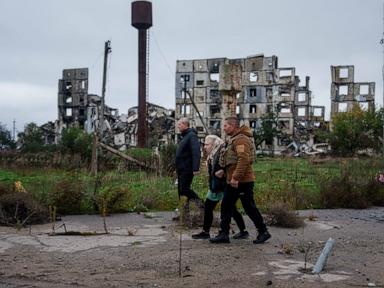
War did not return to Kherson. It never left.
Read the standard wire copy on Kherson right now and you will walk away believing two comforting fictions. First, that a quiet, frozen pause somehow existed over the city and is now expiring on a calendar schedule. Second, that civilians in Kherson are suddenly "preparing" for combat like tourists packing raincoats before a forecast change.
Both claims are lazy theater. They flatten a brutal, grinding riverfront reality into a neat narrative arc—calm before the storm—that sells headlines and misleads anyone tracking security, logistics, or humanitarian risk in southern Ukraine.
I have spent years watching analysts, NGOs, and planners burn budgets on worst-case scripts that ignore daily operational mechanics. I have seen organizations blow millions on evacuation kits, fixed shelters, and PR campaigns designed for a dramatic front-line breakthrough while under-investing in the mundane threats that actually kill people week after week: first-person-view drones, artillery spotters, grid blackouts, and supply bottlenecks. When you misunderstand the threat model, you build the wrong defenses.
The Myth of the "Return" of War
Let us define terms clearly before anyone confuses a temporary lull with peace. In military and security analysis, a localized ceasefire is a tactical, bounded pause—often negotiated around a specific corridor, repair window, or sector—rather than a strategic halt to hostilities. A front line or line of contact is the active zone where opposing forces exchange fire, observe one another, or contest territory. And urban attrition is the slow degradation of civilian life, infrastructure, and psychological endurance through repeated strikes, disruption, and deprivation rather than a single decisive battle.
When coverage talks about war "returning" to Kherson as a localized ceasefire ends, it implies a binary switch: peace off, war on. That switch does not exist along the Dnipro River delta.
Since Ukraine liberated the right-bank city in November 2022, Kherson has lived under the shadow and fire of the left bank across the water. A localized pause in one pocket of activity does not erase the geography of the river, the reach of indirect fire, or the persistent harassment of civilian neighborhoods and transit routes. Treating the end of a localized ceasefire as a sudden "return" of war misses the core nuance: what ends is not peace, but a narrow, temporary ceiling on certain kinds of strikes or movements.
Look at why that distinction matters on the ground. In a full-scale renewal of major ground maneuvers, the primary markers are massed armor, heavy assault columns, and rapid territorial shifts. Across a wide river barrier like the Dnipro—especially following the destruction of the Kakhovka Dam in June 2023, which altered water levels, wetlands, and crossing feasibility—large-scale amphibious assaults face steep terrain and fire disadvantages. Meanwhile, precision loitering munitions, artillery, and electronic warfare operate continuously regardless of diplomatic headlines.
Calling that a "return" of war is like saying the ocean returned to a beach because a five-minute dip in wind ended. The water was there the whole time.
Wrong Question, Wrong Premise
Most coverage asks the wrong question right out of the gate: How are civilians in Kherson preparing for war to come back?
That question assumes civilians are passive spectators waiting for a bell to ring. In reality, anyone still living in a contested riverfront city has already been adapting—often through grim, practical habits that outsiders misread as fatalism or denial.
When people ask "People Also Ask" style questions about Kherson—such as Why do civilians stay in Kherson when fighting escalates? or How do residents survive without reliable utilities?—the standard answers usually reach for melodrama: stubbornness, poverty, or lack of options. There is truth in economic constraint and family ties, of course. Older residents, low-income households, and people caring for immobile relatives face severe barriers to relocating and rebuilding elsewhere.
Yet reducing every resident's calculus to helplessness is analytically sloppy. People weigh competing risks every single day:
- The danger of staying in a city exposed to shelling and drone strikes.
- The cost, uncertainty, and alienation of becoming an internally displaced person with scarce housing and uncertain income.
- The presence of local support networks, property, and familiarity with local warning cues.
When a localized ceasefire expires, the immediate shift is rarely a sudden mass panic; it is a recalibration of risk tolerances. Basements, interior hallways, travel timings, and communications routines get tightened again. Calling that "preparing for the return of war" glosses over the fact that many residents never packed away their mental crisis checklists in the first place.
Imagine a scenario where a municipal repair crew gets a two-day localized pause to patch a water main or power line. While that window holds, traffic moves slightly more freely and residents run errands they delayed for weeks. The moment that window closes, risk does not jump from zero to one hundred—it snaps back from a slightly compressed baseline to a high baseline. Journalists standing on a corner asking residents how they feel about "war returning" often capture raw emotion without explaining the structural ratchet effect behind it.
What Heavy Hitters Actually Focus On
Serious military and conflict analysts—figures and institutions such as Michael Kofman, Phillips P. O'Brien, and researchers at the Institute for the Study of War and the Royal United Services Institute—have spent the past several years hammering home a point that mainstream summaries still underplay: modern war along entrenched lines is shaped heavily by fires, unmanned systems, logistics, and endurance, not just dramatic map arrows.
When you apply that lens to Kherson, three mechanics stand out far more sharply than "ceasefire ends, war resumes":
- Asymmetric Strike Economics. Cheap drones and directed fire can impose constant psychological and material costs without requiring a massive ground offensive. Even limited resumption of higher-intensity strikes forces costly defensive adaptations—sirens, shelter movements, damaged vehicles, and interrupted deliveries.
- Infrastructure Fragility. A city on an active riverfront depends on power grids, water pumping, heating, and road corridors that are expensive to repair and exposed to disruption. When localized pauses end, maintenance windows shrink and repair crews face higher hazard rates.
- Information and Panic Dynamics. Headlines announcing a "return of war" can trigger spikes in anxiety, rumors, and secondary disruptions that outpace actual tactical changes on the street. Clear, unvarnished local advisories matter far more than dramatic framing.
Where My Contrarian Take Can Backfire
A sharp contrarian argument is useless if it blinds you to real dangers. Here is the honest downside of pushing back against "war is returning" framing: underestimating escalation.
Localized ceasefires and de-escalation pockets sometimes fail quietly, and sometimes they precede sharper spikes in shelling, drone waves, or localized clashes. If a reader hears "war never left" and concludes "nothing worse can happen," they can become complacent right when strike intensity rises. High baseline danger is not the same as peak danger. A sudden surge in drone attacks near a market, a hospital, or a transit route can still catch people off guard if they treat every warning as background noise.
There is also a risk of sounding detached when writing about human suffering. Pointing out analytical flaws in media framing should never minimize the terror of sirens at night, shattered glass, or losing a home. Precision is not callousness; sloppy framing hurts both accuracy and aid.
Actionable Steps That Actually Work
If you are following the situation in Kherson—whether as an analyst, donor, aid coordinator, or informed reader—stop chasing dramatic "return of war" narratives and shift to practical discipline:
- Track mechanics, not slogans. Watch utility status, transit/corridor access, strike reporting patterns, and official evacuation or shelter guidance rather than relying solely on dramatic headline phrasing around ceasefire expirations.
- Prioritize resilient, modular support. For humanitarian and crisis planning in high-risk urban areas, modular power backups, portable water/heating solutions, clear shelter signage, and flexible cash or remote assistance generally outperform rigid, grand infrastructure projects that can be knocked offline in an afternoon.
- Separate emotional reality from tactical reality. Validate the fear and exhaustion of civilians living under persistent threat, while keeping your own assessment grounded in verified geography, weapons ranges, and logistics.
- Verify claims before amplifying. In fast-moving conflict coverage, rumors about sudden offensives or total evacuations spread fast when localized pauses end. Cross-check official local authorities and established conflict monitors before sharing alerts.
Stop treating a temporary breathing room as peace, and stop treating its end as a brand-new war. Look at the river, the supply lines, and the people still holding down ordinary life under extraordinary fire—that is where the real story has lived all along.



