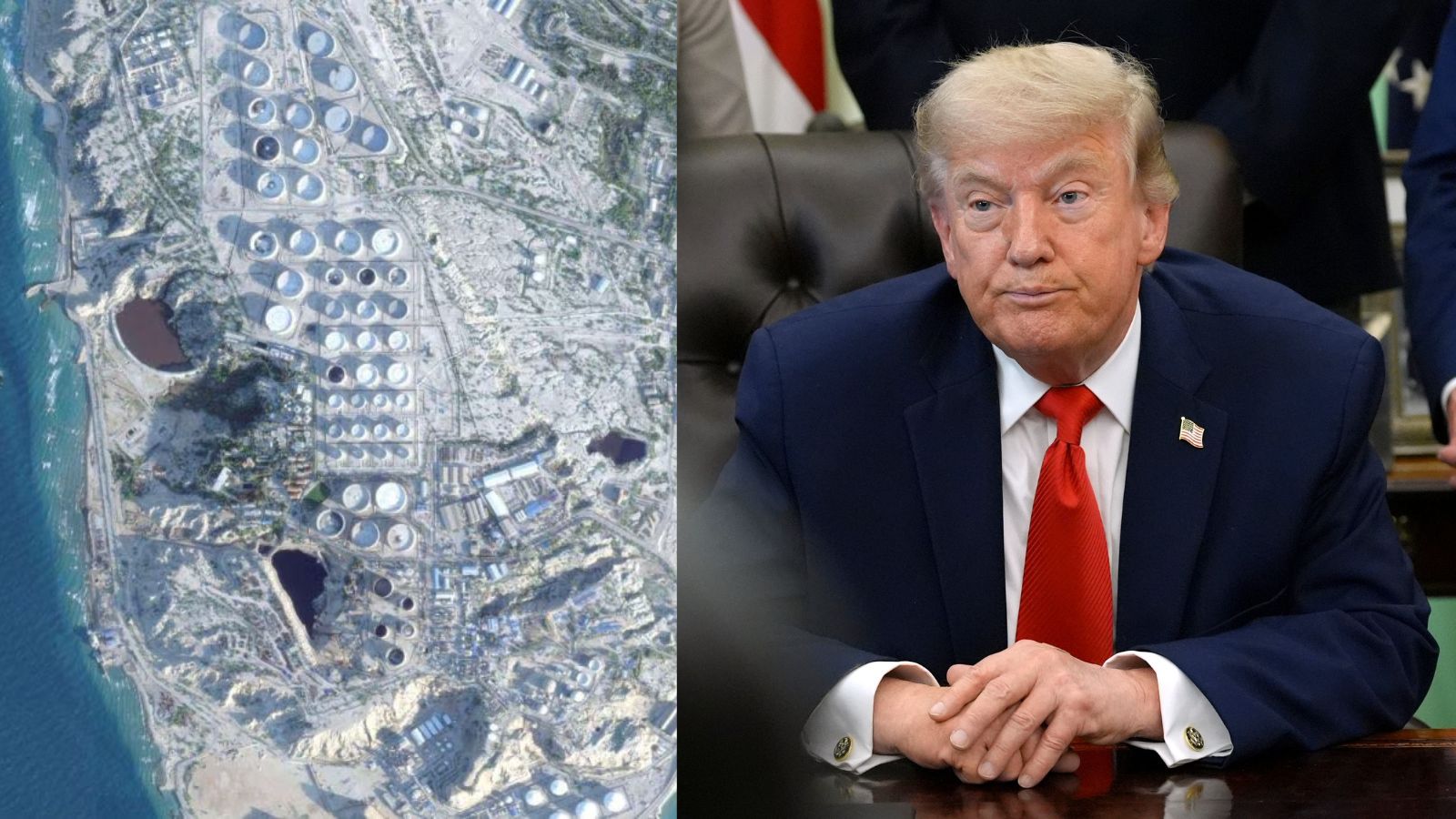
The lazy consensus across foreign policy desks and financial newsrooms is practically written by template. It goes like this: if the United States follows through on its threats to strike or seize Iran’s Kharg Island, global energy markets will experience an apocalyptic meltdown, oil will rocket to $150 a barrel, and a wider regional war will inevitably engulf the Middle East.
This conventional wisdom is completely, fundamentally wrong.
The mainstream press treats Kharg Island as a massive geopolitical trigger that, if pulled, releases a chaotic, uncontrollable chain reaction. But the reality is exactly the opposite. The hyper-fixation on this eight-square-mile rock in the northern Persian Gulf completely misunderstands the nature of modern economic warfare, the structural transformation of the global oil market, and the actual leverage at play.
Seizing or neutralizing Kharg Island is not a path to an uncontrollable escalation; it is a clinical, highly calculated off-ramp disguised as brinkmanship.
The Flawed Premise of the "Supply Shock"
Mainstream analysts love to throw around terrifying statistics. They remind you that Iran holds 12 percent of global oil reserves, that Kharg Island handles roughly 90 percent of Iran's crude exports, and that any threat to this infrastructure threatens to choke the world economy.
But let’s look at the actual data rather than the scary headlines.
Iran accounts for roughly 4 percent of global oil supplies. The physical infrastructure at Kharg has already been degraded by years of operations under suffocating sanctions. Satellite imagery from earlier this year revealed empty jetties and dwindling shipments. The "ghost fleet" of aging, uninsured tankers that Iran relies on to smuggle crude to Asia—primarily China—is already facing massive friction, mounting logistics costs, and structural exhaustion.
The market has already priced in the Iranian disruption. When the latest threats hit the wires, Brent crude spiked briefly toward $95 a barrel before swiftly tumbling back down. Why? Because the physical system is far more durable, and far more insulated, than the doom-mongers assume.
Imagine a scenario where Kharg Island is completely taken off the board. The assumption is that 1.5 to 2 million barrels per day vanish, creating an unfillable void. This ignores the massive spare capacity held by the rest of OPEC+, particularly Saudi Arabia and the United Arab Emirates. For years, these producers have restricted their own output to maintain a price floor. A permanent reduction in Iranian exports simply hands market share back to Riyadh and Abu Dhabi, who are more than eager to turn the taps back on. The "world-ending supply shock" is an illusion.
The Truth About the Island Fortress
Another common piece of lazy commentary is that capturing Kharg Island is a military impossibility that would require an Iraq-style invasion force and lead to massive American casualties.
I have spent years analyzing energy infrastructure vulnerabilities, and I can tell you that the "fortress Kharg" narrative is a myth propagated by people who don't understand geography or logistics.
Kharg is an island located 21 miles off the Iranian coast. It is small—about one-third the size of Manhattan. While it is heavily guarded by the Islamic Revolutionary Guard Corps (IRGC), its greatest asset is also its fatal flaw: it is completely isolated.
To control or neutralize Kharg, a military does not need to march on Tehran. It does not even need to put thousands of boots on the ground to face grueling urban warfare. It requires a maritime and aerial blockade that cuts the island off from the mainland.
The common counterargument on online forums and op-ed pages is that if the U.S. or Israel takes the island, Iran will simply shut off the oil pumps on the mainland, rendering the capture useless. Or worse, that the IRGC will use kamikaze drones to blow up their own infrastructure to ensure nobody else can have it.
To which I say: exactly. That is precisely the point.
The objective of targeting Kharg Island is not for the West to pump and profit from Iranian crude. The objective is to take the asset hostage or force its elimination as an economic lifeline. If Iran destroys its own terminals, or shuts off its own mainland pumps, it achieves the exact policy goal of the sanctions regime—zero Iranian oil exports—without the West having to fire a single missile at the Iranian mainland.
Dismantling the People Also Ask Myth: "Won't Closing the Strait of Hormuz Destroy the West?"
Whenever the issue of Kharg Island arises, the immediate follow-up question is invariably: If the West attacks Kharg, won't Iran just close the Strait of Hormuz and crash the global economy?
This is the ultimate paper tiger of Middle Eastern geopolitics. Let's dismantle the premise entirely.
Iran threatens to close the Strait of Hormuz because it is the only rhetorical card it has left to play. Actually doing it would be an act of economic self-immolation.
The Strait of Hormuz is a two-way street. If Iran blocks the passage to stop Saudi or Emirati oil, it blocks its own ability to import food, medicine, and refined gasoline. More importantly, it completely severs its economic lifeline to China. China is the sole reason the Iranian economy has survived decades of Western isolation. Do you honestly believe Beijing will sit back quietly while Tehran chokes off the energy supplies that power Chinese manufacturing?
Even from a purely tactical perspective, the U.S. military’s Central Command has spent decades preparing for this exact scenario. The idea that a few IRGC speedboats and sea mines can permanently close a global shipping lane is a fantasy out of a 1980s wargame. The physical system has evolved. Modern counter-mine operations, convoy escort systems, and alternative pipelines—like Saudi Arabia’s East-West pipeline and the UAE’s Habshan-Fujairah route—mean that while a disruption would cause a temporary price spike, it cannot cause a permanent blockade.
The Counter-Intuitive Truth: Brinkmanship is the Off-Ramp
The real mistake the mainstream media makes is taking political theater at face value.
When a leader posts on social media that the military is going to seize Iran's energy base and take total control of their oil and gas markets "much like we have with Venezuela," the immediate reaction from the pundit class is panic over a new world war. They miss the underlying mechanics of the negotiation.
This is aggressive posture designed to force a rapid diplomatic conclusion, not an escalation to total war. The threat is targeted at Kharg precisely because it is a discrete, localized, and hyper-specific asset. It gives the adversary a clear, quantifiable metric of what they stand to lose if they stall peace negotiations.
The proof is in the immediate aftermath of these escalations. The moment the threat is maximized and the market panics, the backchannels light up. Secret messages move through intermediaries like Qatar, assurances are given that all-out war is not the objective, and suddenly, planned strikes are canceled because "discussions have been brought to the highest level."
By making the threat to Kharg Island explicit, the administration creates a massive piece of leverage that can be traded away during talks. It shifts the baseline of the negotiation. Instead of debating minor sanctions relief, the conversation suddenly becomes about the literal survival of Iran's primary economic engine. It is brutal, transactional diplomacy.
The Real Risk Nobody is Talking About
If you want to worry about something, stop worrying about a global oil shortage. The real, unvarnished downside to this strategy isn't a spike in fuel prices; it is the structural acceleration of a bifurcated global trade system.
By weaponizing infrastructure like Kharg Island, the West isn't stopping the flow of oil permanently—it is pushing it entirely into the shadows. We are already seeing the consequences:
- An explosion in the use of unflagged, unregulated "dark" tankers.
- Massive environmental degradation and untraceable oil slicks in the Persian Gulf because these ships operate without insurance or safety oversight.
- The creation of a permanent, parallel financial system where China purchases energy using yuan-denominated mechanisms completely immune to Western banking pressure.
The short-term tactical victory of forcing Iran to the negotiating table by threatening Kharg Island comes at the expense of long-term strategic control. We are teaching our adversaries exactly how to build a sanctions-proof economy.
The next time you see a headline screaming about Kharg Island and the imminent collapse of Western civilization, ignore the panic. The oil market is too diversified, the geography is too isolated, and the threats are too calculated for the lazy consensus to ever come true. The theater is loud, but the underlying mechanics are operating exactly as intended.


