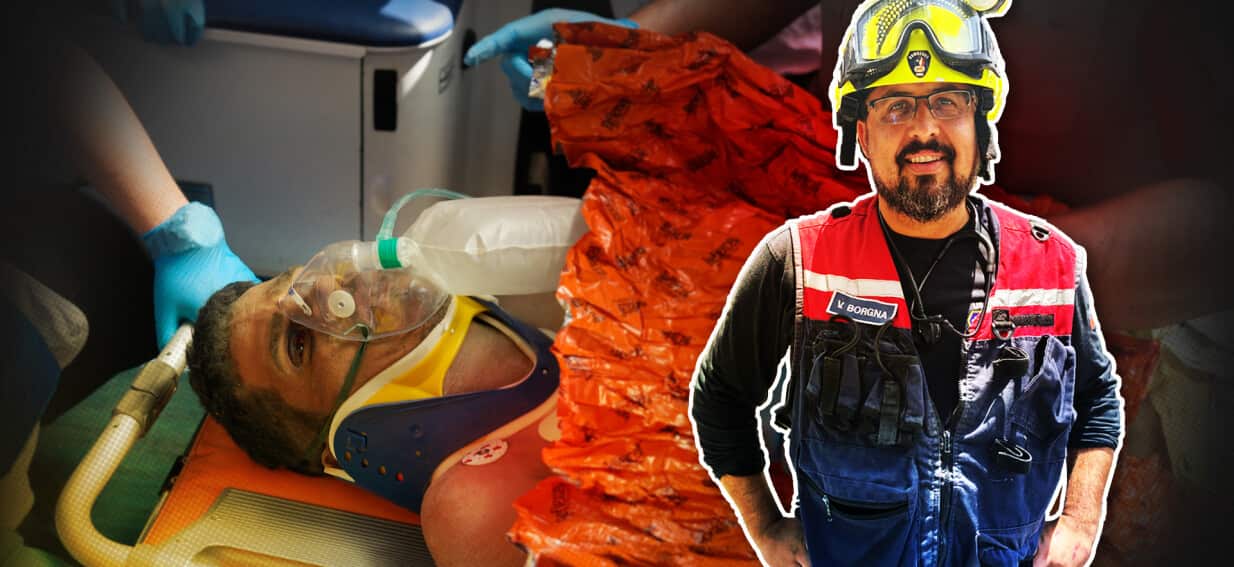
The media playbook for natural disasters is entirely predictable. An earthquake strikes Venezuela, buildings crumble, and the international press rushes in with a flurry of heart-wrenching photographs. Within hours, the standard narrative hardens: survivors are helpless, the local infrastructure is completely obliterated, and the only salvation is a massive fleet of foreign cargo planes stuffed with blankets, bottled water, and generic medical kits.
This narrative is not just lazy. It is actively destructive.
For decades, international non-governmental organizations (INGOs) and multi-lateral agencies have treated disaster zones like blank slates where Western logistics can be dropped from the sky to save the day. I have spent fifteen years managing humanitarian logistics across Latin America and sub-Saharan Africa. I have watched billions of dollars in emergency funding evaporate into thin air, eaten alive by supply chain friction, customs extortion, and institutional inertia.
When a major earthquake hits a complex, politically fractured state like Venezuela, sending physical aid is often the worst possible response. The mainstream media demands immediate visible action, which translates to photogenic aid convoys. But if you actually want to save lives, you need to stop sending boxes of stuff. You need to understand how disaster economics actually work on the ground.
The Physical Aid Trap
The immediate reaction of the global public during a crisis is to organize clothing drives or demand that governments ship pallets of supplies. This stems from a fundamental misunderstanding of supply chain mechanics. Shipping physical goods across borders during an active emergency is slow, astronomically expensive, and economically illiterate.
Consider the lifecycle of a standard shipment of emergency blankets or hygiene kits sent from a warehouse in Miami or Geneva to an affected province in Venezuela.
First, there is the immediate procurement and airfreight bottleneck. Air charter rates skyrocket the moment a disaster hits. You are paying premium prices to move low-value, high-volume cargo through the air.
Second, you encounter the bottleneck of local customs. In a highly bureaucratized and politically sensitive environment, cargo does not simply roll off the tarmac. It sits. It gets inspected. It requires signatures from ministries that may or may not be functioning, or that view foreign aid with intense ideological suspicion. While a bureaucrat argues over paperwork or demands a bribe, specialized medicines spoil on un-refrigerated runways.
Third, and most devastatingly, dumping free physical goods into a disaster zone destroys the remaining local economy.
Imagine a scenario where a localized earthquake hits an agricultural or semi-urban region in northern Venezuela. The physical structures are damaged, but the surrounding regional supply chains are still intact. Local wholesalers, bodegas, and farmers still have inventory. They need revenue to rebuild their own homes and business operations.
When an international agency arrives and distributes thousands of tons of free imported rice, beans, and clothes, they completely undercut every local merchant within a fifty-mile radius. The local market collapses. The corner store owner who survived the earthquake is driven into bankruptcy by the free handouts intended to help his community. By the time the international NGOs pack up and leave six months later, the indigenous commercial network has been completely wiped out.
The Dictator’s Toll Booth
You cannot talk about relief efforts in Venezuela without talking about the institutionalized diversion of resources. The traditional humanitarian model assumes a cooperative, or at least neutral, state actor. That assumption is a dangerous fantasy.
In an authoritarian or heavily corrupted state, physical aid is currency. It is political leverage.
When food trucks and medical supplies enter the country, they must pass through multiple layers of military checkpoints, local paramilitary control, and regional governments. The central government routinely weaponizes the distribution of basic goods to reward loyalty and punish dissent.
If an international agency insists on distributing physical goods through official channels, those goods are systematically diverted to state-controlled distribution networks. The most vulnerable populations—those who lack the correct political credentials or live in opposition-heavy territories—are systematically excluded.
Furthermore, physical cargo is highly vulnerable to outright theft. High-value assets like antibiotics, surgical equipment, and water purification units do not reach the field hospitals. They are siphoned off into the thriving black market of Caracas and Maracaibo to line the pockets of corrupt officials.
When you donate to a traditional campaign that boasts about shipping tons of medical supplies to Venezuela, you are frequently subsidizing the very structures that caused the structural vulnerability in the first place.
The Mathematical Reality of Cash Transfers
If physical aid is a failure, what is the alternative? The answer is simple, unphotogenic, and intensely resisted by traditional charities: direct, unconditional cash transfers.
For years, the humanitarian establishment resisted cash interventions based on a patronizing myth: that poor or traumatized people cannot be trusted with cash because they will spend it on alcohol, tobacco, or weapons. Every piece of rigorous empirical data compiled by institutions like the Center for Global Development and CashLearning Partnership proves the exact opposite. When given cash during a disaster, survivors overwhelmingly spend it on immediate, rational priorities: clean water, specific medicines they actually need, local construction materials, and fresh food.
Let us look at the raw efficiency metrics.
$$\text{Efficiency Ratio} = \frac{\text{Value Reaching the Beneficiary}}{\text{Total Capital Expended}}$$
When shipping physical aid from a Western hub to a Venezuelan crisis point, the efficiency ratio is abysmally low. Up to 70% of every dollar spent goes toward international shipping, storage, security, and administrative overhead. The beneficiary receives roughly thirty cents of actual value on the dollar.
With digital cash transfers or localized voucher systems, that equation is completely flipped. By utilizing digital payment systems, mobile money, or stablecoin networks that bypass traditional, hyperinflation-plagued banking systems, organizations can transfer funds directly to a survivor's smartphone.
- Zero Shipping Costs: You are moving data, not heavy freight.
- Immediate Deployment: Money moves at the speed of an internet connection, bypassing port delays and customs standoffs.
- Market Preservation: Survivors spend that money at surviving local shops, injecting vital liquidity back into the local economy and accelerating structural recovery.
- Dignity of Choice: A survivor knows exactly what their family needs. An NGO worker in an air-conditioned office does not know if a family needs infant formula or specific cardiac medication. Cash allows the survivor to decide.
Admittedly, cash transfers are not a magic bullet. They rely on the existence of functioning local markets within a reasonable distance, and they require secure digital rails to prevent local extortion. In the deepest, most isolated pockets of destruction where markets have completely vaporized, short-term physical distribution remains a grim necessity. But treating physical distribution as the default strategy rather than the absolute last resort is an operational failure.
Why the Aid Industrial Complex Resists Change
If the data favoring cash and localization is so overwhelming, why do international relief efforts still rely so heavily on the outdated model of shipping physical boxes?
Follow the money. The humanitarian sector is an industry, and like any industry, it prioritizes self-preservation and marketing.
An image of a starving child receiving a branded box of food from a Western aid worker is a potent fundraising tool. It triggers immediate emotional compliance from donors. An image of a Venezuelan mother scanning a QR code on her phone to buy milk from a local vendor does not evoke the same emotional urgency. It does not look like a rescue mission; it looks like a trip to the supermarket. Traditional NGOs rely on the theater of rescue to maintain their donor bases.
Furthermore, the entire procurement ecosystem is built around physical logistics. Massive international organizations maintain vast warehouses filled with physical inventory that must be rotated and deployed to justify their ongoing real estate and staffing costs. Entire careers are built on managing these massive, inefficient pipelines. Transitioning to a model focused on digital liquidity and direct localized funding renders large swathes of the international aid bureaucracy completely obsolete.
Stop applauding the arrival of international cargo planes. Stop donating to organizations whose primary metric of success is the weight of the cargo they shipped. The survivors of Venezuela’s crises do not need our old clothes or our logistical paternalism. They need the financial agency to rebuild their own lives through their own markets. Anything less is just charity tourism dressed up as salvation.