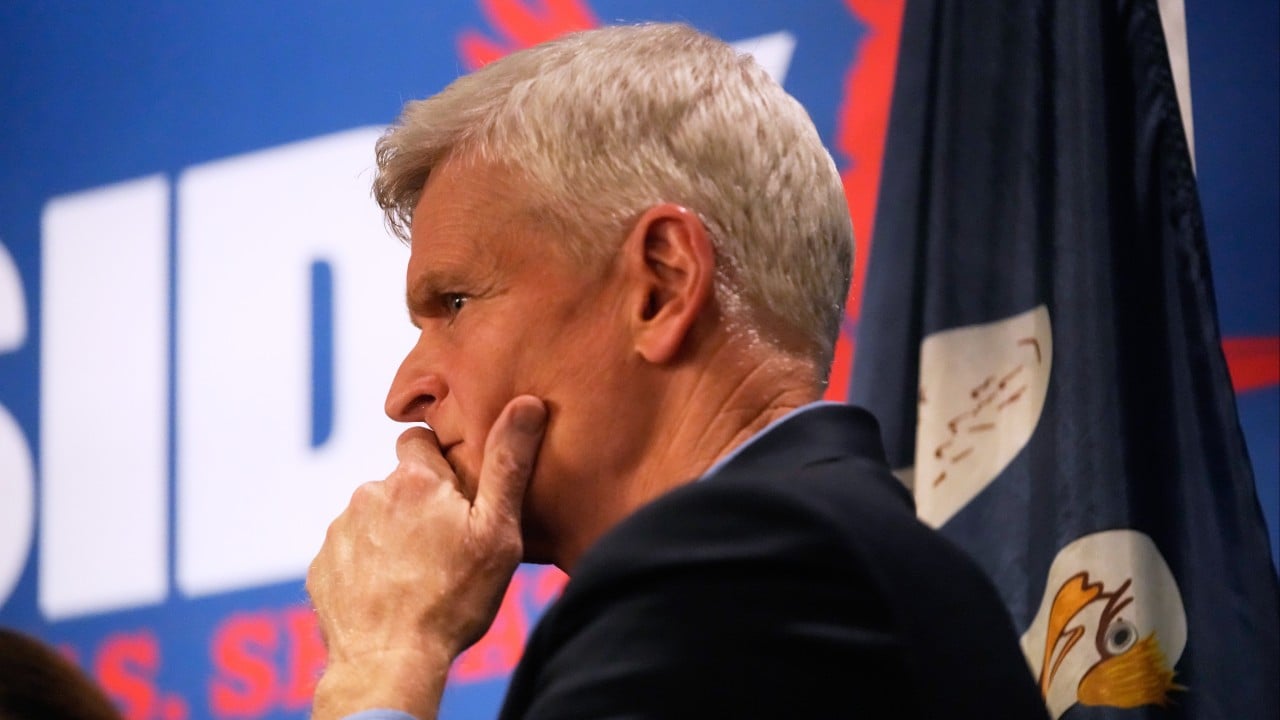
The media consensus dropped its pre-written narrative the second the Associated Press called the Louisiana Republican primary. The headlines are identical. They scream that Senator Bill Cassidy paid the ultimate price for voting to convict Donald Trump in 2021. They paint his third-place finish as a simple, binary tale of MAGA vengeance and a stark warning to any Republican who dares defy the party line.
It is a neat, cinematic storyline. It is also completely wrong.
Placing the blame for Cassidy's defeat entirely on a single vote cast over five years ago is lazy political analysis. It ignores the structural mechanics of modern elections, the tactical failures of a stagnant campaign, and a massive shift in state election law. Cassidy did not lose because he voted his conscience in 2021. He lost because he miscalculated the machinery of 2026.
To understand what actually happened in Louisiana, we have to look past the Trump endorsement and dismantle the myths surrounding this race.
The Real Culprit Was a Structural Bait and Switch
Political pundits love to talk about ideological purity, but elections are won on mechanics. The single most devastating blow to Cassidy’s re-election bid did not come from Mar-a-Lago. It came from the Louisiana State Capitol in Baton Rouge.
For decades, Louisiana operated under a unique "jungle primary" system. All candidates, regardless of party, ran on a single ballot. If a candidate secured over 50 percent of the vote, they won outright. If not, the top two finishers advanced to a runoff.
This system heavily favored incumbents like Cassidy. It allowed a moderate or institutional Republican to build a winning coalition by pulling support from across the political spectrum—including independent voters and moderate Democrats who preferred a known quantity over an insurgent firebrand. In a jungle primary, Cassidy’s deep war chest and institutional backing would have easily carried him into a runoff.
But in January 2024, Governor Jeff Landry signed House Bill 17. The law abolished the jungle primary for congressional races, replacing it with a closed, partisan primary system.
This structural shift changed everything. Suddenly, Cassidy was not appealing to the broad Louisiana electorate. He was locked in a cage match restricted exclusively to registered Republican primary voters.
Imagine a scenario where a CEO spends a decade marketing a product to a mainstream audience, only to have the board suddenly declare that the product can only be sold to hardcore brand loyalists. The product does not change, but the market shrinks drastically.
Cassidy failed to adapt to this new market. His campaign spent over $22 million—outspending Julia Letlow and John Fleming combined—on a legacy air war designed for a general electorate. They flooded the airwaves with ads highlighting his work on the bipartisan infrastructure bill and his defense of the local oil and gas industry.
In a closed Republican primary, bragging about passing a Joe Biden infrastructure bill is not a winning strategy. It is political malpractice. The structural shift isolated Cassidy with the exact demographic most hostile to his record, and his campaign team ran a 2014 strategy in a 2026 reality.
The Illusion of the Impeachment Curse
The "revenge narrative" falls apart when you look at how Cassidy actually behaved after 2021. The media wants you to believe he was a defiant anti-Trump martyr like Liz Cheney. He was not.
Cassidy spent the last five years actively trying to mend fences with the populist wing of his party. He did not run away from the conservative movement; he leaned into it. He used his position as chairman of the Senate Health, Education, Labor and Pensions Committee to torpedo progressive initiatives. He even cast a pivotal vote to confirm Robert F. Kennedy Jr. as health secretary to signal his alignment with the new right ecosystem.
During the campaign, Cassidy openly argued that his effectiveness proved he could work with Trump, pointing out that Trump had signed multiple bills that Cassidy wrote or negotiated.
If voters were driven purely by a deep-seated desire to punish Cassidy for his impeachment vote, his poll numbers would have bottomed out years ago. Instead, his defeat was driven by an active, fresh primary challenge engineered by the national party structure.
Trump did not just issue a passive statement of disapproval. He actively cleared the field, endorsing Representative Julia Letlow early and weaponizing the national fundraising apparatus. Cassidy did not lose to a ghost from 2021; he lost to a well-funded, highly coordinated operational campaign led by Letlow and Fleming that capitalized on his inability to connect with the modern primary base.
The Problem with Incumbent Arrogance
During my years analyzing campaign structures, I have watched entrenched politicians blow millions on legacy consultants who refuse to read the room. Cassidy’s team fell into the classic incumbent trap: they believed that delivering federal dollars back home still guarantees victory.
The conventional wisdom in Washington says that if you build roads, protect local industries, and secure earmarks, the home state will reward you. Cassidy bought into this theory completely. He campaigned heavily on his ability to deliver tangible results for one of the poorest states in the country.
But the currency of modern politics has shifted from pork-barrel spending to cultural alignment. Primary voters are no longer transactional; they are ideological. By emphasizing his ability to negotiate bipartisan deals in Washington, Cassidy unwittingly reinforced the primary challenger narrative that he was a creature of the swamp.
The downside to point out here is obvious: challenging this status quo means acknowledging that effective governance and legislative execution are no longer primary prerequisites for winning a modern primary election. It is a grim reality, but denying it is what gets incumbents blindsided. Letlow and Fleming understood that a closed primary is about activation, not persuasion. They did not need to convince voters that Cassidy was a bad senator; they just needed to remind a highly specific, motivated slice of the electorate that he did not share their grievances.
The Wrong Questions to Ask
Whenever an incumbent falls, political analysts rush to ask the wrong questions:
- Does this mean Trump completely controls the GOP?
- Can a moderate Republican ever win in a red state again?
These questions miss the point entirely. The real lesson of the Louisiana primary is that structural election rules dictate political survival. If Louisiana had kept its jungle primary system, Cassidy would likely be cruising into a runoff with a diverse coalition behind him.
The question we should be asking is how state-level legislative changes are quietly reshaping the federal landscape. By shifting to closed primaries, state parties are effectively filtering out institutional lawmakers and ensuring that only the most ideologically rigid candidates advance to the general election.
Cassidy’s political career is over not because he crossed a line in 2021, but because he stood still while the ground beneath his feet was completely remodeled. He ran a well-funded, traditional campaign for an electorate that no longer existed.
Stop reading the lazy op-eds about political martyrdom. Look at the rules of the game, look at the changing structure of the primary system, and realize that in modern politics, adaptability matters far more than a legacy war chest.


_Biopsy.png?branch=uat_release_3)
