Don't believe the neat public statements coming out of Washington or Tehran right now. The reality on the ground is messy, chaotic, and tracking toward another major diplomatic trainwreck. Last week, US President Donald Trump and the Iranian leadership signed a 14-point memorandum of understanding designed to end the devastating regional conflict that erupted following the 12-day war in 2025. This interim peace deal was supposed to bring stability. Instead, it opened up an aggressive public shouting match over who gets to see Iran's nuclear material, where they can go, and when the cameras start rolling again.
The core of the dispute rests entirely on one question. Will International Atomic Energy Agency inspectors get immediate access to Tehran's sensitive uranium enrichment facilities?
If you listen to the White House, the answer is a definitive yes. Trump even posted on social media that Iran agreed to highest level nuclear inspections long into the future. He called it a guarantee of total honesty. Vice President JD Vance backed this up, stating that Iran invited inspectors right back in. But if you turn on Iranian state media or check the feeds of their top diplomats, you get an entirely different story. Tehran is flatly denying that any immediate inspections of their heavily fortified, war-damaged facilities are on the table. They claim those visits will only happen after a final, comprehensive treaty is signed and every single US economic sanction is completely wiped out.
This is where IAEA Director General Rafael Grossi stepped into the fray. Speaking from the Fukushima nuclear plant in Japan, Grossi made it clear that despite the political theater, inspections are legally required under the signed memorandum. He basically told the world to ignore the noise. The text of the agreement explicitly states that the IAEA will supervise the handling and downblending of Iran's highly enriched uranium. To do that, inspectors must walk through the doors. Grossi insisted it will happen, whether it takes two days or ten days. But between Washington's triumphalism and Tehran's stubborn pushback, the shaky 60-day negotiating window is already showing deep fractures.
The Public War of Words and Why It Matters
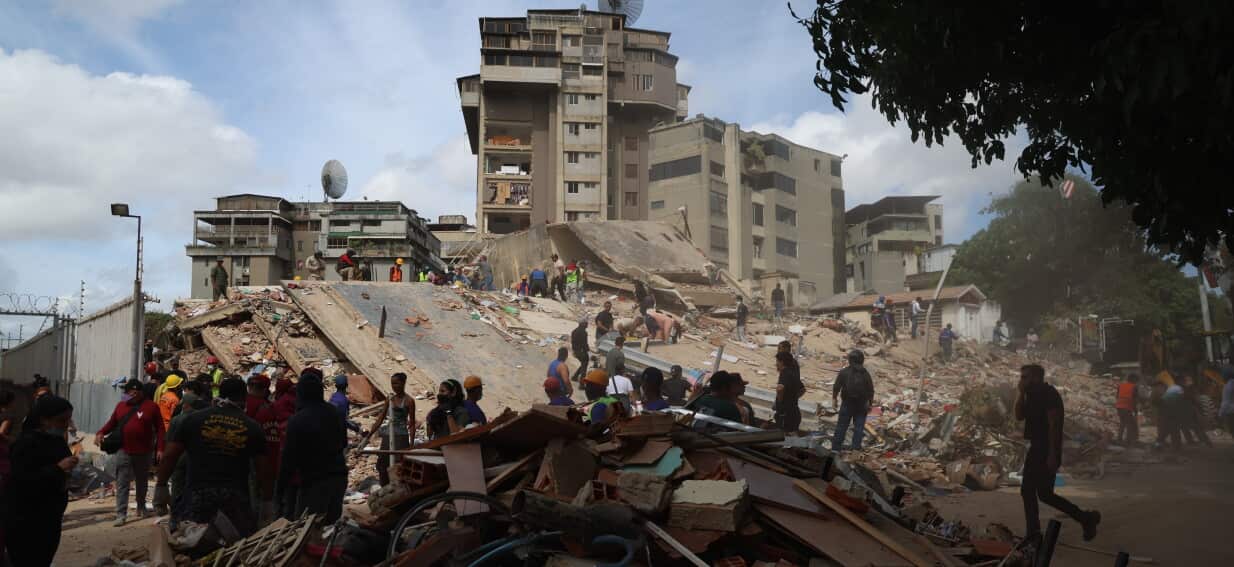
The diplomatic whiplash we are seeing isn't just standard political grandstanding. It has massive real-world consequences for a region that just survived a brutal military escalation. The 12-day war in 2025 saw direct US and Israeli strikes on Iranian infrastructure, including some of their most secretive nuclear installations. Since those bombs fell, Tehran has kept the IAEA completely locked out of its main enrichment sites, particularly the underground facilities near Isfahan.
The global watchdog can still monitor standard commercial operations like the Bushehr nuclear power plant. But they're completely blind when it comes to the real threat. They don't know the exact size of Iran's current uranium stockpile. They can't verify if the centrifuges are still spinning. They have no way of knowing if material is being secretly moved into deep, undetected mountain tunnels.
When Deputy Foreign Minister Kazem Gharibabadi took to social media to push back against Grossi, he wasn't just venting. He stated plainly that access to attacked nuclear sites will only be resolved within a final agreement. He warned Washington that they cannot advance their policies through media hype. This creates an immediate logical paradox for the interim peace deal. How do you execute a confidence-building measure when neither side trusts the other enough to let the inspectors count the centrifuges?
The danger here is that the entire truce relies on a 60-day clock. This timeline was built to give technical teams room to breathe and talk at quiet resorts like Bürgenstock in Switzerland. Instead, the public squabbling is threatening to reignite the broader proxy conflicts. We already saw how fragile this is. Just hours after the verbal disputes peaked, a stray Israeli airstrike hit southern Lebanon, testing the separate, highly volatile ceasefire with Hezbollah. The entire diplomatic structure is linked. If the nuclear inspections deal collapses, the regional ceasefires will likely go down with it.
Breaking Down the 14 Point Memorandum
To understand why both sides think they're right, you have to look at the actual mechanics of the 14-point memorandum of understanding. This isn't a final treaty. It's a temporary framework designed to freeze the conflict and prevent a rapid sprint toward a nuclear breakout.
The most urgent requirement in the text involves the physical reduction of Iran's uranium stockpile. Under the agreed mechanism, Iran must take its highly enriched uranium and dilute it down to much safer, lower levels. This technical process is called downblending. The text explicitly demands that this downblending happen on-site and under the direct, physical supervision of IAEA technicians. This is the exact clause Grossi is pointing to when he says inspections are guaranteed in bold letters. You simply cannot supervise a complex chemical dilution process via a Zoom call. You need boots on the ground.
In exchange for this nuclear concession, the US agreed to provide immediate economic breathing room. Washington consented to waive specific sanctions targeting Iran's vital oil export sector. This allows Tehran to start generating cash immediately to rebuild its war-torn domestic economy. The deal also outlines the reopening of the strategic Strait of Hormuz to commercial shipping, allowing thousands of stranded sailors and billions of dollars in global freight to finally move freely again.
The text also attempts to enforce a total cessation of military operations across all regional fronts. This includes halting the violence in Lebanon and stopping drone attacks from various militias. The problem is that the document leaves the sequencing entirely ambiguous. It doesn't clarify what comes first. Does the IAEA get to walk into the Isfahan tunnels before the oil sanctions are permanently removed? Or does Iran get its economic relief while keeping the padlocks on its enrichment facilities until day 60? That ambiguity is exactly why the deal is currently rotting from the inside out.
The Technical Reality Inside Iran's Nuclear Facilities
To understand the stakes, we need to look at what Iran is actually holding. Before the 2025 conflict, nonproliferation experts estimated that Iran had accumulated enough uranium enriched up to 60% purity to quickly manufacture as many as ten nuclear weapons.
No other country in history has ever enriched uranium to that specific, dangerously high level without maintaining an active military weapons program. While Tehran has consistently claimed its nuclear research is purely peaceful, for medical and energy production, the math tells a different story. Power plants don't need 60% enriched material. Weapons do.
The technical work required to fix this situation is incredibly delicate. The downblending process involves mixing highly concentrated uranium hexafluoride gas with depleted or natural uranium to lower the overall percentage of the fissile isotope. It requires precise measurements, secure facilities, and constant environmental monitoring.
The IAEA needs to verify several critical data points before they can declare the threat neutralized.
- The exact baseline mass of the existing 60% enriched stockpile.
- The operational status of the remaining IR-6 advanced centrifuge cascades.
- The total absence of undeclared nuclear material in nearby underground bunkers.
- The calibration of automated surveillance cameras and electronic seals.
Right now, the international community is operating entirely on guesswork. If Iranian officials are telling the truth, and enrichment activities completely stopped after the 2025 strikes, then an immediate inspection would validate their claims and accelerate sanctions relief. But their refusal to open the doors suggests a deep fear that inspectors will find something unexpected. They might discover that the stockpile is larger than previously reported, or that advanced centrifuges were secretly salvaged from the bombed ruins and moved to deeper locations.
The Real Roadmap Moving Forward
The path out of this diplomatic gridlock requires moving away from loud social media posts and focusing entirely on quiet, incremental verification steps. If either Washington or Tehran insists on a total, immediate victory, the interim agreement will collapse long before the 60-day clock runs out. The technical talks scheduled to resume in Switzerland represent the last realistic chance to save the deal.
Secretary of State Marco Rubio is currently touring the Persian Gulf, meeting with leaders in the United Arab Emirates, Kuwait, and Bahrain. This regional tour is highly strategic. Washington is trying to build a unified regional front to pressure Iran, while also reassuring Gulf allies that the US won't accept a weak verification regime. Pakistan is also playing a quiet but vital role as a mediator, trying to bridge the massive communication gap between the two presidents.
To prevent a total breakdown, the negotiators at Bürgenstock need to implement a phased, step-by-step verification schedule rather than demanding everything at once.
First, Iran must provide a complete, written declaration of its current nuclear inventory to the IAEA, without immediately opening the physical doors to the bombed sites. This creates a benchmark. Second, the US can issue short-term, 30-day waivers on specific oil shipments as a direct reward for that data disclosure. Third, a small team of senior IAEA inspectors must be granted access to the Isfahan site for a limited, 48-hour period solely to verify that the declared stockpile matches reality. Only after that baseline is established can the actual downblending process and full sanctions removal begin.
If both sides refuse to compromise on sequencing, expect a rapid return to military readiness. The regional ceasefires are holding by a thread, and the global energy markets are watching the Strait of Hormuz with intense anxiety. The technical work needs to start immediately. The time for political theater is over. For those tracking global stability, the next move isn't about watching the headlines, it's about watching whether Grossi's team actually boards a flight to Tehran. Use the next few days to watch the oil market indicators and regional troop movements. Those metrics will tell you the truth long before any official press release does.