The headlines make it sound like a sudden, aggressive rush to war. You've probably seen them spinning variations of the same dramatic line: the US military is building a massive, war-ready weapons stockpile on Australia's southeast coast.
But if you look closely at the actual logistics strategy, something else is happening. This isn't a quick reaction to a sudden threat. It's a calculated, expensive shift in how the Pentagon plans to survive a long-distance war with China.
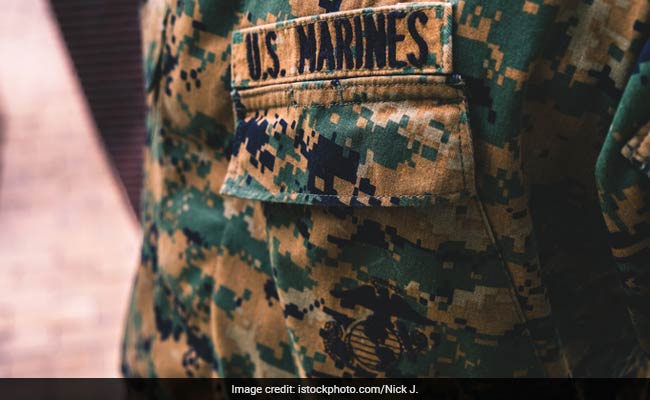
The US Navy recently published tender documents mapping out a 30 million dollar project to construct warehouses and administrative facilities in Victoria, specifically at the Bandiana military base. The goal? A permanent, combat-ready forward provisioning hub for the US Marine Corps, fully functional by 2028.
But why rural southeastern Victoria, thousands of miles away from the likely flashpoints in the South China Sea or the Taiwan Strait?
The answer comes down to geometry, missile ranges, and a brutal truth about modern warfare: the old American strategy of relying on massive, centralized hubs like Guam or Okinawa is a death sentence in a modern conflict.
The Tyranny of Distance and the Death of the Mega-Base
For decades, American military power in the Pacific relied on giant hubs. Places like Camp Humphreys in South Korea or Kadena Air Base in Japan were supposed to act as untouchable staging grounds.
They aren't untouchable anymore.
China's People's Liberation Army (PLA) has spent the last twenty years building a missile inventory specifically designed to wipe those bases off the map on day one of a war. The Lowy Institute, an international security think tank based in Sydney, published research explicitly warning that China's ballistic missiles can comfortably target northern Australia from occupied outposts in the South China Sea.
If northern Australia is vulnerable, Okinawa doesn't stand a chance.
That's why the US military is retreating south to find breathing room. Southeastern Victoria is deep. It's far enough down the globe to sit comfortably outside the reliable strike envelope of most Chinese conventional ballistic missiles. By hiding ammunition, spare parts, and crew-served weapons in Bandiana, the Marines are ensuring they actually have equipment left to fight with if the primary logistics lines are shattered.
It's a shift from efficiency-based logistics to effectiveness-based survival. In a high-end fight, the army with the deeper magazine wins.
Why Australia is Giving Up Its Sovereign Comfort Zone
This buildup isn't entirely frictionless. Australia has a fierce, long-standing policy against allowing foreign military bases on its soil. It's a highly sensitive domestic political topic.
To get around this legal and cultural barrier, the Bandiana facility isn't being labeled an American base. Technically, it's an Australian defense site hosting US forces and gear on rotation. Around 2,000 US Marines already rotate through Darwin every year. This new stockpile just takes that rotational logic and applies it permanently to hardware.
But let's be honest. Sam Roggeveen, the director of international security at the Lowy Institute, pointed out that this development represents a fundamental shift in Australian policy. It ties Canberra explicitly to Washington's strategic goals. If war breaks out, a warehouse full of US Marine Corps weapons on Australian soil turns that geographic coordinate into a legitimate target, hidden or not.
Australia is making a conscious trade: sacrificing a piece of its independent strategic ambiguity in exchange for deep American integration.
Co-Production and Pre-Positioning are Replacing the Assembly Line
If you think this is just about shipping American boxes to Australian sheds, you're missing the bigger picture. This infrastructure ties directly into an aggressive push for local defense manufacturing.
The Pentagon is already running into severe industrial bottlenecks. It can't build missiles fast enough to keep up with global consumption, a reality laid bare by the war in Ukraine. To fix this, Washington and Canberra signed bilateral defense agreements to kickstart domestic Australian manufacturing.
Through Australia's Guided Weapons and Explosive Ordnance (GWEO) Enterprise—backed by a 21 billion dollar government commitment—local facilities are transitioning from storing weapons to actively building them.
- Lockheed Martin Australia is establishing lines to assemble Guided Multiple Launch Rocket Systems (GMLRS).
- Raytheon Australia is handling local capabilities for critical air-defense and strike missiles like the AIM-120 AMRAAM and Sidewinders.
- KONGSBERG Australia is targeting full-rate production of Naval Strike Missiles by 2028.
The Bandiana stockpile will eventually hold weapons that aren't just shipped across the Pacific, but manufactured right in Australia's backyard. This builds a self-sustaining ecosystem. If a conflict cuts off ocean shipping lanes, the US and Australian forces can feed their launchers locally.
The Real Next Steps for Security Observers
If you're tracking defense logistics or Indo-Pacific geopolitical shifts, stop watching the troop movements and start watching the supply contracts. The real indicators of friction won't be political speeches; they'll be infrastructure bids.
Keep a close eye on the construction timelines at Bandiana over the next twelve months as a global defense contractor hires the 110 engineers and safety specialists needed to run the facility. Watch how fast Australia integrates its local GMLRS production lines into the broader US supply network. The speed of that integration will tell you exactly how urgent the Pentagon thinks the timeline for a regional conflict really is.
Australia's Missile Gamble Explains the Logistics Shift is a detailed video analysis that breaks down the structural realities of Australia's Western Sydney defense infrastructure upgrades and how shifting to effectiveness-based logistics changes the power balance in a contested Pacific environment.