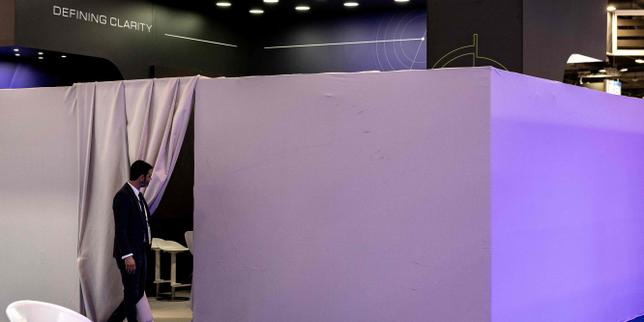
Wooden barriers don't exactly scream high-tech defense diplomacy. Yet, walking through the halls of the Eurosatory defense exhibition outside Paris, that's exactly what you see.
A dozen Israeli defense company booths sit completely blocked off, boarded up overnight like abandoned storefronts. It’s a jarring sight at one of the world's most prestigious land defense expos, and it has triggered a massive diplomatic and commercial row between Paris and Jerusalem. If you found value in this piece, you might want to look at: this related article.
This isn't a random administrative mix-up. It's the latest flashpoint in a bitter, two-year structural breakdown between France and Israel. If you think defense expos are just about showing off hardware and signing contracts, this mess proves they're actually raw geopolitical theater.
The Midnight Lockdown in Paris
The drama unfolded right as Eurosatory opened its doors. Companies like Aeronautics, Controp, Orbit, and Smart Shooter arrived to find their pavilions completely walled off. The show's organizer, Coges Events, confirmed they shuttered 12 stands to enforce strict regulations handed down by the French government. For another look on this development, check out the recent update from NPR.
Here is the kicker: these Israeli firms didn't even try to bring heavy offensive gear.
Weeks before the event, Paris explicitly banned Israel from setting up a national pavilion and blocked government officials from attending. They told Israeli firms they could only show up individually if they strictly displayed air defense and ballistic missile defense capabilities. Offensive weapons were completely off-limits.
According to the affected companies, they jumped through every single hoop. They wiped their displays clean. Dan Slasky, the CEO of Aeronautics, noted his booth was stripped down to nothing but digital screensavers. Inspectors checked the booths twice—once in an unannounced surprise raid—and apparently gave them a green light. Then, hours later, the walls went up anyway.
"They sent an email, like a thief in the night, saying they were going to block the booth," Orbit CEO Daniel Eshchar stated.
While heavy hitters like Israel Aerospace Industries (IAI), Rafael, and Elbit Systems managed to keep their spaces open, their setups are heavily restricted, showing zero physical weapon models to the public.
What is Really Behind the French Friction?
France claims these measures are about political alignment and international humanitarian law, pointing to deep concerns over ongoing military actions in Gaza and Lebanon. Tensions spiked even further after France recognized Palestinian statehood and banned specific far-right Israeli ministers from entering the country.
But look past the official diplomatic talking points, and you see a fierce commercial rivalry.
Israel’s defense ministry didn't hold back, calling the shutdown a cynical, discriminatory move meant to hide Israeli technological superiority from global buyers. The truth is, Israeli defense tech has been eating into European market share. For example, Germany heavily backed the European Sky Shield Initiative, opting to buy Israel’s Arrow 3 missile defense system. France pointedly stayed out of that initiative, preferring to champion domestic, European-made defense alternatives.
By boxing out Israeli firms, France undercuts its biggest commercial rivals on its own soil. It’s a strategy that Israel’s ambassador to France, Joshua Zarka, labeled as completely unfair competition.
A History of Walled-Off Weapons
If this feels like deja vu, that's because it's the fourth time France has tried to squeeze Israeli defense firms out of major trade shows over the last two years.
- Eurosatory 2024: France tried a total ban, which was ultimately overturned by a French commercial court.
- Euronaval 2024: Another attempt to block Israeli exhibitors met a similar fate in court.
- Paris Air Show 2025: Organizers erected black partition walls around booths showing offensive weapons.
- Eurosatory 2026: A highly targeted blockade that effectively shuts down independent subcontractors.
The retaliation has already begun. Israel’s defense ministry completely froze procurement contracts with France. While Israel doesn't buy a massive amount of French military hardware anyway, the move signals a total collapse of institutional trust.
Where Defense Procurement Moves Next
For defense tech firms and international procurement officers, the lesson from Eurosatory is loud and clear: you cannot rely on traditional European hubs to keep business separate from shifting political winds. Relying on host countries that use regulatory red tape to blindside exhibitors is a massive financial and strategic liability.
If you are managing defense partnerships or international sales, it's time to diversify where you do business. Industry insiders are already suggesting a hard pivot toward more predictable venues. The recent ILA exhibition in Germany, for instance, saw massive interest and smooth operations for international teams without the political grandstanding.
Relying on platforms where your multi-million dollar marketing setup can be boarded up overnight is a bad bet. Move your focus, your personnel, and your contract signings to jurisdictions that respect trade show compliance over political optics.