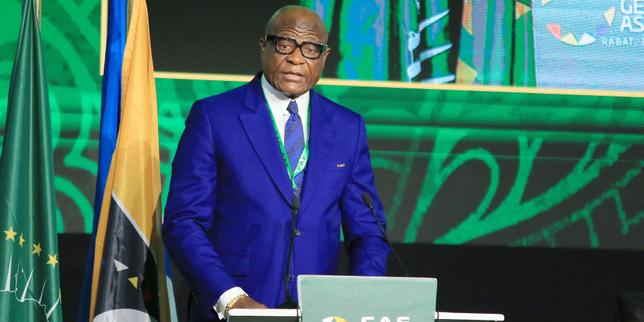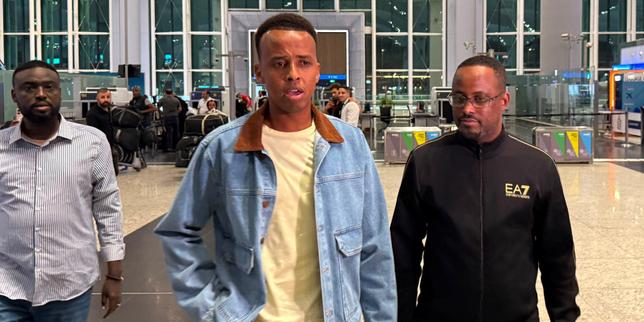
The football media is weeping over Omar Abdulkadir Artan.
If you believe the mainstream narrative bleeding out of the sports pages right now, the Somali referee is the tragic victim of a cold, bureaucratic American machine. The headlines write themselves: a rising officiating star gets denied a visa for the 2026 World Cup in the United States, only to be "rescued" by UEFA and handed the whistle for the European Super Cup. It is framed as a redemption story. A cosmic balancing of the scales. A comforting pat on the back for a referee wronged by geopolitics.
That narrative is completely wrong. It fundamentally misunderstands how elite refereeing works, how UEFA operates, and why the European Super Cup is treated by insiders as one of the most calculating, high-stakes testing grounds in global football.
UEFA is not a charity. Aleksander Čeferin is not running a sanctuary for officials with visa issues. Handing Artan the Super Cup is not an act of pity—it is a calculated, high-pressure evaluation that carries more professional risk than a standard group-stage match in New Jersey or Los Angeles ever would.
The media wants you to look at the bureaucratic red tape. We need to look at the pitch.
The Myth of the Consolation Prize
The lazy consensus across sports journalism right now is that refereeing the European Super Cup is a lesser alternative to working a World Cup. The underlying assumption is that international tournaments represent the absolute pinnacle of the profession, while a single-match European showpiece between the Champions League and Europa League winners is merely a glamorous exhibition.
I have spent years analyzing referee development structures and discussing assignment mechanics with former FIFA-listed officials. Let me break the illusion: for a referee's long-term career trajectory, a European Super Cup is often significantly more critical than officiating a group-stage match between two mid-tier nations in a expanded 48-team World Cup.
At a World Cup, a referee from a smaller confederation is often protected by the sheer volume of fixtures. They are eased in. They get a low-stakes group match where the tactical speed is predictable and the global scrutiny is diffused across eight other games happening that same week. If they make a mistake, it is buried in the noise of a massive tournament.
The Super Cup offers nowhere to hide. It is a standalone, global broadcast featuring the two most tactically sophisticated club teams on the planet. The speed of play in a match involving the Champions League winners is demonstrably faster, more cynical, and more demanding than 90% of international football.
To call this assignment a "consolation" is an insult to the rigor required to manage it. UEFA did not give Artan this match to make him feel better. They gave it to him to see if he survives the absolute highest level of tactical intensity.
The Geopolitical Blind Spot
The public outrage surrounding Artan’s visa denial ignores the cold reality of international sports governance. When a state department denies a visa, football federations do not throw tantrums; they pivot.
"The assumption that football merit overrides state sovereignty is a luxury only fans can afford to believe."
The United States immigration system does not care about FIFA's scheduling. It does not care about a referee’s rising status in the Confederation of African Football (CAF). Whether it was a paperwork error, a diplomatic snag, or a strict adherence to regional quotas, visa denials happen to elite athletes and officials every single year.
The mistake the media makes is assuming this denial damages Artan’s career permanently. History shows the exact opposite. When top-tier officials miss tournaments due to administrative failures or administrative blockades, their home confederations and regional bodies often accelerate their development elsewhere to ensure their top talent does not rust.
UEFA assigning a non-European referee to a major match is rare, but it is a strategic mechanism used to maintain global refereeing standards. By stepping in, UEFA is securing a premium asset, testing his adaptability in a foreign confederation, and capitalising on a world-class official who suddenly has a completely clear schedule. It is a pragmatic talent acquisition strategy, not a human rights intervention.
Why the World Cup Expansion Is Diluting Referee Quality
Everyone is asking the wrong question. The press is asking: How could the US let a World Cup referee get turned away?
The real question we should be asking is: Why are we pretending the 2026 World Cup referee pool is an unassailable standard of excellence?
With the World Cup expanding to 48 teams, the tournament requires an unprecedented number of match officials. To fill those slots, FIFA has to dig deeper into regional pools, often selecting referees who have rarely, if ever, managed matches featuring high-pressing, elite European club tactics.
The expansion has diluted the product. The group stages of the 2026 World Cup will feature matches that mimic the quality of secondary continental tournaments rather than elite knockout football.
By contrast, the European Super Cup remains pure. It is concentrated essence of elite club football. If you want to see pure officiating capability—decisions made under intense pressure, management of world-class egos, navigating complex tactical fouls—the Super Cup is a far superior metric than a diluted World Cup group stage match.
Artan missing out on the American tournament is a logistical annoyance for him, certainly. But from a purely technical standpoint, controlling the tempo of the Super Cup does more for his actual development than refereeing a mismatch in a suburban American gridiron stadium ever could.
The Brutal Reality of the Super Cup Whistle
Let's address the structural pressure of this assignment.
When a referee takes the pitch for the Super Cup, they are dealing with players who play together 50 times a year. The chemistry, the systemic diving, the calculated dissent, and the tactical fouling are highly coordinated. International refereeing, by comparison, is often slower because national teams lack that exact club-level synchronization.
If Artan succeeds in the Super Cup, he establishes himself as an elite global commodity who can transcend continental boundaries. If he fails—if he misses a critical VAR intervention or loses control of the match’s temperature—the narrative flips instantly. The same pundits calling his assignment a beautiful redemption story will claim he was out of his depth and unsuited for European speeds.
That is the knife-edge UEFA has placed him on.
- Tactical Speed: Club football transitions happen in fractions of a second compared to international play.
- Player Dissent: Elite club players employ sophisticated psychological pressure tactics on referees that require immense emotional intelligence to neutralize.
- Global Spotlight: As a standalone fixture, every single decision will be dissected by every major sports network concurrently.
This is not a reward. This is an administrative crucible.
Stop Treating Elite Referees Like Victims
The broader issue here is the infantilization of sports officials by the media whenever bureaucratic hurdles arise. Omar Abdulkadir Artan is an elite professional operating at the absolute peak of a cutthroat industry. He does not need sentimental columns framing him as a victim of geopolitical misfortune.
He is a referee who faced a logistical roadblock, adjusted his trajectory, and landed one of the most prestigious, high-intensity single-match assignments in the world.
The media needs to stop mourning his missed American vacation. The real test isn't getting past a border agent in New York; it's managing 22 world-class athletes under the lights in Europe without letting the game spiral out of control.
Forget the visa. Watch the whistle. Everything else is just noise.