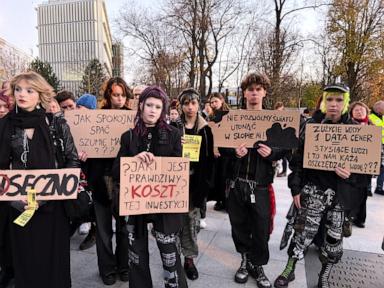
Activists in Amsterdam recently stormed a Microsoft data center, convinced they were striking a blow against big tech greed and resource hoarding. The mainstream press ate it up. Every coverage piece framed this as a classic David-versus-Goliath clash—local communities fighting off greedy American hyperscalers stealing their water and electricity.
That narrative is lazy, emotionally satisfying, and completely wrong. Meanwhile, you can explore other events here: The Quiet Pulse Beneath the Red Dust (And Why Mars Might Still Be Alive).
I have spent over a decade consulting on high-density server deployments and grid interconnection agreements across the European Union. I have seen companies blow millions of euros trying to navigate municipal permitting labyrinths while local politicians play both sides of the fence. The protesters chaining themselves to gates in North Holland are not stopping the climate crisis or saving the Dutch power grid. They are performing theater for cameras while the real architects of Europe’s energy bottleneck walk away untouched.
The Lazy Consensus on Hyperscale Resource Theft
Mainstream tech journalism loves a simple villain. When activists breach a facility in the Wieringermeer polder, reporters immediately dust off the standard talking points: data centers consume massive amounts of electricity, evaporate millions of liters of drinking water, and strain aging municipal grids. To explore the complete picture, check out the recent article by Ars Technica.
Here is what those articles conveniently leave out. Modern hyperscale facilities in Northern Europe are among the most ruthlessly efficient industrial operations on the planet. When a facility runs at a Power Usage Effectiveness (PUE) of 1.15 or lower—standard for new builds in the Netherlands and the Nordics—virtually every watt entering the building goes directly into computation, not wasted heat. Compare that to the legacy, on-premise server closets sitting inside European banks, hospitals, and government ministries right now, which regularly operate at a PUE above 2.0.
By protesting modern hyperscalers, activists are effectively demanding that Europe keep its digital infrastructure fragmented inside inefficient, power-guzzling basements.
And let us talk about the water myth. Media reports love citing peak summer cooling numbers as if data centers run at maximum evaporative capacity 365 days a year. In reality, facilities in Amsterdam’s climate rely on free-air cooling—using cool ambient outside air—for over 80% of the year. When Microsoft or Google uses water in Northern Europe, it is increasingly closed-loop systems or greywater treated from industrial runoff, not the tap water coming out of a resident's kitchen sink.
Who Actually Broke the European Power Grid
If big tech is not the primary villain, why is the Netherlands facing severe grid congestion? Why are housing developments and local businesses being told they cannot get power connections until the 2030s?
Look at Brussels and The Hague, not Redmond.
For twenty years, European energy policy prioritized decommissioning baseload power generation—coal and nuclear—faster than transmission operators like TenneT could build out high-voltage interconnects for intermittent wind and solar. Regulators spent a decade patting themselves on the back for generation targets while ignoring transmission math. You cannot plug gigawatts of offshore North Sea wind into a distribution network designed in the 1970s without massive copper upgrades.
When politicians realized the grid was buckling, they needed a scapegoat. Blaming decades of regulatory failure and NIMBYism against high-voltage power lines is political suicide. Blaming foreign tech giants is an easy win.
Imagine a scenario where every single hyperscale data center in the Netherlands shut down tomorrow morning. Would Dutch grid congestion vanish? No. The bottleneck is fundamentally a distribution and substation capacity failure driven by simultaneous electrification of heating (heat pumps) and transport (EVs) without corresponding transmission investment. Protesters breaking into server farms are attacking the symptoms of European infrastructure paralysis while giving the lawmakers who caused it a free pass.
Do Data Centers Really Steal Electricity From Local Homes
Let us dismantle the most common question circulating on social media every time a protest makes headlines: Are tech companies taking power away from residential neighborhoods?
No. Power grids do not work like a shared glass of water where one person drinking leaves less for everyone else.
Industrial hyperscalers do not just plug into a wall outlet and drain the neighborhood transformer. To get a connection above 10 megawatts in Europe, a developer must sign a multi-year grid capacity agreement, fund dedicated substation infrastructure, and often underwrite long-term Power Purchase Agreements (PPAs) that finance brand-new renewable energy projects.
Without hyperscale tech buyers signing 15-year guaranteed off-take contracts, half the wind farms in the North Sea and solar arrays in Spain would never have secured bank financing. Tech companies are the single largest corporate buyers of renewable energy in Europe. They are literally paying to build the green generation capacity that activists claim to champion.
The Dirty Secret Protesters Ignore
Here is the nuance that both corporate PR teams and anti-tech activists refuse to touch: You cannot protest the hardware while addictively consuming the software.
Every person livestreaming a protest from a data center fence in Amsterdam is routing video packets through edge servers, cloud storage buckets, and AI content-moderation pipelines. Europe wants the perks of a modern digital economy—instant banking, streaming entertainment, AI medical diagnostics, remote work—without hosting the physical machines required to run them.
This is digital NIMBYism at its worst.
If Europe regulates or protests hyperscale infrastructure out of Amsterdam, Frankfurt, and Dublin, the compute demand does not magically disappear. It simply migrates to jurisdictions with weaker environmental standards, dirtier coal-heavy grids, and zero oversight. Pushing data centers out of the Netherlands increases global carbon emissions while stripping European nations of digital sovereignty.
Do I think hyperscalers are saints? Hardly. I have sat across the table from cloud executives who lowball municipal water estimates during early zoning meetings and hide behind aggressive NDAs to obscure their true expansion roadmaps. When tech giants buy up agricultural land under shell companies, they earn the public distrust they get.
But transparency failures in zoning do not justify sabotaging critical infrastructure.
What Happens If Europe Actually Wins This Fight
Suppose the protesters get their wish. Suppose moratoria on new data centers become permanent across the FLAP-D markets (Frankfurt, London, Amsterdam, Paris, Dublin). Here is what happens next:
- Latency spikes for European businesses. Financial trading, industrial automation, and real-time healthcare applications suffer when data has to round-trip across borders to reach available compute.
- European AI startups die on the vine. Training and running inference on large models requires localized, high-density GPU clusters. Without domestic capacity, European founders are forced to rent compute abroad at higher costs and navigate cross-border data compliance nightmares under GDPR.
- Energy transition slows down. Without corporate PPAs from massive data center operators, utility developers lose their most creditworthy anchor tenants, stalling new wind and solar construction.
Stop Chaining Yourselves to Fences and Fix the Real Bottleneck
If activists, journalists, and policymakers actually want sustainable digital infrastructure in Europe, they need to stop treating data centers like toxic waste dumps and start treating them like industrial utilities.
First, mandate district heating integration. A data center is essentially a giant heater that does math as a byproduct. Instead of venting low-grade waste heat into the atmosphere or evaporating water to cool it, municipalities should force developers to pipe that thermal energy directly into neighboring residential heating networks and agricultural greenhouses. Denmark and Sweden already do this at scale; the rest of Europe is dragging its feet because municipal heating utilities refuse to update their billing models.
Second, force grid-interactive UPS systems. Every hyperscale facility houses massive banks of lithium-ion batteries and backup generators that sit idle 99.9% of the year. Regulators should require operators to integrate those battery arrays into the national grid as virtual power plants, stabilizing frequency drops when wind and solar generation fluctuates.
Third, reform permitting for high-voltage transmission. Stop letting local councils block power lines for eight years while approving millions of electric vehicles.
Breaking through a security perimeter in Amsterdam makes for dramatic photography, but it will not pour a single ton of copper into the Dutch transmission network or heat a single apartment block this winter. You cannot build a green, sovereign European economy by smashing the physical engines of the modern world.