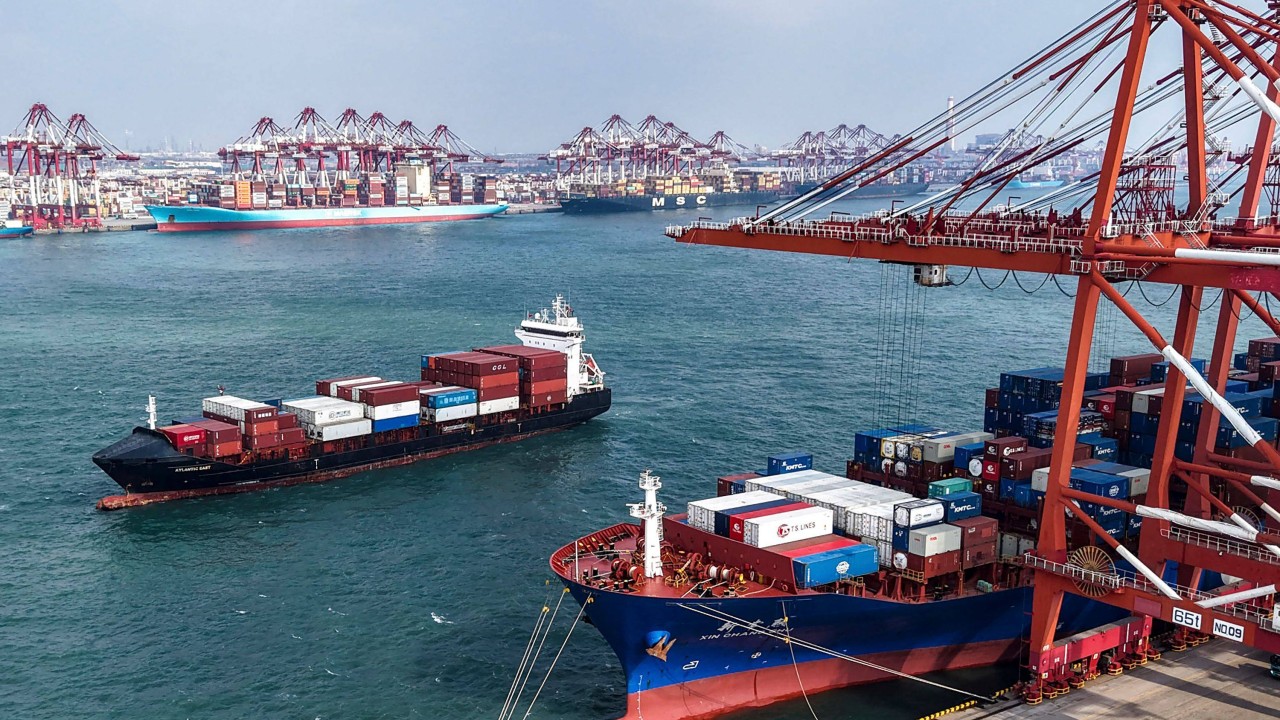
Europe is staring at an industrial graveyard. If you think that’s an exaggeration, just look at the solar industry. It didn't just shrink; it vanished. Now, the same script is playing out in electric vehicles, wind turbines, and high-end machinery. For decades, the European Union played the "good student" of global trade, sticking to the rules while everyone else cheated. But as of March 2026, the game has changed. A wave of influential think tanks and officials is finally saying the quiet part out loud: the EU must weaponize its massive internal market against China or prepare for a total manufacturing collapse.
The logic is simple. China isn't playing by market rules. It’s running a state-led industrial machine designed to produce more than its own people can ever buy. This isn't just "efficiency." It's a calculated strategy of overcapacity. When Chinese factories churn out twice as many EVs or steel beams as their domestic market needs, that surplus has to go somewhere. It lands on European shores at prices no local firm can match. You aren't competing with a Chinese company; you're competing with the Chinese Treasury. Discover more on a connected subject: this related article.
The Industrial Accelerator Act and the End of Naive Trade
Brussels is finally ditching its "open for all" mantra. The newly proposed Industrial Accelerator Act is the first real sign that the EU is growing teeth. This isn't just another boring regulation. It’s a doctrinal shift that would have been unthinkable two years ago.
At its core, the Act introduces a "Made in EU" threshold. To get a government subsidy or win a public contract for electric vehicles, at least 70% of the component value must be manufactured within the EU. It’s a direct hit to the Chinese business model of assembling "European" cars using 90% Chinese parts. If you want access to the world’s most lucrative consumer bloc, you have to build here. Additional analysis by Business Insider explores similar views on the subject.
It’s basically a "buy European" mandate with a geopolitical twist. Critics call it protectionism. Supporters call it survival. Honestly, it’s both. But when your competitor uses state-backed loans to keep loss-making factories running just to kill off your industry, playing fair is just a slow form of suicide.
Why 2026 is the Breaking Point
We’ve reached a point where "de-risking" is no longer a buzzword; it’s an emergency. Recent data from 2025 shows the EU’s trade deficit with China hitting a record €400 billion. That isn't just a number on a spreadsheet. It represents millions of jobs and the technological sovereignty of an entire continent.
The "China Shock" 2.0 is hitting harder than the first one. In the early 2000s, Europe lost low-end textiles and toys. Today, it’s losing the very things it’s supposed to be best at: cars and high-precision engineering. Look at the numbers. Chinese-made wind turbines are now 30% cheaper than European ones. Not because the tech is better, but because the financing is basically free.
The Overcapacity Trap
China’s manufacturing sector accounts for roughly 25% of its GDP, compared to about 14% in the EU. They’ve built an economy that requires the rest of the world to stay in a permanent state of under-consumption.
- Subsidized Energy: Chinese firms often get electricity at a fraction of the cost paid by German manufacturers.
- Cheap Land: Local governments in China provide land for "strategic" factories at near-zero cost.
- Forced Technology Transfer: If you want to sell in China, you give up your IP.
Europe’s mistake was thinking China would eventually "become like us" as it got richer. It didn't. Instead, it used the profits from the global trade system to build a system that seeks to replace it.
Lessons from the Draghi Report
Mario Draghi’s landmark report on competitiveness, released in late 2024 and still the bible for EU policymakers in 2026, warned that Europe faces an "existential challenge." He didn't mince words. He called for €800 billion in annual investment to keep pace with the US and China.
Draghi’s point was clear: Europe’s market is its only real weapon. If the EU doesn't use its regulatory power to favor local production, it won't have the tax base to fund its social model. You can't have a Swedish-style welfare state on a service-only economy. You need factories. You need high-paying blue-collar jobs.
The Reciprocity Assessment
The EU is now moving toward a "Reciprocity Assessment." Basically, if a country blocks European firms from its public tenders, the EU will block that country’s firms from ours. It sounds fair, right? But for the EU, this is a radical departure from the "Global Britain" style of hyper-openness. It's an admission that the rules-based order is broken.
The Internal Friction Problem
Of course, not everyone in Europe is on board. Germany is terrified. German automakers like Volkswagen and BMW still sell a massive chunk of their cars in China. They fear that if Brussels gets too aggressive, Beijing will retaliate by shutting them out.
But here’s the reality: China is already shutting them out. Domestic Chinese brands like BYD and Xiaomi are eating the German giants' lunch in the Chinese market. Protecting the status quo isn't a strategy; it’s a delay tactic. France, on the other hand, is leading the charge for a "Fortress Europe" approach. They’ve seen their auto suppliers lose half their workforce in a decade. They know that once a manufacturing base is gone, it’s gone forever. You don't just "re-skill" a whole generation of factory workers into TikTok influencers.
How to Actually Weaponize the Market
So, what does "weaponization" look like in practice? It’s not just about tariffs. It’s about being smarter with the tools already on the table.
- Dynamic Procurement: Stop giving public contracts to the lowest bidder if that bidder is a state-owned enterprise from a non-market economy. Price in the "security risk" and the carbon footprint of shipping goods halfway across the planet.
- Carbon Border Adjustment Mechanism (CBAM): Use environmental standards as a trade tool. If a Chinese steel plant doesn't pay for its carbon emissions, it should pay a massive tax at the EU border.
- Export Controls on Tech: Stop the leakage of high-end machinery and AI hardware. If they want the tools to build the future, they have to let us compete on a level playing field.
- Sovereign Wealth Funds: Europe needs a massive, centralized fund to match Chinese subsidies. We can't let 27 different countries fight over crumbs.
The "Made in Europe" push is a gamble. It will make some things more expensive in the short term. Your next EV might cost 10% more. But the alternative is far more expensive. The cost of a collapsed industrial base—mass unemployment, social unrest, and total dependence on a strategic rival—is a price Europe can't afford to pay.
The next few months will be decisive. As the Industrial Accelerator Act moves through the European Parliament, expect massive lobbying from both Beijing and the industries that rely on cheap Chinese imports. But for the first time in decades, the momentum is with the "industrialists." Europe is finally realizing that if it doesn't fight for its market, it won't have a market left to defend.
If you're an investor or a business owner, you need to prepare for a much more protected European economy. Supply chains that were built on "just-in-time" delivery from Asia are becoming "just-in-case" assets located within the Schengen zone. Diversify your suppliers now. The era of cheap, state-subsidized Chinese imports is coming to a messy, necessary end.