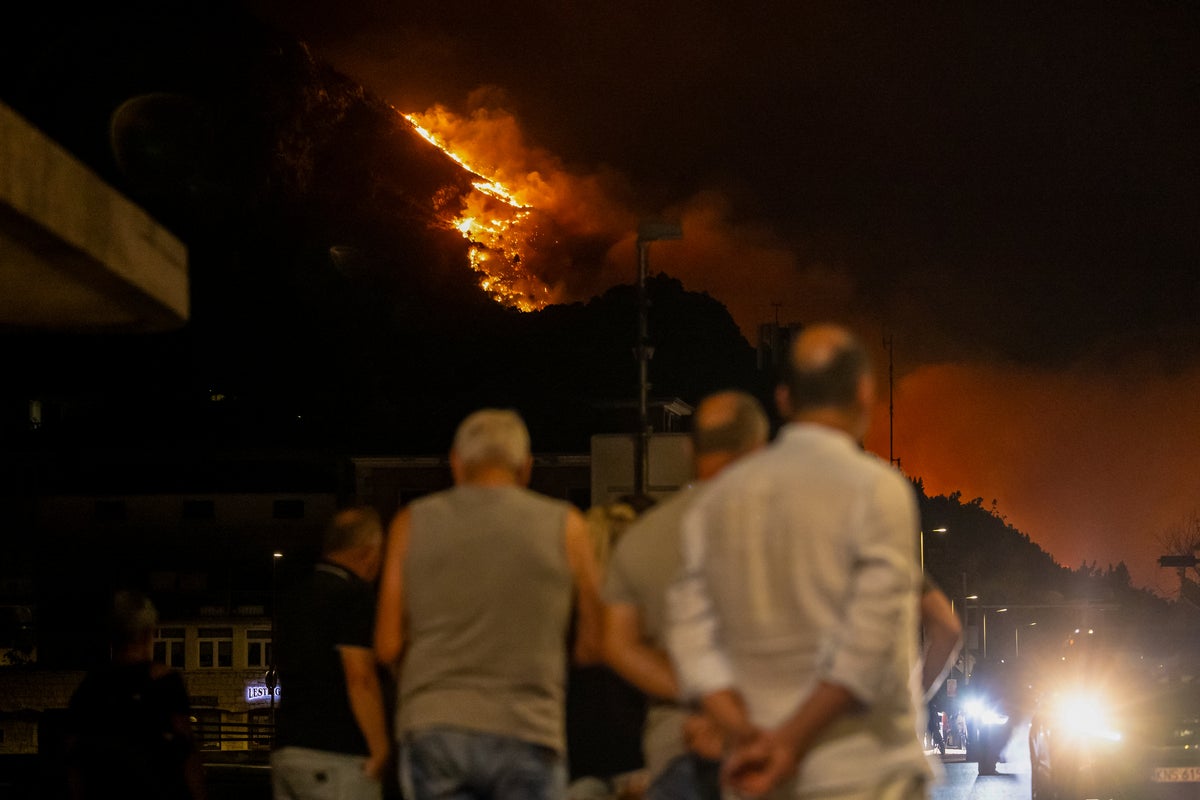
Every July, the media machine spins up the same recycled panic. Headlines shriek about Europe getting pummeled by relentless heat waves, turning ancient capitals into modern ovens, and forcing tourists to flee Mediterranean beaches. Experts on television wave their hands over angry red weather maps, blaming carbon emissions, blocking high-pressure systems, and our collective failure to live sustainably.
It is lazy journalism, sloppy science, and outright geographic illiteracy. Discover more on a related topic: this related article.
Europe is not suffering from abnormal meteorological torment. Europe is suffering from a massive design flaw combined with institutional stubbornness. I have spent two decades consulting on infrastructure resilience across the continent, and I have watched cities blow billions on panic-driven PR campaigns while ignoring the most basic laws of urban physics.
The lazy consensus says the atmosphere is out to get Europe. The reality is that Europeans built a civilization designed for perpetual autumn and refuse to admit that geography, not carbon alone, dictates modern survival. More reporting by The Washington Post highlights comparable views on the subject.
The Myth of the Accidental Inferno
Let us start with the core deception. When a thermometer in Seville or Athens hits 42°C, the collective panic button gets slammed. We are told this is unprecedented, apocalyptic, and entirely unprecedented in human history.
It is none of those things.
Southern Spain, interior Portugal, and parts of Greece have always been hot. They sit on the same latitude as parts of California and North Africa. Andalusia is meant to be blistering in August. That is not a climate crisis anomaly; that is standard Mediterranean climatology.
What changed is not the sun, but the architecture.
During the post-war building boom, European developers abandoned centuries of vernacular architecture in favor of the international glass-and-steel box. They imported skyscrapers from Chicago and curtain-wall office parks from Frankfurt, dropping them into environments drenched in relentless sunshine. Then they acted shocked when those buildings turned into greenhouses.
I’ve walked through historic quarters in Seville where narrow streets, high thermal mass stone walls, and strategic courtyards keep ambient temperatures livable without a single watt of grid electricity. Walk two hundred meters into the twentieth-century expansion zones, and you hit a wall of radiating concrete and sealed glass that traps heat like a baked potato in foil.
The heat wave narrative is a convenient distraction. It shifts blame from terrible municipal planning to an abstract global villain.
Why Your Questions Are Flawed
When people search for why Europe keeps cooking, they ask the wrong questions entirely. They ask: Why are European summers getting hotter? or Why doesn't Europe have air conditioning?
Both questions miss the mark.
First, asking why summers are getting hotter ignores the urban heat island effect, which turns concrete jungles into thermal traps entirely independent of regional background temperatures. When you pave over every square meter of topsoil with dark asphalt and seal buildings in reflective glass, you create local microclimates that skew every meteorological dataset.
Second, asking why Europe lacks air conditioning reveals a profound misunderstanding of energy economics and thermodynamics. The knee-jerk American solution to heat is to blast air conditioning everywhere, turning every indoor space into a meat locker. Europe resisted this for decades, not purely out of stubborn eco-piety, but because the electrical grids simply cannot handle the simultaneous peak load of universal mechanical cooling.
If every apartment block in Rome or Paris fired up a cheap window unit at two o'clock on a Tuesday afternoon, the local transformers would detonate. I have seen municipal grids buckle under the strain, plunging entire districts into darkness precisely when the cooling is most critical.
More importantly, slapping an air conditioner onto a poorly insulated building is a fool's errand. You are pumping indoor heat outside, heating up the immediate street canyon, which forces your neighbor to crank their unit even higher. It is a thermodynamic death spiral.
The Architectural Betrayal
Europe’s real failure is the wholesale abandonment of passive survival strategies in favor of mechanical crutches.
For generations, Mediterranean and continental builders understood thermal lag. They used thick stone, high ceilings, exterior shutters, and cross-ventilation. These were not primitive choices; they were sophisticated responses to local climate realities.
Then came the obsession with modernism. Planners stripped exterior shutters off historical facades because they looked messy. They installed single-pane glass that acts as a thermal magnifying glass. They paved courtyards that used to contain shade trees and fountains, turning them into unshaded parking lots.
When you strip a city of its passive defenses, you make it dependent on fossil fuels just to maintain basic habitability. Then, when the grid strains and fossil fuel prices spike, the population panics.
Admitting this flaw requires taking responsibility for decades of bad zoning laws and architectural vanity. It is much easier to blame the jet stream.
Unconventional Solutions That Actually Work
If you want to fix urban heat in Europe, stop waiting for global carbon treaties to kick in. Stop throwing tax money at subsidized window units that break the grid.
Here is what actually works:
- Mandatory Exterior Shading: Interior blinds are useless once sunlight passes through glass. The heat is already inside your envelope. Cities must mandate external louvers, awnings, and traditional shutters on all residential and commercial facades.
- Radical Depaving: Asphalt absorbs solar radiation and radiates it back out long after sunset. European municipalities need to rip up unnecessary pavement and replace it with permeable surfaces, native vegetation, and unpaved soil that allows natural evaporative cooling.
- Night-Purge Ventilation: Buildings need automated nocturnal ventilation systems that flush out daytime heat with cool night air, utilizing structural thermal mass to absorb coolness for the next day. This requires changes to building codes that currently prioritize acoustic sealing over airflow.
- Water Infrastructure Revival: Bring back public fountains, reflective pools, and misting corridors. Water is the most efficient natural thermal buffer on earth, yet modern planners treat it as an aesthetic luxury rather than a public health necessity.
My contrarian approach has a major downside, of course. It is expensive, disruptive, and requires telling property owners and municipal councils that their beloved modern glass boxes are architectural failures. It demands retrofitting millions of buildings with low-tech solutions that lack the sleek sexiness of a smart thermostat or a sleek solar panel array.
People hate being told that the solution to a high-tech problem is often a low-tech, ancient intervention. They want a gadget to save them. They want a policy declaration to lower the temperature.
The Bottom Line
Europe is not a victim of atmospheric malice. It is a victim of its own modern design arrogance.
Stop checking weather maps for apocalyptic red zones. Stop blaming the clouds for doing what they have done for millennia.
Tear down the glass facades, put the shutters back on the windows, rip up the asphalt, and design cities for the climate you actually live in, not the one you wish you had.
Or keep sweating, keep panicking, and keep wondering why your air conditioner bill just bankrupted you while the stone houses down the street stay cool without a single wire.
The choice is yours.