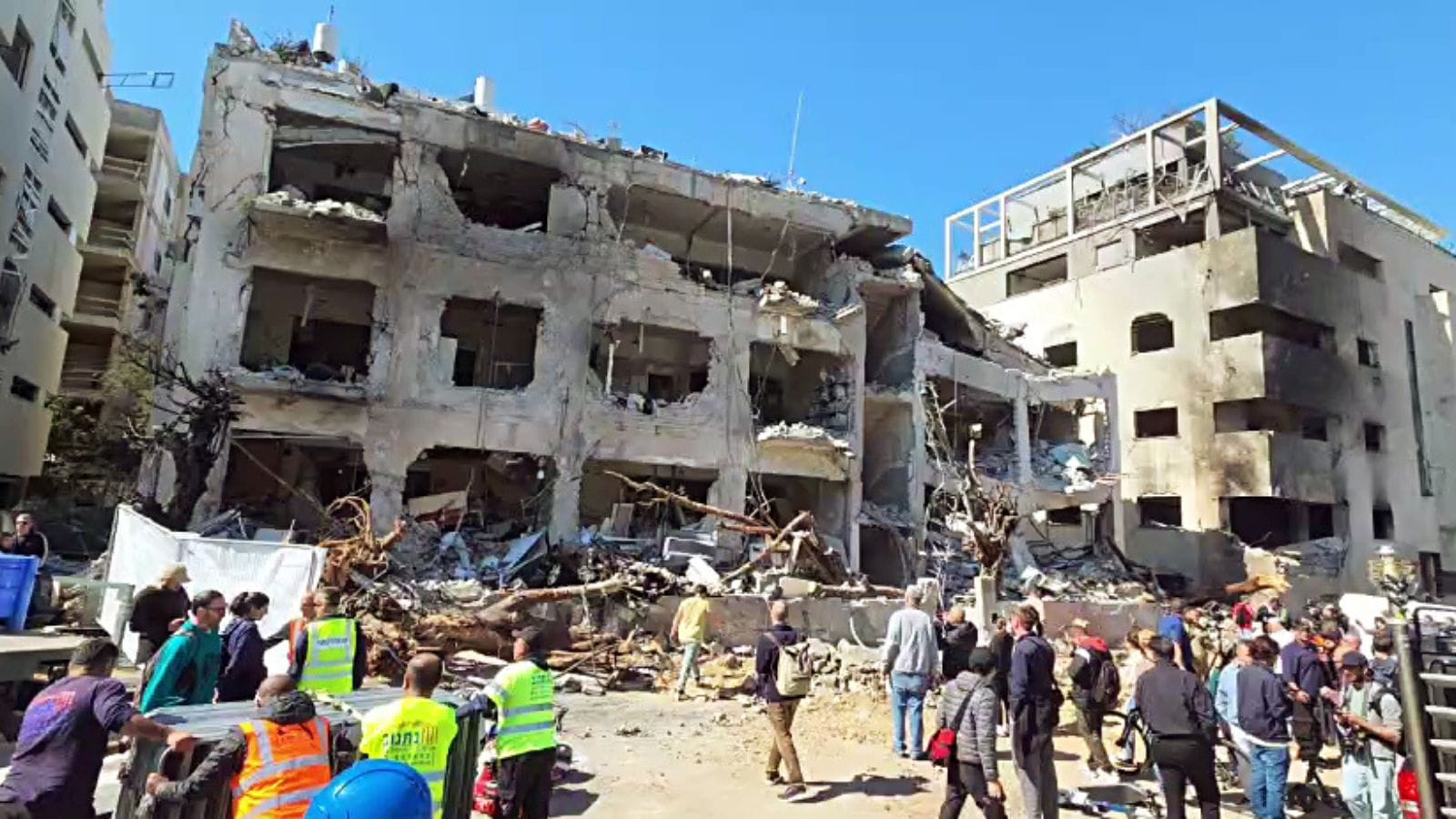
The sirens in Tel Aviv don't just sound like a warning. They sound like a shift in history. Last night, the abstract threat of a regional shadow war turned into a concrete nightmare of shrapnel and smoke. While the headlines focus on the tactical exchange, the ground reality is much grimmer. At least 9 people are dead in Israel and more than 100 others are nursing wounds after Iran launched a massive retaliatory strike that bypassed layers of sophisticated defense systems.
This isn't just another flare-up. It's a fundamental break in the "rules of engagement" that have kept the Middle East on a shaky life-support system for decades. If you've been following the news, you know the cycle of strikes and counter-strikes usually happens in the dark, through proxies. Not anymore. This was direct. It was loud. And for the families of the nine who didn't make it to a shelter in time, it's a permanent scar on a region already bleeding from too many directions.
The Night the Shield Cracked
For years, the narrative has been that Israel's multi-tiered defense—Arrow, David’s Sling, and the famous Iron Dome—was nearly impenetrable. Last night proved that "nearly" is a dangerous word. When Iran launched its swarm of ballistic missiles and suicide drones, the sheer volume was designed to saturate the sensors.
It worked, at least partially.
While the Israeli Defense Forces (IDF) claim a high interception rate, the nine fatalities occurred in areas where debris or direct hits struck residential structures. We aren't just talking about military outposts. We’re talking about living rooms in suburbs. The 100-plus injured aren't just soldiers; they're civilians who were caught in the panicked rush to reinforced rooms or hit by glass shattered by the supersonic shockwaves of interceptions overhead.
Why the Interception Rate Matters Less Than You Think
Military analysts often get bogged down in percentages. They'll tell you a 90% success rate is a miracle. But in a dense urban environment, that remaining 10% is catastrophic.
- Saturation Tactics: Iran used a "layered" attack. Drones go first to distract the radars. Cruise missiles follow to hug the terrain. Ballistic missiles come last, screaming down from the atmosphere.
- Falling Debris: Even a "successful" interception sends hundreds of pounds of hot metal raining down on neighborhoods.
- Psychological Exhaustion: You can't underestimate the toll of spending six hours in a bunker while the sky literally explodes above you.
Understanding the Iranian Motivation
To understand why Tehran took this gamble, you have to look at the Damascus strike from weeks ago. Iran felt backed into a corner after its high-ranking IRGC officials were targeted. In the world of Middle Eastern geopolitics, silence is seen as weakness.
Tehran’s leadership felt they had to "restore deterrence." But there’s a massive irony here. By trying to look strong, they’ve invited a level of scrutiny and potential Western alignment against them that hadn't been seen in years. They traded long-term diplomatic maneuvering for a single night of fire. It’s a move that feels more like desperation than a calculated chess play.
The Human Toll Behind the Statistics
Numbers are cold. Nine dead. 100 injured.
But when you look at the reports coming out of the hospitals in Jerusalem and Tel Aviv, the picture gets messy. Many of the injuries are "indirect"—heart attacks from the stress, falls during the scramble for safety, and severe respiratory issues from the smoke of downed projectiles.
The physical damage to infrastructure is also significant. We’re seeing reports of hit roads, power lines, and at least one school that, thankfully, was empty at the time of the strike. The economic cost of a single night like this runs into the billions when you factor in the cost of the interceptor missiles (each Tamir interceptor for the Iron Dome costs around $50,000, while the Arrow missiles used for ballistics cost millions each).
The Reality for Civilians
Imagine you're a parent in Haifa. You have exactly 60 to 90 seconds from the moment the siren wails to get your kids out of bed and into a safe zone. You don't have time to grab shoes. You just run. This is the daily reality that has now been amplified by the scale of Iran’s direct involvement. The "retaliatory" nature of the strike doesn't matter to someone picking glass out of their child's arm.
What the Media Is Missing
Most outlets are reporting this as a win or loss based on the body count. That's a mistake. The real story is the logistics of the escalation.
Iran didn't just fire from its own soil; it coordinated with groups in Lebanon, Yemen, and Iraq. This was a "ring of fire" test. They wanted to see if they could overwhelm the regional radar network. The fact that nine people died despite Israel having the most advanced air defense on the planet suggests that no matter how much tech you have, a determined adversary can still draw blood.
Furthermore, the role of Jordan and the US in the middle of this shouldn't be ignored. Reports indicate that US and British jets were active in the skies over the region, picking off drones before they even reached Israeli airspace. This wasn't just Israel vs. Iran. This was a coalition effort to prevent a total collapse of the regional order.
The Strategy of No Return
We’re now in a cycle where "proportionality" is a dead concept. Israel has signaled that any direct hit from Iranian soil would be met with a direct response on Iranian soil. Tehran has said the matter is "concluded" unless Israel strikes back.
But it’s never concluded.
The 100 injured people are currently being treated, and as they tell their stories, the domestic pressure on the Israeli government to "end the threat" grows. It’s a political pressure cooker. If the government doesn't respond, they look weak to their base. If they do respond, we could be looking at a full-scale war that drags in every major power in the world.
The Miscalculation Risk
The biggest danger right now isn't a planned invasion. It's a mistake. A stray missile hitting a holy site or a hospital could trigger a chain reaction that nobody can stop. Last night’s nine deaths were a tragedy, but they were also a warning. We are one bad night away from a conflict that makes the last few decades look like a preamble.
Preparing for What Comes Next
If you're watching this from the outside, it’s easy to feel detached. But the global markets are already reacting. Oil prices are twitchy. Shipping routes are being rerouted. The world is smaller than we like to admit.
For those in the region, the next steps are practical and harrowing.
- Stockpiling Basics: Families are being told to keep 72 hours of water and non-perishables ready.
- Digital Readiness: Keeping power banks charged and emergency apps updated is now as routine as checking the weather.
- Psychological First Aid: The long-term trauma of these strikes will outlast the physical repairs.
The nine lives lost last night won't be the last if the current trajectory continues. The shift from proxy war to direct confrontation is a bell that can’t be un-rung. Everyone is waiting for the next move, but the smart money is on a period of intense, nervous tension where every flight on radar is treated as a potential start of the end.
The immediate priority for anyone in the impact zone is clear. Don't wait for the next siren to check your shelter's ventilation or your emergency radio. The window of "maybe" has closed. We are now in the era of "when." Update your emergency contacts, ensure your family knows the fastest route to a protected space, and keep your communication devices on high alert. The geopolitical landscape has shifted, and the safety margins have never been thinner.