In a public health crisis, misinformation acts as a parallel pathogen with its own reproductive rate, transmission vectors, and clinical impact on population behavior. During outbreaks of high-mortality diseases like Ebola, the proliferation of conspiracy theories and institutional distrust does not merely complicate logistics; it directly alters the epidemiological trajectory by shifting the host's behavioral response from compliance to resistance. When individuals reject medical interventions based on flawed data, the effective reproduction number ($R_t$) of the biological virus escalates. Managing an epidemic requires managing the information ecology with the same mathematical and structural rigor applied to viral containment.
The primary failure of standard public health communications lies in treating misinformation as a simple educational deficit. It is a structural trust deficit. To neutralize its impact, interventions must pivot from generic fact-checking to targeted disruptions of the behavioral bottlenecks that falsified narratives exploit.
The Information-Behavior Feedback Loop
Epidemiological modeling traditionally relies on the assumption that a population will adopt protective behaviors—such as self-isolation, safe burial practices, and contact tracing—proproportionately to the perceived risk of infection. Misinformation fractures this feedback loop by introducing competing narratives that misattribute the source, motive, or severity of the disease.
The transmission of a conspiracy theory can be mapped using a modified susceptible-infectious-recovered (SIR) framework, where individuals move from susceptible to belief, and finally to a state of entrenched resistance. Unlike a biological virus, information exposure does not require physical proximity; its transmission rate is governed by algorithmic amplification, cultural alignment, and pre-existing institutional friction.
When a conspiracy theory posits that a pathogen is an artificial construct introduced by foreign entities or domestic elites, the perceived risk shifts away from the biological threat toward the institutional responders. This cognitive realignment produces specific operational bottlenecks:
- Suppression of Case Reporting: Symptomatic individuals conceal illness to avoid entering isolation centers, which are perceived as execution chambers or harvesting facilities rather than treatment nodes.
- Decentralized Viral Reservoirs: Traditional burial practices, which frequently involve direct contact with highly infectious cadavers, persist in secret, creating hidden clusters of transmission outside regular surveillance networks.
- Hostility Toward Frontline Personnel: Contact tracers and medical teams face physical security threats, forcing international and local agencies to pause operations, which immediately degrades data collection quality.
The mathematical consequence of these behaviors is a artificial extension of the virus's generation time and an inflation of the actual caseload, as unmonitored transmission chains propagate unchecked.
The Three Strands of Institutional Distrust
Misinformation does not emerge in a vacuum; it adheres to existing historical and socio-political fault lines. In regions heavily impacted by Ebola outbreaks, such as the Democratic Republic of Congo or West African nations, conspiracy narratives generally fall into three distinct structural categories.
1. The Weaponization Hypothesis
This narrative frames the outbreak as a deliberate demographic control mechanism or a geopolitical weapon deployed by external actors. The operational outcome is absolute non-cooperation with international non-governmental organizations (NGOs). Because the intervention itself is viewed as the delivery system for the harm, medical hardware (such as personal protective equipment) is reinterpreted as evidence of hostile intent.
2. The Commercial Exploitation Narrative
Here, the epidemic is viewed as an artificial crisis manufactured by political elites or foreign pharmaceutical entities to secure international funding, distort local election cycles, or extract bio-data. The behavioral response manifests as a rejection of novel therapeutics, vaccines, and diagnostic testing, as population segments refuse to become experimental subjects or economic commodities for distant stakeholders.
3. The Cultural Erasure Counter-Narrative
This framework positions Western biomedical protocols as direct assaults on indigenous sovereignty, spiritual systems, and familial duties. By criminalizing local mourning rituals or demanding the immediate cremation or chemical treatment of bodies, public health mandates inadvertently validate the theory that the state intends to dissolve the community's cultural infrastructure.
Quantifying the Cost Function of Informational Interference
To understand the systemic drag of misinformation, public health administrators must calculate its operational cost function. Informational interference introduces specific, measurable inefficiencies into deployment logistics.
$$C_{total} = C_{d} + C_{s} + C_{t}$$
Where $C_{d}$ represents data degradation costs, $C_{s}$ represents security overhead, and $C_{t}$ represents delayed containment penalties.
Data Degradation ($C_{d}$)
When a population actively misleads contact tracers or hides symptomatic relatives, the sensitivity of the surveillance system drops. Public health models must then operate under high uncertainty, requiring wider confidence intervals and more resource-intensive random sampling to locate active clusters. The time to detection increases, allowing a single index case to generate multiple generations of secondary infections before an intervention occurs.
Security Overhead ($C_{s}$)
In environments where misinformation induces violence against medical infrastructure, resources must be diverted from clinical care to force protection. Escorts for burial teams, fortified treatment centers, and secure transport corridors compress the operational budget, reducing the capital available for actual diagnostic kits, therapeutics, and community compensation.
Delayed Containment Penalties ($C_{t}$)
Every week required to stabilize a community's willingness to cooperate extends the duration of the outbreak exponentially. The economic cost of an extended epidemic includes prolonged trade freezes, collapsed local markets, and the exhaustion of health worker capacity, leading to increased mortality from unrelated, preventable conditions due to systemic healthcare collapse.
Strategic Interventions for Information Decoupling
Countering the contagion of conspiracy theories requires moving away from mass-media broadcast strategies toward precise, localized structural interventions. The following protocol outlines the necessary operational adjustments for field deployments.
Decentralize Isolation and Care Architecture
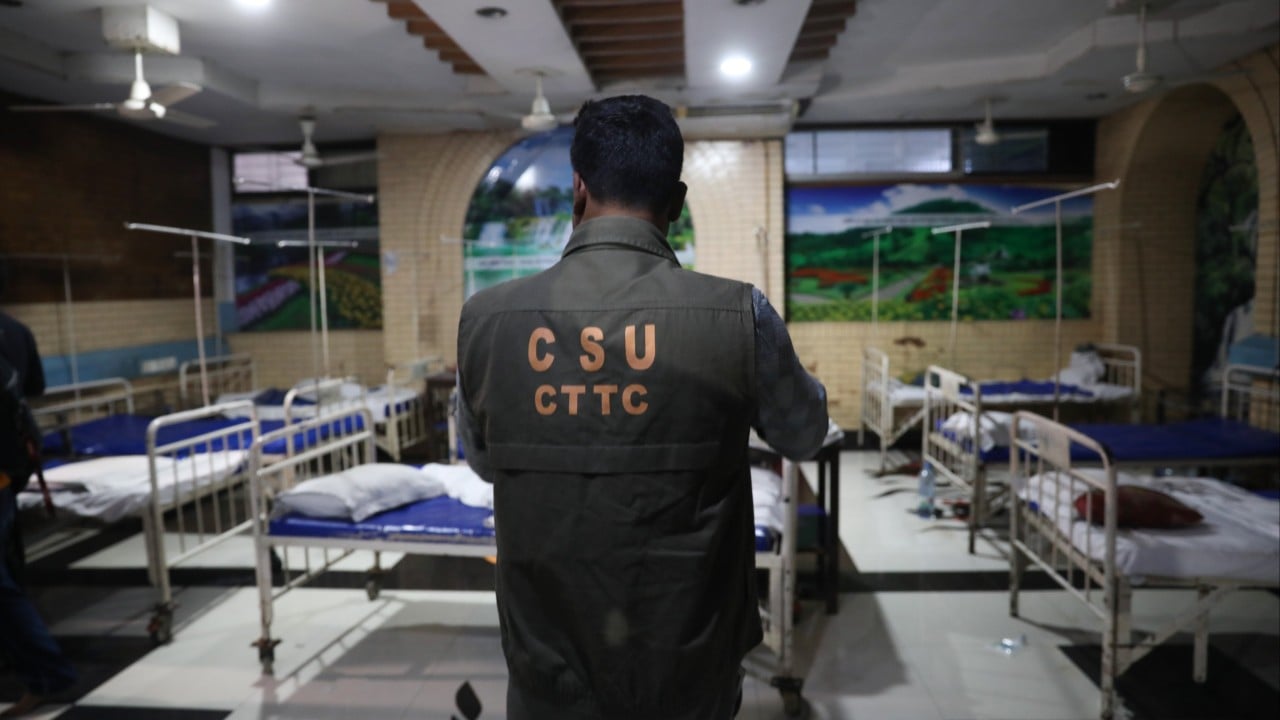
Large, centralized Ebola Treatment Units (ETUs) often resemble high-security installations, fueling rumors of organ harvesting and clandestine deaths. Replacing these massive structures with smaller, community-led transit centers featuring transparent walls allows families to observe their relatives receiving care from a safe distance. Visual verification dismantles the narrative of the ETU as a terminal destination.
Integrate Local Governance into Surveillance Networks
International personnel lack the cultural capital required to validate data collection. Surveillance and contact tracing responsibilities must be transferred to local leaders, traditional healers, and trusted community figures who are equipped with basic epidemiological training. When the data collector is a known peer rather than an external authority, the friction reducing accurate disclosure decreases significantly.
Structural Pre-Bunking and Behavioral Incentives
Attempting to correct a rumor after it has achieved hyper-transmission is statistically ineffective due to confirmation bias. Public health agencies must deploy predictive modeling to identify likely vectors of misinformation before teams arrive in a new sector. Furthermore, compliance must be decoupled from economic hardship; providing food security, clean water, and basic financial support to families in quarantine transforms isolation from a punitive measure into a supported civic action.
Structural Limitations of Information Interventions
No strategic framework can entirely eliminate misinformation during an acute crisis. Human cognitive architecture naturally searches for intent and agency during high-mortality events, making conspiracy theories highly resilient to logic-based refutation. Public health agencies must acknowledge that a baseline segment of any population will remain entirely unreachable through orthodox institutional channels.
Furthermore, over-reliance on digital monitoring or social media scraping to detect rumors can misallocate resources. In low-connectivity environments where Ebola frequently occurs, the most damaging misinformation propagates via oral networks and hyper-local messaging apps, which evade automated keyword detection algorithms. Field strategies must remain reliant on human intelligence and continuous ground-level ethnographic feedback to remain accurate.
Tactical Deployment Execution
The immediate operational priority for ongoing and future containment efforts requires a reallocation of capital away from centralized public relations campaigns and into hyper-local operational transparency.
First, mandate that all international field operations operate under the logistical umbrella of verified local health authorities, stripping away the visual cues of foreign intervention that trigger weaponization narratives.
Second, convert the burial and sanitation protocols from a military-style enforcement model to a collaborative system where family members can participate in rituals via protective proxies or supervised distances.
Third, establish immediate, local feedback loops where community complaints regarding medical side effects or logistical errors are addressed publicly and transparently within 24 hours. Neutralizing the viral spread of a conspiracy theory requires demonstrating that institutional systems are highly adaptive, locally accountable, and fundamentally safe.