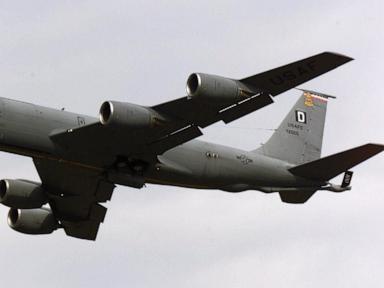
The coffee goes cold first. That is always the detail nobody puts in the press release.
You are sitting at a kitchen table in a brick terraced house three miles from the perimeter fence of Royal Air Force Lakenheath, or perhaps near Mildenhall, watching the condensation bead on a ceramic mug while the windowpanes begin to vibrate. Not the familiar, scheduled hum of a morning training sortie—the rhythmic, predictable thunder that residents across the Suffolk fens have woven into the background noise of school runs and dog walks for generations. This is different. It is irregular. Urgent. A heavy, low-frequency growl that rattles the cutlery in the drawer at an hour when the runways are supposed to be quiet.
Then come the taillights on the A1065. Then the silence.
When a defense official confirms in a clipped, two-sentence statement that the United States Air Force has evacuated aircraft from a base in England because of a threat, the news wires treat it like a logistical footnote. Assets relocated. Force protection postures adjusted. Operations continuing. The language is intentionally sterile, designed to lower the collective blood pressure of the public while signaling competence to adversaries.
Sterile.
Yet beneath those sanitized syllables lies one of the most tense, human, and strategically revealing choreography routines in modern military history. Moving multi-million-dollar fighter jets, aerial tankers, or reconnaissance platforms out of harm’s way isn't like pulling cars out of a hailstorm. It is a high-wire act performed in the dark, governed by split-second intelligence, decades-old alliances, and the quiet, unspoken anxiety of the men and women who have to turn the wrenches while the clock ticks down.
The Anatomy of a Sudden Departure
To understand what actually happens when an American air base in Britain empties its tarmac in response to a threat, picture a hypothetical night shift on the flight line. Let us call the crew chief Sergeant Miller—not a specific individual from a declassified dossier, though there are hundreds like him stationed across East Anglia right now, breathing in the damp British chill and the sharp, sweet tang of JP-8 aviation fuel.
For Miller, a normal shift is governed by checklists that read like religious texts. Every bolt torque, every hydraulic pressure reading, every foreign-object sweep of the concrete apron is measured, logged, and double-checked. Aviation hates haste. Haste kills pilots and destroys airframes.
Until the klaxon sounds, or the secure line rings in the operations desk, and haste becomes the only thing keeping those airframes alive.
In military doctrine, what the public calls an "evacuation" is usually referred to as dispersal or force preservation. Think of an air base not as a fortress, but as a glass cabinet full of Fabergé eggs sitting in an open field. Modern fighter jets—like the F-35A Lightning IIs or F-15E Strike Eagles stationed in the United Kingdom—are masterpieces of sensor fusion and stealth, capable of dominating airspace thousands of miles away. On the ground, however, parked wingtip to wingtip on an open ramp, they are extraordinarily vulnerable. A single drone strike, a compromised perimeter, a credible intelligence warning of an imminent attack—any of these turns a priceless strategic asset into a sitting duck.
So the order comes down. Get them in the air.
Within minutes, the choreography shifts from routine maintenance to controlled emergency. Fuel trucks roll out under blackout or reduced lighting. Ground crews pull wheel chocks with practiced, frantic precision. Pilots who were asleep in base housing twenty minutes ago are sprinting into life-support gear rooms, strapping into harnesses while intelligence officers brief them on the fly—not on a target to strike, but on a safe airfield to land at, somewhere beyond the radius of the threat.
Listen to the sound of a base emptying out. One by one, the auxiliary power units whine to life. Then the main engines catch, a rolling wave of percussion that builds across the tarmac until the air itself feels thick enough to chew. Within an hour, the apron that held billions of dollars of American airpower is nothing more than wet concrete reflecting orange sodium lights.
Why Britain’s Runways Carry Such Heavy Weight
People often ask why the United States keeps so much hardware parked in the English countryside in the first place, decades after the Cold War ended. Looking at a map, Britain can seem like a quiet, rain-swept island far removed from the flashpoints of Eastern Europe, the Middle East, or the Indo-Pacific.
That map lies.
Geographically, the United Kingdom is the ultimate unsinkable aircraft carrier tethered to the edge of the European continent. Bases like RAF Lakenheath, RAF Mildenhall, and RAF Fairford sit at a critical crossroads. From those runways, aerial refueling tankers bridge the Atlantic, allowing fighters and bombers flying from the continental United States to reach Europe and the Middle East without stopping. Intelligence aircraft launch from British soil to monitor borders from the Baltic to the Black Sea. Heavy bombers deploy there to signal deterrence whenever global tensions spike.
I remember standing near the fence line at Fairford years ago during an international air tattoo, watching a B-52 Stratofortress lumber down the runway. Up close, the sheer scale of the machine defies comprehension—wings drooping under the weight of fuel, eight engines trailing ribbons of dark exhaust, the ground literally trembling beneath your boots. Watching it lift off felt like witnessing a skyscraper decide to defy gravity. Now imagine that same machine, or a squadron of stealth fighters, being ordered to launch not for an airshow crowd holding cameras, but because an intelligence analyst three thousand miles away spotted a threat pattern on a satellite feed.
That is the invisible weight sitting on those British bases. Because they are vital hubs for global operations, they are also perpetual magnets for risk. When threats emerge—whether from state-sponsored sabotage networks, rogue drone operators, cyber-physical intrusions, or heightened geopolitical friction—these bases are among the first places where the tremors are felt.
The Invisible Stakes Behind the Fence
When an official says aircraft were moved "because of a threat," the phrasing naturally triggers a wave of speculation. Was it a bomb threat? Drone surveillance? A specific intelligence warning about an attack?
Usually, the Pentagon refuses to elaborate, and for a maddeningly practical reason: naming the threat tells the adversary how you detected it.
Consider what happens next in the cat-and-mouse game of intelligence. If the Air Force reveals that it evacuated jets because of suspicious radio emissions near the perimeter, the person behind those emissions immediately knows their frequency is compromised. If they admit to intercepting an encrypted message, the enemy changes their encryption keys by sunset. Ambiguity isn't bureaucratic laziness; it is operational armor.
Yet that ambiguity leaves a vacuum, and human nature rushes to fill vacuums with fear.
Think about the families living in the villages surrounding those bases. In towns like Brandon, Bury St Edmunds, or Newmarket, American service members and British locals share pubs, grocery aisles, and Little League sidelines. The relationship is warm, deeply rooted, and built on eighty years of shared history stretching back to World War II, when young Americans flew B-17s out of these exact fields into the flak-filled skies over Germany.
When the planes suddenly vanish into the night, the spouses left behind in base housing don't get a classified briefing. They get a text message that says, I have to go in, love you, talk soon. Then they hear the roar of departing jets, look at an empty sky, and wait.
I have spoken with military spouses who describe that waiting not as panic, but as a low-grade, exhausting hum in the back of the skull. You still have to pack school lunches. You still have to walk the dog in the drizzle. You still have to smile at the cashier at Tesco while half your brain is refreshing news feeds, wondering if the "precautionary measure" mentioned on the evening broadcast means your partner is flying into a storm or simply waiting it out on a tarmac in Germany or Scotland.
A History Written in Dispersal
There is a historical rhythm to this kind of sudden movement, though modern technology has compressed the timeline from days into minutes.
During the Cold War, dispersal was a permanent way of life. NATO planners knew that in the opening minutes of a conflict with the Soviet Union, fixed airfields in West Germany and the United Kingdom would be the very first targets hit by ballistic missiles and long-range bombers. So they built hardened concrete shelters—thick, earth-covered bunkers designed to withstand near-misses—and practiced "minimum interval takeoffs," launching entire wings of aircraft seconds apart, roaring straight through each other's wake turbulence just to get off the ground before the runways were cratered.
For a few decades after the Berlin Wall fell, that muscle memory atrophied. Wars were fought in distant theaters against adversaries who had no air forces, no long-range missiles, and no ability to threaten a base in Suffolk. Airfields became sprawling, comfortable campuses. Planes sat out in the open. Security focused on the gate, not the sky above it.
That era is over.
Today, defense planners call the new reality "Agile Combat Employment." Strip away the Pentagon jargon, and the concept is brutally simple: if you stay in one place, you die. Modern warfare has democratized long-range precision strike. Cheap, commercially modified drones can carry explosives across borders. Cyberattacks can blind radar systems. Sabotage teams can operate quietly in civilian clothes thousands of miles from any declared front line.
Consequently, the U.S. Air Force has spent the last several years relearning how to be nomadic. Squadrons now train relentlessly to pack up an entire base's worth of fuel bladders, maintenance kits, and communications gear into cargo planes and scatter to secondary, bare-bones airfields at a moment's notice.
What looks to an outsider like an emergency evacuation is often the sharp end of this exact doctrine in action—a live-fire test of whether the muscle memory has truly returned.
What the Empty Tarmac Really Tells Us
It is easy to read a headline about evacuating military aircraft and feel a spike of alarm, as if the world has suddenly teetered onto the brink of open conflict. It is equally easy to dismiss it as routine military theater, another bureaucratic false alarm in a noisy news cycle.
Both reactions miss the point.
The truth sits uncomfortably in the middle. Moving aircraft out of an air base in England because of a threat is a sign that the global security environment has grown thin-skinned and volatile—that the invisible boundary between peacetime and crisis has blurred to the point where major powers must constantly guard their assets even on the soil of their closest allies.
At the same time, an empty tarmac is proof that the warning system worked. Intelligence caught a signal before a spark became a fire. Commanders chose caution over pride, willingness to disrupt schedules over the catastrophic risk of losing irreplaceable crews and machines.
Hours after the last jet lifts off from Suffolk, the base settles into an eerie, unfamiliar quiet. The ground crews return to the hangars, wiping rain from their jackets, drinking lukewarm coffee from paper cups while the radar screens sweep an empty sky. Out in the surrounding villages, the windows stop rattling. People pull their curtains shut against the damp English night.
Somewhere out over the North Sea, or descending through cloud cover toward a dispersal runway hundreds of miles away, pilots are checking their fuel gauges and waiting for the all-clear. They will come back when the shadow passes—because in a world where threats travel at the speed of light, the only true safety is never standing still.


