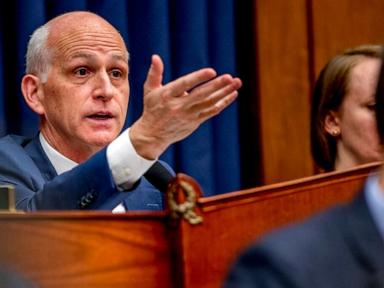
Standard political reporting treats a vice presidential non-endorsement as a routine biographical footnote or a minor messaging wrinkle. That framing misses the structural mechanics at work when Vice President JD Vance declined to back Israeli Prime Minister Benjamin Netanyahu ahead of Israel's October 27, 2026 election, one day after President Donald Trump offered full-throated backing. Rather than a simple split over personalities, the divergence exposes a calculated allocation of political capital across domestic midterm calendars, regional conflict management, and coalition-building inside the American right.
To understand what actually happened and why it matters, this analysis breaks the episode into four operational dimensions: the signaling architecture of presidential versus vice presidential endorsements, the domestic resource allocation around the 2026 U.S. midterms, the strategic friction created by the U.S.–Israeli–Iran conflict dynamic, and the hypocrisy audit surrounding Vance's past foreign election involvement. Each factor operates with distinct incentives and trade-offs that conventional coverage tends to blur together.
Deconstructing Standard Coverage Versus Structural Reality
Typical breaking-news coverage of this episode relies on three recurring habits that obscure more than they clarify:
- Surface-level contrast framing: Articles place Trump's praise of Netanyahu side-by-side with Vance's statement that he is "not anti-endorsing him" and "not pro-endorsing him," treating the juxtaposition itself as the full story.
- Literal acceptance of stated rationales: Reporters often take Vance's explanation—that he endorses American candidates and is focused on the U.S. midterms—at face value without testing it against his prior overseas campaigning.
- Disconnection from wartime leverage: Coverage frequently mentions the Gaza war, West Bank tensions, or the Iran conflict in passing without mapping how public endorsement decisions alter Washington's bargaining position with Jerusalem and Tehran.
Replacing those habits requires treating public statements as strategic signals inside a two-level game, where domestic electoral math and foreign policy leverage interact continuously. In a two-level game, an executive branch leader manages domestic constituencies at home while negotiating or projecting resolve abroad. When the president and vice president split on an endorsement, they distribute risk across different parts of the coalition rather than necessarily fracturing command.
The Signaling Architecture of Dual-Track Endorsements
In modern U.S. foreign policy, an endorsement by a sitting president carries immediate sovereign weight because it signals alignment on military aid, diplomatic cover, and strategic patience. Trump's backing of Netanyahu tied the Israeli prime minister's survival directly to U.S. burden-sharing in the conflict involving Iran, warning that replacing Netanyahu would force Washington to shoulder more of the work itself. That framing turns a foreign election into an instrument of executive leverage over both foreign actors and domestic critics.
A vice president occupies a structurally different lane. Because the vice president does not control commander-in-chief authority or unilateral diplomatic commitments, withholding an endorsement costs less in immediate alliance credibility while preserving room to speak to skeptical domestic factions. Saying "I'm not anti-endorsing him. I'm not pro-endorsing him" functions as strategic ambiguity: it avoids a direct public rebuke of the president while refusing to lock the vice president's brand onto an embattled foreign incumbent.
Consider how that division of labor plays out across audiences:
- Pro-intervention and traditionalist allies hear Trump's endorsement as continuity of hard-line backing for a wartime partner.
- Restraint-minded and anti-endless-war conservatives hear Vance's neutrality as a signal that foreign entanglement is not an automatic blank check.
- Israeli political actors see a split risk-hedging posture in Washington rather than unanimous executive enthusiasm, even as high-level defense contacts continue behind the scenes.
This distinction is a known fact regarding the public remarks made in October 2026, whereas the degree to which the split was coordinated versus improvised remains an educated hypothesis based on observable incentives. Either way, the functional effect is clear: the administration widened its ideological bandwidth without formally repudiating its own stated policy.
Midterm Arithmetic and Coalition Friction
Vance explained his posture by pointing to the U.S. midterms and his focus on American races, such as campaigning for Republican Senate nominee Michael Whatley in North Carolina. From a campaign-management perspective, time and attention are scarce inputs. Every day spent on foreign electoral politics carries an opportunity cost in battleground states where voters prioritize cost of living, domestic governance, and limiting foreign commitments.
Yet the deeper mechanism is ideological rather than purely logistical. Foreign policy toward Israel and the wider Middle East has become a fault line inside the broader conservative coalition, pitting traditional interventionists and strong pro-Likud voices against populist and non-interventionist currents that question open-ended regional commitments. Vance has previously voiced skepticism about efforts to prolong regional conflict and has warned Israeli officials against criticizing Washington during sensitive negotiations with Tehran.
For a prospective future contender within the movement, remaining neutral on Netanyahu's reelection bid solves two problems at once:
- It avoids alienating voters who view foreign intervention and external lobbying with suspicion.
- It avoids creating an explicit loyalty test that forces him to defend every controversial aspect of Netanyahu's wartime record in Gaza, the West Bank, or the Iran conflict.
The limitation of this strategy is equally clear. By declining to back an ally whom the president just praised as a "great warrior", Vance invites scrutiny from donors and voters who equate backing Netanyahu with backing the administration's foreign policy record. Neutrality lowers downside exposure on one flank while raising questions about alignment on another.
The Foreign-Campaigning Precedent and Credibility Cost
Any serious evaluation of Vance's "I'm not getting involved in Israeli elections" rationale must test it against his prior record. In April 2026, Vance traveled to Hungary ahead of parliamentary elections to back then-Prime Minister Viktor Orbán against challenger Péter Magyar, a race Orbán went on to lose. He also met with Alternative for Germany (AfD) co-leader Alice Weidel in February 2025 ahead of a German election, drawing criticism in Berlin over foreign political interference.
That record introduces a credibility tax whenever Vance invokes strict non-involvement in foreign elections. Critics and analysts do not have to guess at his willingness to engage in foreign politics; he has already demonstrated it selectively when the ideological or strategic payoff looked attractive. Selective non-involvement is a common tool in statecraft—leaders routinely intervene where they see upside and claim principle where they see risk—but claiming a categorical rule undermines trust when past behavior points the other way.
Furthermore, backing a foreign leader who subsequently loses, as Orbán did in Hungary, illustrates a classic hazard of foreign endorsements: when a backed candidate falls, the endorser absorbs a share of the reputational loss. Holding back on Netanyahu ahead of an October 27 vote widely viewed as a referendum on his leadership insulates Vance from that specific downside risk, even if it leaves him open to charges of inconsistency.
Wartime Leverage and Alliance Management
Endorsements do not happen in a vacuum; they occur alongside defense diplomacy and active military pressure. Around the same window as the endorsement split, Defense Secretary Pete Hegseth held talks with Netanyahu and Defense Minister Israel Katz amid ongoing hostilities involving Iran and regional security pressures. That pairing reveals an important operational truth: public rhetoric and hard security coordination operate on parallel tracks.
When a U.S. president publicly ties American reluctance to fight alone to Netanyahu remaining in office, Washington signals that leadership stability in Jerusalem matters to its own risk calculus. When the vice president steps back from endorsing that same leader, Jerusalem faces a more complicated Washington environment—one where presidential backing remains strong today, but succession and populist skepticism inside the ruling coalition are visible variables for the future.
This dynamic carries three practical consequences for policymakers and observers tracking the alliance:
- Greater conditionality in tone: Even without immediate policy shifts, visible daylight at the top of the ticket signals that unconditional enthusiasm is not uniform across the administration.
- Heightened sensitivity to domestic narratives: Any perception that foreign leaders are pressuring Washington or prolonging regional conflict draws sharper pushback from the restraint wing.
- Continued reliance on executive channels: Core military and intelligence coordination remains anchored in direct executive and defense relationships rather than vice presidential campaigning.
No single diplomatic signal guarantees a specific electoral outcome abroad or a permanent shift in U.S. policy. Over-interpreting a single non-endorsement as a total rupture is just as analytical an error as ignoring it completely.
Strategic Play for Decision-Makers
Treat Vance's refusal to endorse Netanyahu not as a personal feud or an ironclad principle of non-interference, but as a calculated hedge designed to protect domestic midterm bandwidth and preserve standing with restraint-minded conservatives while leaving hard-line foreign policy signaling to the president. Anyone advising a campaign, foreign ministry, or corporate risk team should track concrete institutional actions—defense meetings, diplomatic negotiations, and legislative or funding posture—rather than public endorsement statements alone, and anticipate that intra-coalition tension over foreign entanglement will intensify as domestic elections approach.