The air in Tehran does not taste like victory anymore. It tastes like old paper and unburned fuel, a dry static that catches in the back of the throat long after the sun has slipped behind the jagged tooth of the Alborz mountains.
On a cracked sidewalk in the capital, a man named Dariush watches a delivery scooter weave through the evening gridlock. He is fifty-four, with silver-threaded temples and hands that remember the texture of imported carpets before the sanctions turned commerce into an arithmetic puzzle of survival. He doesn't look at the news screens mounted above the chaotic intersections. He already knows what they say. The ticker tape crawls with threats, ultimatums, and a specific, looming calendar date that dominates every conversation from the bakeries to the backrooms of the parliament. You might also find this related coverage interesting: The Waters Between Us.
The date is January 20, 2029.
Across the ocean, in a quiet suburban kitchen in Ohio, a mother named Sarah watches her twenty-year-old son, a marine corporal home on leave, trace the rim of a coffee mug. She is not thinking about geopolitics in the abstract. She is thinking about airline ticket prices, deployment cycles, and the cold dread that pools in her stomach every time a black sedan slows down on her street. As extensively documented in recent articles by Associated Press, the effects are widespread.
Two worlds. One invisible string.
Right now, the corridors of power in Washington and Tehran are operating on a calendar of endurance. The calculus pulsing through the Middle East is stark, stripped of diplomatic pleasantries. In Tehran, the official warning is blunt: Iran will make its adversaries pay a heavy cost. But beneath the rhetoric lies a grimmer strategy, whispered in diplomatic outposts from Geneva to Doha. The prevailing theory inside the Iranian security establishment is simple. Wait.
Just wait out the clock.
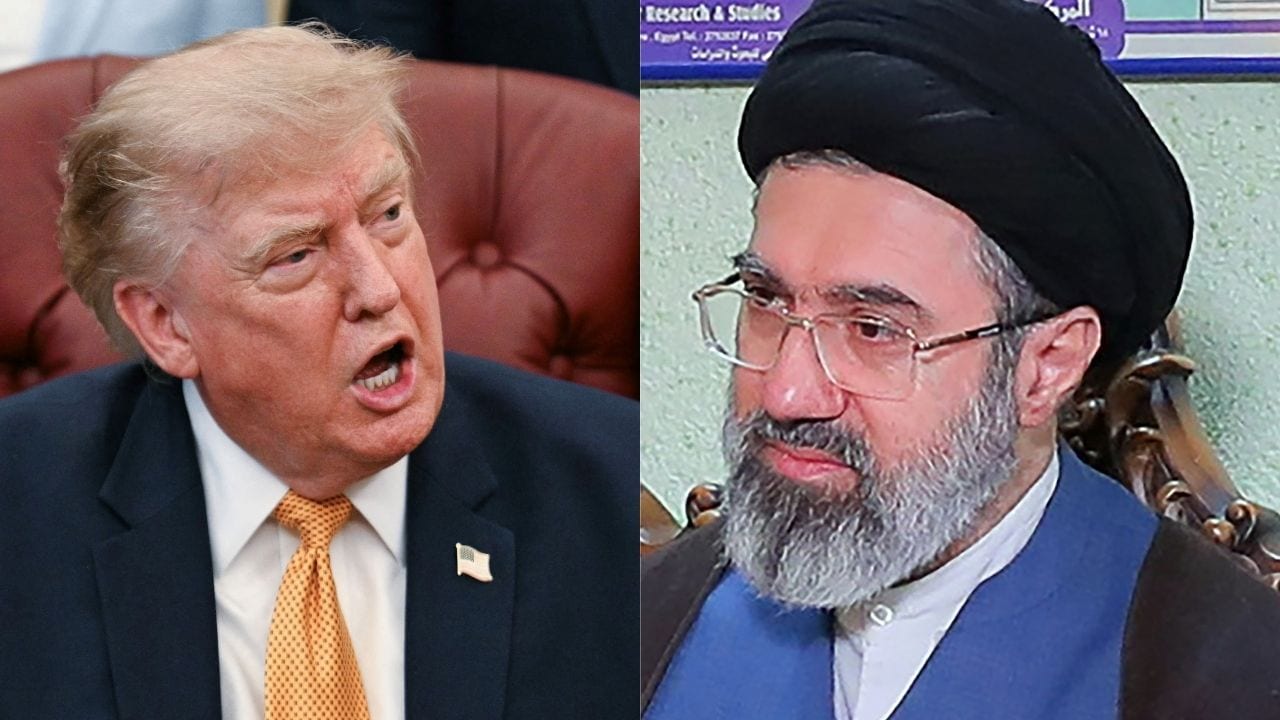
The belief is that the administration of Donald Trump, currently back in the White House, operates on a finite timeline. Four years. Forty-eight months. A blink in the ancient chronology of empires, but an eternity for an economy already suffocating under maximum pressure. The core bet of the regime is that if they can absorb the economic blows, dodge the kinetic strikes, and keep the regional proxy network firing just enough to bleed their rivals without triggering a total collapse, the American political cycle will eventually turn. They are betting on exhaustion. They are betting that American patience has an expiration date.
And they might be right about the patience, but they are catastrophically wrong about the math.
To understand why this war—this sprawling, low-humming conflict that spans from the Red Sea shipping lanes to the hills of Lebanon—threatens to drag on until the final hour of the current U.S. presidential term, you have to look at how modern conflicts are fueled. They are not won with dramatic flags planted in conquered soil. They are sustained by momentum, pride, and the sheer inertia of institutional hostility.
Consider the metaphor of a rusting freight train barreling down a mountain track with no brakes. The engineer can shout warnings from the cab, and the onlookers can pile debris on the rails, but the sheer weight of the vehicle dictates its trajectory. Neither side can afford to blink first because backing down is interpreted by domestic hardliners as an existential surrender.
When Tehran warns that the region will remain a theater of friction until Washington's policy fractures, they are speaking to an audience of domestic loyalists. They need to project defiance. Yet, walk through the side streets of Isfahan or Shiraz, and you will find a population that is utterly exhausted. They are tired of watching their savings evaporate. They are tired of the proxy wars bleeding national wealth into foreign soil while hospitals lack basic pharmaceuticals.
Yet, war has its own gravity.
In Washington, the strategy is equally rigid. The return of a high-stakes, transactional foreign policy means that pressure is applied not with a scalpel, but with a sledgehammer. The objective is to squeeze the Iranian economy until the internal seams rupture. There is little appetite for prolonged nation-building, but an insatiable appetite for economic isolation and targeted disruption.
This creates a terrifying equilibrium. Neither side can deliver a knockout blow without risking a regional conflagration that would spike oil prices to catastrophic levels and draw in global superpowers. At the same time, neither side can afford to walk away from the table empty-handed.
So, what happens in the interim?
The shadow war steps out of the alleys and into the daylight.
We see it in the cyber assaults that paralyzed municipal water systems, attacks that are officially attributed to anonymous actors but carry the distinct fingerprints of statecraft. We see it in the drone incursions over commercial shipping lanes, where a multi-million-dollar missile is fired at a container ship carrying sneakers and refrigerators, all to prove a point about maritime dominance.
This is the hidden cost of the waiting game. It is paid in the micro-tragedies that never make the evening broadcast.
In a small clinic in southern Lebanon, a nurse named Layla washes her hands in cold water because the municipal grid only gives them two hours of electricity a day. She isn't a combatant. She doesn't care about presidential terms or electoral maps. But she is the one who has to ration gauze pads when a stray rocket fragment hits a nearby olive grove.
The friction of this war is grinding down the infrastructure of ordinary existence across multiple borders. In Yemen, in Syria, in Iraq, and in the Gaza Strip, millions of people are living suspended in amber. Their lives are on hold, dictated by the erratic pulse of regional escalation.
Why won't it stop? Because stopping requires a narrative of victory that neither capital can currently manufacture.
For the White House, admitting that maximum pressure failed to force a regime change or a complete capitulation would be treated as a political vulnerability. For the Iranian leadership, altering their posture under direct American coercion would shatter the myth of invincibility that justifies their monopoly on power.
And so, the calendar pages turn.
January 20, 2029, is circled in red ink on a hundred whiteboards in intelligence agencies from Langley to Tel Aviv. It is the finish line that keeps moving. Every time a new crisis erupts—a tanker seized, a base targeted, a sanction package tightened—the distance to that finish line stretches out just a little bit further.
Back in Tehran, Dariush closes his small storefront early as the evening curfew whispers through the avenues. He pulls the heavy metal shutter down, the screech of iron echoing against the concrete walls. He knows that tomorrow the news will feature the same stern faces, the same translated warnings of impending costs, and the same hollow promises that resolution is just around the corner.
He walks home through the cooling dusk, stepping carefully over a cracked pavement stone, carrying the weight of an era defined not by how it ends, but by how long it refuses to die.