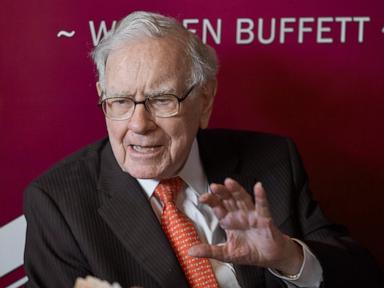
Warren Buffett stepping down as Berkshire Hathaway chairman marks the definitive close of an economic epoch. For decades, the conglomerate operated as a reflection of one man's singular intellect, patience, and idiosyncratic temperament. Wall Street loved the folklore. Analysts obsessed over the annual letters, the folksy wisdom delivered from an armchair in Omaha, and the uncanny ability to buy value when fear gripped the wider market. But dynasties built on personal genius carry an inherent expiration date. When Buffett finally relinquishes the chairman's seat, the markets are not just witnessing a corporate handover. They are watching the ultimate stress test of a decentralized empire designed to outlive its architect.
The immediate reaction from financial media focused on the transition to Greg Abel. Abel has managed the non-insurance operations for years with operational rigor and quiet competence. Yet the narrative that Abel steps seamlessly into Buffett's shoes ignores the mechanics of how Berkshire actually makes money. Buffett was never merely a chief executive officer. He was the sole allocator of tens of billions of dollars in deployable capital, armed with a reputation that commanded respect from desperate CEOs during liquidity crunches. Abel is an elite operator. Whether he possesses the specific gravitational pull required to convince family-owned businesses to sell exclusively to Berkshire during a panic remains an entirely unproven proposition.
To understand the vulnerability of post-Buffett Berkshire Hathaway, look past the insurance float and examine the sheer scale of the balance sheet. Holding massive piles of cash is easy when interest rates fluctuate, but deploying that capital efficiently at a multi-hundred-billion-dollar scale defies historical precedent. When Berkshire was a smaller entity, Buffett could slide into undervalued micro-caps or pick up whole regional enterprises that moved the needle. Today, any acquisition must be massive to alter the company's growth trajectory. Opportunities of that magnitude are vanishingly rare, heavily contested by private equity titans backed by institutional leverage, and frequently scrutinized by antitrust regulators who view mega-conglomerates with deep suspicion.
The conglomerate model itself has fallen out of fashion for a reason. Modern capital markets reward purity, focus, and rapid divestment of underperforming assets. Berkshire retains a sprawling collection of disparate enterprises ranging from freight rail and energy utilities to confectioneries and industrial manufacturing. Without Buffett acting as an infallible moral and strategic anchor, institutional shareholders may begin to pressure management to unlock hidden value through spin-offs. The sum-of-the-parts argument will grow louder. Activist investors, historically kept at bay by Buffett's untouchable voting control and cultural reverence, will test the gates once the founder's presence fades from the boardroom.
Succession planning in corporate America is notoriously fraught with friction, ego, and miscalculation. Buffett handled the preparation longer and more transparently than almost any legendary founder in history. He structured subsidiaries to run autonomously, trusting local management teams while retaining ultimate authority over cash deployment. That cultural insulation has preserved the corporate ethos for a long time. Yet culture is fragile when leadership shifts from an iconic visionary to an administrative steward. If Abel or his successor makes a multibillion-dollar misstep in capital allocation early in their tenure, the institutional patience cultivated over half a century could evaporate overnight.
The insurance operations, anchored by GEICO and the massive reinsurance divisions, represent another domain undergoing structural transformation. Float provides Berkshire with cheap capital to invest, but the property and casualty landscape faces severe headwinds from climate volatility, rising litigation costs, and aggressive technological disruption in underwriting. Competitors utilizing advanced predictive analytics and automated risk assessment are nibbling at the edges of traditional markets. Buffett famously maintained a healthy skepticism toward certain technology sectors, leaving Berkshire underexposed to the digital infrastructure that dictates modern commerce. The incoming leadership team must navigate this technological transition without losing the disciplined underwriting standards that kept the company solvent through every major catastrophe of the past fifty years.
Retail investors often forget that Berkshire Hathaway is not just a stock ticker. It is a psychological barometer for American capitalism. For generations, retail shareholders treated Berkshire shares as a generational savings account, secure in the knowledge that the Oracle of Omaha was watching the ledger. As control transitions to Abel and investment lieutenants Todd Combs and Ted Weschler, the emotional connection will weaken. The stock will eventually be priced purely on fundamentals, cash flow multiples, and expected returns, stripped of the Buffett premium that factored in unmatched financial acumen and moral hazard protection.
The end of this era forces a broader reckoning regarding how modern enterprises perpetuate themselves without cults of personality. Most companies fail the transition from founder to successor because they attempt to replicate the unreplicable. Berkshire's structural decentralization was designed specifically to avoid this trap, granting subsidiaries the operational freedom to survive independent of central oversight. Whether that decentralized defense mechanism holds against the relentless pressure of modern shareholder activism and shifting macroeconomic realities will define the next chapter of American financial history. The era of benevolent, folksy capitalism overseen by a singular financial sage has drawn to a close, leaving behind a corporate behemoth that must now prove it can walk alone.