The heat in Dubai doesn't just sit on you; it vibrates. It radiates off the blacktop of Sheikh Zayed Road, creating a shimmering distortion that turns the distant Burj Khalifa into a wavering needle in a haystack of glass. Below that needle, thousands of souls sit trapped in a glittering, metallic gridlock. They are encased in leather-trimmed isolation, surrounded by the hum of high-end climate control, yet they are going nowhere. This is the paradox of the modern megacity: we have built monuments to speed, yet we spend our lives at a standstill.
Sarah is a hypothetical architect, but she represents a very real demographic of the United Arab Emirates. She is thirty-four, sharp, and perpetually exhausted by the geometry of the commute. For Sarah, the journey from her home in Dubai Marina to a site meeting in downtown is a sixty-minute gamble against the whims of traffic. It is a theft of time. Sixty minutes of staring at the bumper of a white SUV, pondering the structural integrity of a life lived in first gear.
But by the end of this year, Sarah will stop looking at the bumper. She will look at the sky.
Uber isn't just updating an app; they are rewriting the physical constraints of human movement. The announcement that electric air taxi services will begin operations in Dubai before the calendar turns is more than a press release. It is the first crack in the ceiling of urban living.
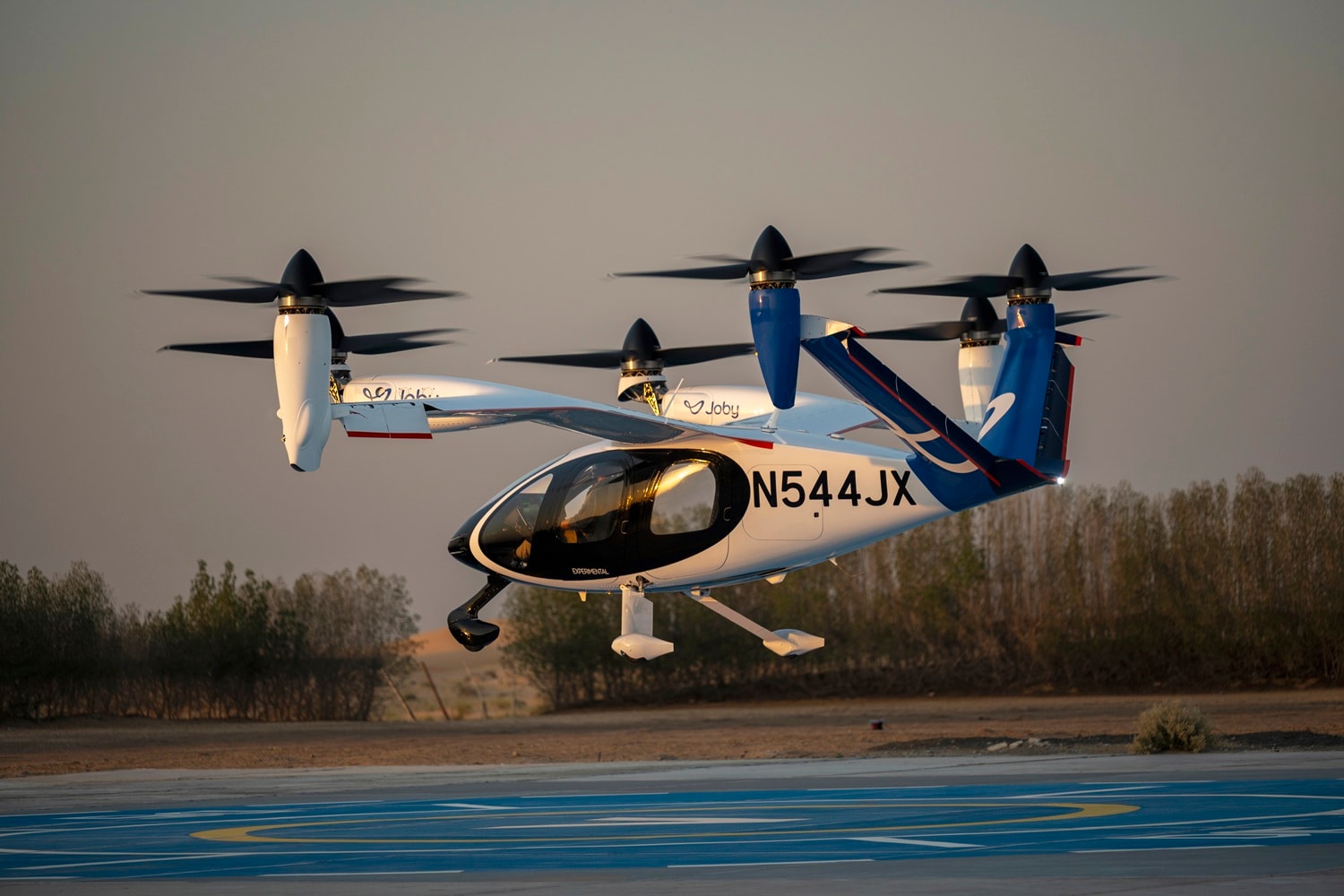
The technology hinges on eVTOL—electric vertical take-off and landing—aircraft. Think of them as a cross between a drone and a private jet, minus the deafening roar and the carbon footprint. These machines don't need a mile of runway. They need a pad, a patch of roof, or a designated "vertiport." In Dubai, these launch sites are already being integrated into the city’s existing infrastructure, turning the rooftops of parking garages and transport hubs into the departure gates of the future.
The Physics of the Vertical Leap
To understand why this matters, we have to look at the math we’ve been forced to accept for a century. Traditional urban transit is two-dimensional. We move on an X and Y axis. When a city grows, we try to solve the problem by adding more lanes, but Braess’s Paradox suggests that adding more roads can actually slow traffic down. We are fighting a losing battle against the ground.
By moving to the Z-axis, the air taxi bypasses the friction of the city. A journey that takes Sarah an hour on the ground will take roughly ten minutes in the air.
Ten minutes.
It is difficult to overstate how that shift reconfigures a person's brain. When travel time is slashed by eighty percent, the city shrinks. The "far side of town" ceases to exist. We aren't just moving faster; we are reclaiming the hours that were previously sacrificed to the gods of congestion.
These aircraft, developed in partnership with manufacturers like Joby Aviation, use distributed electric propulsion. Instead of one giant, thundering engine, they utilize multiple small rotors. This is the secret to their quietude. If you stand on a street corner while one passes overhead, you won't hear the bone-shaking thump of a traditional helicopter. You will hear a hum, a sound that dissolves into the ambient noise of the city. This is vital. A city of flying cars is a nightmare if it sounds like a war zone. A city of silent gliders is a miracle.
The Cost of the Clouds
There is an instinctive skepticism that comes with this kind of progress. We have been promised the "Jetsons" future for seventy years, and yet we are still fixing potholes. The first question is always: Who is this for?
Initially, the skeptics are right. The first flights across the Dubai skyline will not be priced like a bus ticket. This is a premium service, a high-speed bypass for those whose time is valued at a significant hourly rate. But Uber’s history provides a roadmap for what happens next. When the first Ubers appeared on the streets of San Francisco, they were black cars for tech executives. They were a luxury. Within five years, the "UberX" model democratized the service, making it accessible to the middle class.
The air taxi follows the same trajectory. The goal isn't to create a private playground for the ultra-wealthy; it's to build a new tier of mass transit. As the fleet scales and the battery technology—the most expensive and heaviest component of the craft—becomes more efficient, the cost per seat mile will drop.
Consider the economics of a standard taxi. You are paying for the driver, the fuel, the maintenance, and the time spent idling in traffic. In an electric air taxi, the idling cost is zero. The "fuel" is electricity, which is significantly cheaper than high-octane petrol. Eventually, these craft are designed to be autonomous. When the pilot is removed from the equation, the price point shifts from "private jet" to "premium Uber."
The Invisible Infrastructure
Dubai was chosen as the proving ground for a reason. It is a city that views "impossible" as a starting bid. The government has already cleared the regulatory hurdles that would take a decade to navigate in London or New York. The General Civil Aviation Authority (GCAA) has been working in lockstep with tech providers to define the "sky lanes" these vehicles will inhabit.
This isn't just about the planes. It’s about the "Vertiports." These aren't just helipads; they are high-tech terminals where batteries are swapped or ultra-fast charged while passengers board. Four initial locations are being prioritized: Dubai International Airport, Downtown Dubai, Palm Jumeirah, and Dubai Marina. These are the pressure points of the city. By connecting them, the air taxi creates a high-speed spine for the entire metropolis.
The experience for Sarah, our architect, will be a study in friction-less movement. She opens the app. She selects a destination. Instead of a car arriving at her door, she is directed to the nearest vertiport, perhaps a five-minute walk or a short scoot away. She scans a code, settles into a seat that feels more like a lounge chair than a cockpit, and feels the stomach-dropping lift of vertical ascent.
She won't be looking at her phone. She will be looking at the world. From five hundred feet up, the chaos of the city turns into a quiet mosaic. She can see the curve of the earth over the Persian Gulf. She can see the intricate patterns of the man-made islands. For ten minutes, she is not a commuter. She is an observer.
The Weight of Reality
We must be honest about the hurdles. Gravity is a harsh master. The energy density of current batteries is a fraction of what liquid fuel provides. This means these early flights are short—usually under 100 miles. They are intra-city sprints, not cross-country marathons.
Then there is the psychological barrier. We are terrestrial creatures. For a century, we have equated "flying" with "big airports" and "stressful security." The idea of hopping into a small electric pod to go to a lunch meeting feels precarious. Trust will have to be earned in increments. It will be earned every time a craft lands softly. It will be earned when people realize these vehicles have redundant systems—if one motor fails, the others compensate. If everything fails, some are even equipped with ballistic parachutes.
But the biggest challenge isn't technical or psychological. It is integration. The air taxi cannot exist in a vacuum. If Sarah takes a ten-minute flight but then has to wait twenty minutes for a lift down from the roof or a car to take her the last mile, the system breaks. The "Uber" part of the equation is the most important: the orchestration of the entire journey from A to B.
The New Map of the World
If this succeeds in Dubai this year—and all indications suggest the rotors are already spinning—the implications ripple far beyond the desert. We are looking at a fundamental shift in how human settlements are designed.
Historically, cities were built around water. Then they were built around rail. Finally, they were built around the highway. Each shift expanded the radius of where a person could live and still participate in the economy of the center. The air taxi expands that radius again, but it does so without the need to pave over more nature. It is a "hollow" infrastructure. It exists in the air, leaving the ground for parks, for walking, for living.
Imagine a city where the ground level is returned to the people because the heavy lifting of logistics and transit has moved to the sky. It is a radical vision, and like all radical visions, it feels like science fiction until the moment it becomes a commodity.
Back on the ground in Dubai, the sun begins to set, turning the Burj Khalifa into a shard of rose gold. Sarah is still in her car. She is three miles from home, but in this traffic, she might as well be on the moon. She looks up through her sunroof. The sky is empty for now, a vast, blue expanse of wasted potential.
But she knows the quiet hum is coming. She knows that soon, the gridlock will be a choice, not a fate. She reaches for her phone, not to check the map for a faster route, but to check the app for a launch date.
The asphalt has had its turn. The future is up.