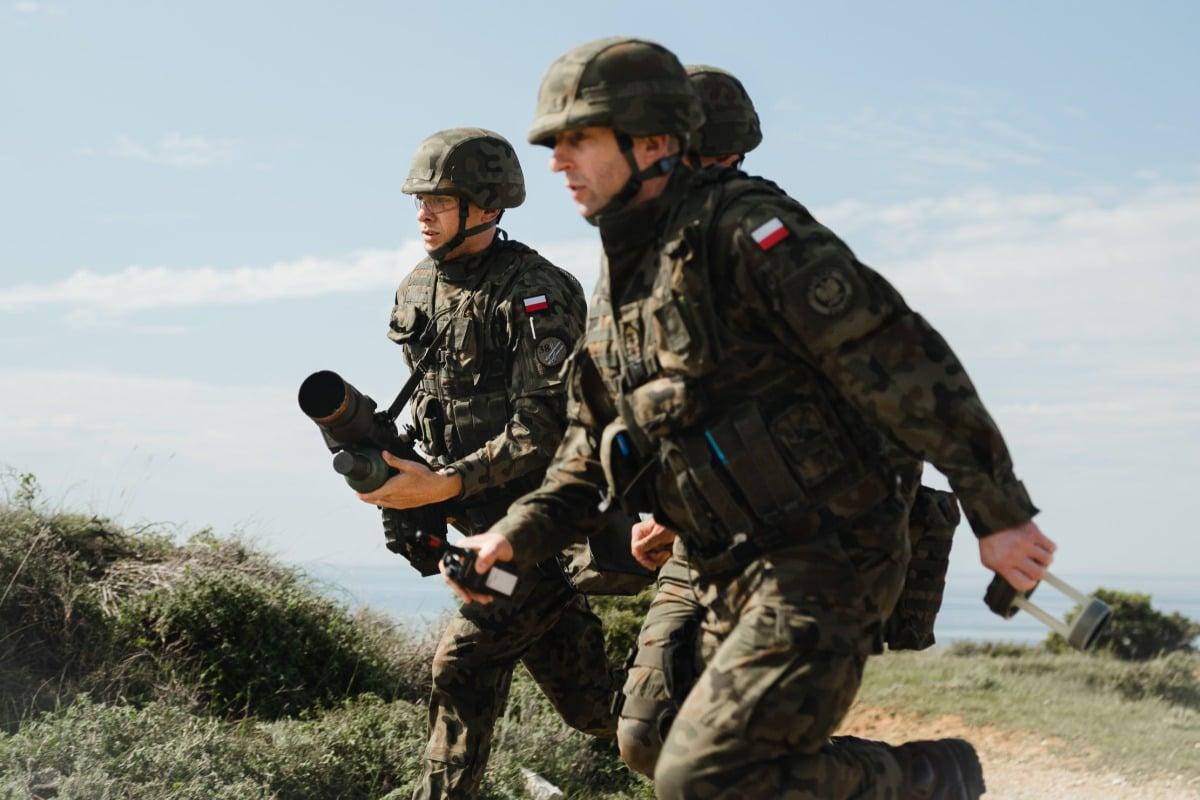
The silence is what notices you first.
If you walk deep enough into the Bialowieza Forest, where the moss swallows the sound of your boots and the oak trees have stood since the Middle Ages, you expect the ancient noise of the woods. You expect the drumming of a white-backed woodpecker, the heavy rustle of a European bison cutting through the underbrush, or the occasional distant whine of a crop duster tending to the fields near the border.
But lately, if you look up through the canopy where the leaves part to reveal the pale Polish sky, the emptiness feels heavy. Artificial.
Poland has quietly pulled down a digital shutter. The government closed its low-altitude airspace along a massive stretch of its eastern frontier, drawing an invisible wall right where the country meets Ukraine and Belarus. To the casual observer reading a wire report, it sounds like standard bureaucratic maneuvering. A technical adjustment. A footnote in a defense ministry ledger.
It is none of those things. It is the moment the abstract friction of a modern geopolitical crisis filters down to the dirt, the trees, and the people who live beneath the clouds.
The Invisible Line at Three Thousand Feet
To understand what has changed, you have to understand how we used to look at the sky. For decades, the air above Europe was a playground of shared freedom. Paragliders floated on thermals over the Masurian lakes. Amateur drone pilots filmed the sunset over the Bug River. Hobbyists, farmers, and search-and-rescue volunteers operated under a simple premise: the air belongs to everyone, provided you stay out of the way of the big commercial jets.
Now, that premise is gone.
The new restriction zone hugs the border like a security fence made of radio waves. It restricts all uncontrolled flights from the ground up to roughly three thousand feet. In the language of aviation, this is Class G airspace—the wild west of the sky, where pilots fly by sight rather than instruments. By choking off this specific band of altitude, the Polish military hasn't stopped the Boeing 737s cruising to Warsaw or Vilnius. Instead, they have cleared the canvas.
Imagine a crowded room where suddenly everyone under six feet tall is ordered to leave. The room isn't empty, but the energy shifts completely. The space feels hollowed out.
Why do this now? The answer lies in the shifting nature of modern anxiety. We are no longer living in an era where threats only arrive in the shape of a supersonic fighter jet or a massive ballistic missile tracked by multi-billion-dollar radar installations. Today, the things that keep border guards awake at night are small, quiet, and cheap.
The Ghost in the Radar
Consider a hypothetical volunteer drone operator named Tomasz. For years, Tomasz used a commercial quadcopter to help local forestry officials track wildlife migrations and spot early signs of peat fires along the swampy borders. He knows the contours of the land by heart. He knows how the mist rises off the river in the early morning, creating a thick white blanket that blinds cameras but hides nothing from a thermal lens.
Under the new rules, Tomasz’s drone must stay in its case.
"The sky used to feel like an extension of the backyard," he might tell you over a coffee in a border town like Hajnówka. "Now, you look up, and you wonder if someone is looking back down at you through a screen a hundred miles away."
The restriction is a direct response to a psychological war of nerves. For months, the borders with Belarus and Ukraine have been hot zones of asymmetrical pressure. It is a world of reconnaissance drones drifting across the line to map border guard positions, of small hobby craft modified to carry contraband, and of the constant, low-grade threat of navigation signals being jammed or spoofed until a pilot loses their bearings entirely.
By clearing the low-altitude sky of civilian hobbyists, the Polish defense forces have solved a massive problem of identification. If everything is banned, then anything that flies is an enemy.
The military no longer has to guess whether a radar blip over a dense patch of forest is a teenager filming a TikTok video or a foreign scout drone probing for a gap in the fence. The ambiguity is gone. The sky is dark, and any light that blinks in that darkness is treated as a target.
The Friction of Peace
There is a specific kind of exhaustion that settles into communities living on the edge of history. Warsaw is vibrant, bustling, and loud, insulated by miles of highway and concrete from the reality of the east. But here, the geopolitical reality is something you can smell in the diesel exhaust of military trucks rolling down rural roads.
The closing of the airspace is a reminder that peace is not the absence of tension; it is merely the management of it.
The tourism industry in eastern Poland, already battered by years of border crises and migration standoffs, takes another quiet hit. People who travel to these remote regions do so to escape the grid, to feel a sense of boundless space. But when the sky itself is cordoned off, the sense of confinement is palpable. You feel the border even when you cannot see it.
It makes the ground feel smaller.
The logic behind the restriction is ironclad. In an era where a five-hundred-dollar drone can carry a grenade or a camera capable of compromising national security, a nation cannot afford to leave its basement windows open. The Polish government is doing exactly what any responsible sovereign power must do to protect its citizens and its territory.
Yet, the human cost is found in the slow erosion of normalcy. It is the transition from a landscape of leisure to a theater of operations.
The Sound of the Shift
The real problem lies in how quickly we adapt to the loss of these quiet freedoms. A year ago, the idea of a permanent no-fly zone for civilians along a European border would have sparked intense debate about civil liberties and economic impact. Today, it happens with a press release and a notice to airmen. We accept it because the alternative—the vulnerability, the unknown blip on the radar that turns out to be something catastrophic—is too terrifying to contemplate.
Consider what happens next when winter settles over the borderlands. The leaves will fall from the Bialowieza oaks, stripping away the cover that the canopy once provided. The ground will freeze solid. The sky will turn the color of wet slate.
In past winters, you might have heard the distant, comforting buzz of a local flying club's propeller plane taking advantage of the crisp, clear air. This winter, there will only be the wind through the pines. And perhaps, if you listen closely enough during the quietest hours of the night, the faint, electric hum of a military drone, watching an empty border from a sky that no longer belongs to the people below it.


