A private jet is a pressurized tube of high-stakes silence. When the President of the United States assembles a delegation of CEOs for a state visit to China, the cabin air thickens with the scent of leather, expensive coffee, and the quiet vibration of geopolitical tectonic plates shifting. On this particular flight, more than a dozen of the most powerful executives in America are strapped into those seats. They represent the old guard and the new—energy giants, financial titans, the masters of the physical world.
But there is a ghost in the manifest. If you liked this post, you should check out: this related article.
Jensen Huang is not on the plane. The man whose company, Nvidia, effectively owns the blueprint for the future of human intelligence is staying home. To the casual observer, it is a minor scheduling note. To those who understand the invisible architecture of the twenty-first century, it is a deafening statement.
The Silicon Silk Road
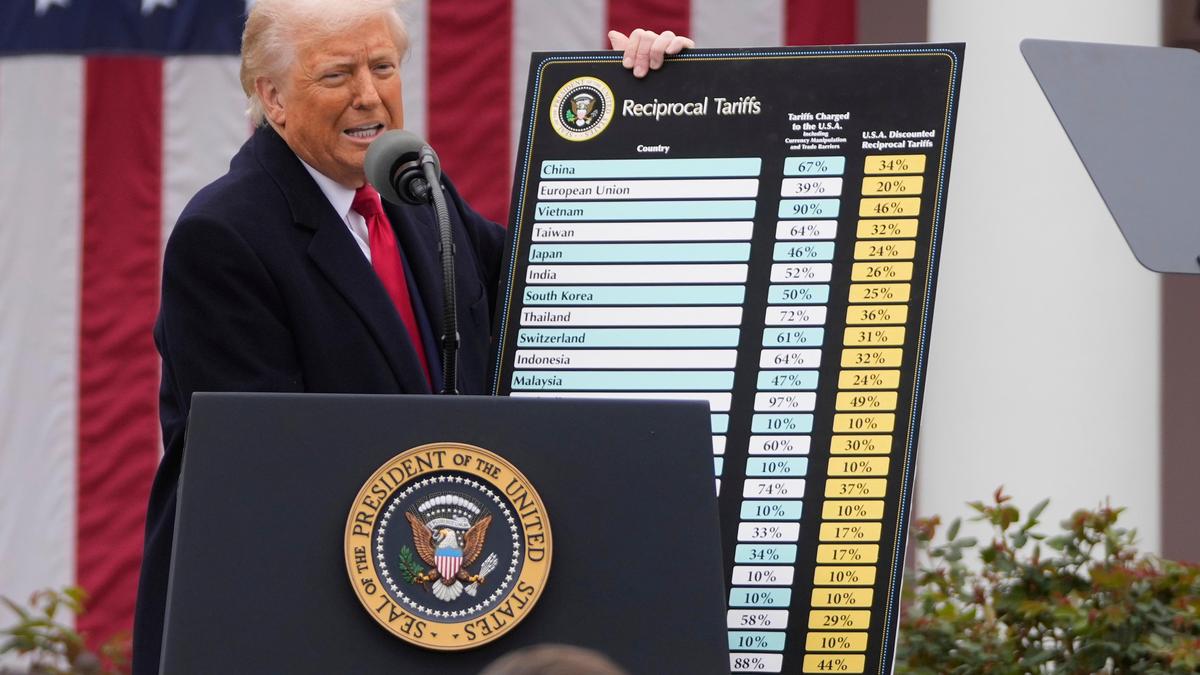
Trade missions are usually theater. They are designed to show a unified front, a handshake across the Pacific that says business transcends borders. When Donald Trump prepared his trip to Beijing, the goal was clear: secure deals that look good on a balance sheet and even better on a campaign poster. Goldman Sachs, Boeing, and Cheniere Energy were all there, ready to sign memorandums of understanding that promised billions in mutual prosperity. For another look on this event, see the recent coverage from Financial Times.
This is the world of tangible assets. You can see a jet engine. You can smell liquified natural gas. You can map a supply chain for soybeans.
Then there is the chip.
A semiconductor is a sliver of polished sand that has been tricked into thinking. It is the most complex object ever manufactured by human hands. For Jensen Huang, the decision to skip the trip wasn't about a lack of interest in the Chinese market. China is, after all, one of Nvidia's most vital territories. It was about the fact that Nvidia no longer deals in mere commodities. They deal in sovereignty.
In the boardrooms of Santa Clara, the calculation was likely different than it was in the halls of a traditional manufacturing firm. When you produce the engines that power Artificial Intelligence, you aren't just an exporter. You are a custodian of a strategic resource that the U.S. government increasingly views through the lens of national security rather than simple commerce.
Huang's absence highlights a growing rift. The American corporate world is splitting into two camps: those who can still play the old game of globalized trade, and those whose technology is so vital that it has become a weapon of statecraft.
The Man in the Black Leather Jacket
To understand why that empty seat matters, you have to understand the man who didn't fill it. Jensen Huang is famous for his signature black leather jacket, a uniform that signals he is always in "startup mode," even as his company's valuation chases the stars. He is a technical visionary who bet the entire house on a specific type of computing—parallel processing—long before the world realized it was the key to the AI revolution.
Consider a hypothetical engineer in a lab in Shenzhen. Let’s call him Li. Li is brilliant. He has the math. He has the data. But without Nvidia’s architecture, his algorithms are like a Formula 1 driver trying to win a race on a bicycle. He needs the hardware. The hardware is the gatekeeper.
When a president takes a group of CEOs to China, the message is usually: We want to sell you things. But the message surrounding high-end chips has shifted to: We aren't sure we can let you have this.
By not boarding that plane, Huang avoided the awkward friction of being a salesman for a product that the Pentagon is simultaneously trying to fence off. It is a delicate dance. If he goes, he risks looking like he is flouting the tightening restrictions on tech transfers. If he stays, he maintains the quiet, necessary distance that a "defense-adjacent" titan must keep in an era of digital cold wars.
The Invisible Border
We often think of borders as lines on a map, guarded by men in uniforms. In the modern era, the most significant border is the one that exists between a "smart" device and a "dumb" one.
The executives who did join the trip—leaders from Blackstone, Cheniere, and even industrial players like Terex—deal in the world of the "seen." Their presence in Beijing was a signal that the traditional engines of the global economy are still humming. They want to build bridges, sell hardware, and manage capital.
But the digital world is different. It is governed by "choke points."
If you control the chips, you control the pace of progress. You control who gets to train the next generation of large language models. You control the efficiency of autonomous drones. You control the future of drug discovery. This isn't just business; it is the new high ground.
The tension is palpable. On one hand, Nvidia needs China. The revenue from that region fuels the R&D that keeps them ahead of the competition. On the other hand, the U.S. government is increasingly wary of that very success. They fear that the "sand" we sell today will become the intelligence that outmaneuvers us tomorrow.
Huang’s choice to remain in California is a masterclass in reading the room. He didn't need a seat at the table in Beijing to prove his relevance. In fact, his relevance is proven by the fact that his absence was the only thing people wanted to talk about.
A Different Kind of Power
There is a specific kind of power that comes from being the person everyone is waiting for. In the theater of international diplomacy, being the "missing piece" can be more influential than being a member of the chorus.
While the delegation in Beijing was busy signing deals for liquid natural gas and aircraft parts, the world’s most important conversations were happening elsewhere. They were happening in encrypted messages between Washington and Silicon Valley. They were happening in the cleanrooms of Taiwan. They were happening in the quiet corridors of Nvidia’s headquarters.
The deals signed on that trip were worth billions. But the chips that Huang’s company produces are worth the future.
The executives on the plane were there to manage the present. They were there to ensure that the current systems of trade and finance continue to function without too much friction. They are the mechanics of the global machine.
Huang is the architect of the next machine.
The Cost of the Chair
What does it feel like to be the CEO of a company that is too important to be part of a standard trade mission? It must be a lonely, lucrative position. You are no longer just a businessman; you are a geopolitical variable. Your quarterly earnings reports are read by hedge fund managers and intelligence analysts with the same level of intensity.
Every time a new export control is announced, or a new tariff is threatened, the pressure on Nvidia increases. They have to design "lite" versions of their chips just to stay within the letter of the law while still serving their Chinese customers. They have to navigate a world where the two largest economies are trying to decouple their nervous systems while keeping their circulatory systems connected.
The empty seat on that plane wasn't a snub. It was a symptom.
It was a sign that the era of "business as usual" between the U.S. and China has ended for the tech sector. The stakes have graduated from profit margins to existential competition.
As the jet descended toward the tarmac in Beijing, the executives on board likely looked out the windows at a city that represents both a massive opportunity and a massive challenge. They were there to do the work of the visible world.
Back in California, perhaps Jensen Huang was looking at a different kind of map. Not one of countries and capitals, but one of neurons and nodes. One where the borders are made of code and the territory is the mind itself.
The world of the leather-jacketed visionary doesn't require a presidential escort. It requires a different kind of vision—one that realizes that sometimes, the most powerful move you can make is to stay exactly where you are, making yourself indispensable to everyone while remaining beholden to no one.
The plane landed. The handshakes were photographed. The papers were signed. But the most important technology in the world remained at home, tucked away in the silences of a Silicon Valley laboratory, waiting for the world to catch up to the reality that the most important deals aren't made in ballrooms, but in the architecture of the machines we are building to replace us.