The coffee in the green rooms of Manhattan always tastes like burnt copper and urgency. Outside, the sirens of NYPD escorts carve the autumn air into jagged pieces, announcing the passage of men who hold maps of the world in their breast pockets. Inside, the wait is quiet. Heavy. The kind of silence that precedes an argument or an estrangement.
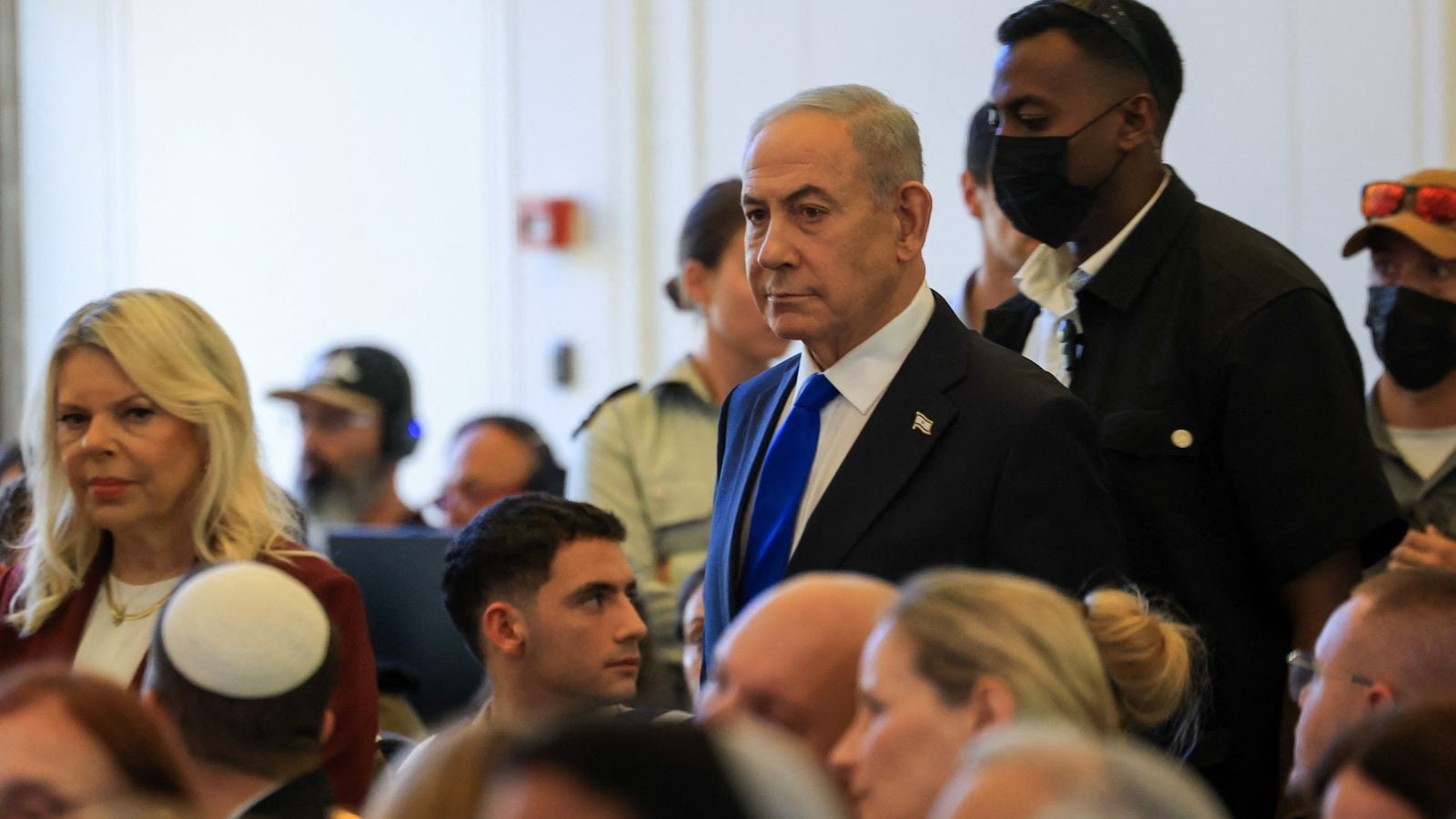
Benjamin Netanyahu did not linger under the chandeliers of New York this autumn. His visit was a ghost ship passing in the night—a rapid descent into the United Nations General Assembly, a tightly managed speech delivered to a half-empty hall of diplomats checking their watches, and an immediate retreat homeward. It was diplomacy measured in stopwatch seconds. But more than that, it was a physical manifestation of a fracture that used to be unthinkable.
To understand the distance between Washington and Jerusalem right now, you do not need to read the classified cables or parse the careful, bloodless syntax of State Department press releases. You just need to look at the geometry of the departures. Time was when an Israeli Prime Minister in New York meant a pilgrimage to the Oval Office, flashing cameras on the South Lawn, and a public reaffirmation of an unbreakable bond forged in the fires of the mid-twentieth century. This time, the motorcade rolled toward the tarmac with unseemly haste.
Borders shift. Not just on maps, but in the architecture of trust.
Consider what it feels like to sit in a secure bunker beneath Tel Aviv while the phone rings and the voice on the other end—the voice of your closest, oldest, most indispensable friend—begins sentences with cautionary qualifiers. We support your security, however... We understand your grief, but...
That word. However.
It is a small word. Four syllables. Yet it weighs more than a ton of artillery shells. It is the sound of an alliance aging out of its romantic youth and entering a cold, transactional middle age.
For decades, the narrative was simple, almost cinematic. Two democracies standing shoulder-to-shoulder against a rising tide of autocracy and hostility in a brutal neighborhood. Shared values. Shared intelligence. Shared nightmares. When an Israeli leader flew west, it was homecoming. It was an affirmation that no matter how loud the condemnation grew in the international community, there was a shield in Washington that would never drop.
That shield is developing hairline cracks.
They are visible in the tense phone calls leaked to reporters. They are audible in the careful distance maintained by American officials who find themselves navigating an agonizing domestic political landscape where every foreign policy choice is a live grenade. And they were starkly visible in the fleeting nature of this recent American excursion. Netanyahu came, he spoke, he drew his red lines in the air, and he left. The grand summit meetings that once defined these visits were replaced by brief consultations, cautious handshakes, and a mutual recognition that they are no longer reading from the same script.
Diplomacy is theater, but it is also psychology. When two leaders who have known the machinery of statecraft for decades look at each other across a polished mahogany table, they are calculating survival. Netanyahu sees an American administration constrained by its own electorate, anxious about regional escalation, and increasingly vocal about a humanitarian horizon that Israel's current wartime cabinet views as a secondary luxury. Washington sees an Israeli government driven by an existential imperative that brooks no compromise, marching down a path that risks pulling the entire Middle East into a conflagration neither capital wants, yet neither seems entirely able to prevent.
Distance.
It grows in inches. A delayed invitation here. A pointed critique of military strategy there. A frosty reception at the airport.
If you have ever had a lifelong friendship begin to sour, you know the choreography. You still show up to the dinner party because your shared history demands it. You still smile for the cameras because the alternative signals weakness to your rivals. But you do not stay for dessert. You make an excuse about an early flight. You check your watch before the conversation can drift into the uncomfortable territory of what you really think of each other.
That was the New York visit in miniature. An early flight.
The deeper tragedy is that both sides are trapped by the very logic of their positions. In Jerusalem, the trauma of October 7 remains a raw, unhealed wound. To step back from the stated objective of dismantling Hamas is viewed by the current leadership as an existential betrayal of the dead and the hostages still languishing in the dark. In Washington, the calculus is global. It is about preventing a wider war with Iran and its proxies, managing oil prices, keeping fragile Arab partners from breaking away, and surviving an election cycle where every foreign misstep carries a heavy electoral price.
Both leaders are right, from their own vantage points. And that is precisely why they are drifting apart. When two imperatives are absolute, compromise becomes a luxury neither can afford.
The motorcades will roll again. There will be more summits, more communiqués, more solemn
The Broken Bridge Over the East River
news
3
The tarmac at John F. Kennedy International Airport radiates a familiar, brutal heat. Down on the tarmac, a Boeing 767 sits idling, its turbines humming a low, mechanical growl that vibrates through the soles of your shoes. This is the Wing of Zion. Inside, the cabin lights are dimmed. The air smells of recycled oxygen, cold coffee, and the heavy, electric tension of men who sleep with their phones unlocked.
For decades, this metal tube was a bridge. A thick, steel-cable span connecting two distinct worlds that shared an unspoken language. When an Israeli Prime Minister’s plane touched down on American soil, it was never just a flight. It was an institutional ritual. Sirens wailed, motorcades carved through the gridlock of Manhattan like surgical steel, and within hours, handshakes were exchanged beneath the crystal chandeliers of the White Park or the United Nations.
This visit was different.
It was fast. Almost ghostly. A fleeting footprint left on rain-slicked asphalt before the wind could even scatter it.
To understand why this matters, you have to step away from the diplomatic press releases and look at the geometry of modern power. Power is no longer maintained through grand speeches delivered from golden podiums. Power lives in the spaces between words. It lives in the three-day delay before a phone call is returned. It lives in the subtle, agonizing choice of whether to meet behind closed doors or in front of the blinding flashbulbs of the global press corps.
Consider what happens when two old friends stop looking each other in the eye.
At a roadside diner in Scranton or a cafe in Tel Aviv, ordinary people feel the tremor long before the diplomats acknowledge the earthquake. When the alliance frays, the anxiety trickles down. It hits the small-business owner importing microchips, the reservist checking his kit in a damp locker room, the student walking across a campus quadrangle with a knot in her stomach. Politics is personal. It always has been. The statesmen in their tailored suits negotiate treaties, but the rest of us live inside the weather they create.
For the past seventy-some years, the relationship between Washington and Jerusalem operated on a gravity of its own. It didn't matter who sat in the Oval Office or who occupied the chair on the seventh floor of the Kaplan Street government complex in Jerusalem. The bedrock was moral, historical, and strategic. It was an alliance sealed in the ashes of the twentieth century.
Yet, gravity can weaken.
When Benjamin Netanyahu swept into New York for this lightning-quick diplomatic excursion, the optics told the real story. This wasn't a tour of celebration. It was a containment exercise. It was a high-stakes chess match played against a ticking clock, executed while both capitals faced fierce internal tempests. On the American side, an administration wrestles with a fractured domestic electorate, deep ideological fissures over foreign intervention, and the exhausting fatigue of endless global crises. On the Israeli side, a nation remains suspended in a state of collective trauma and political polarization that cuts straight through family dinner tables.
Strained ties do not snap overnight. They fray thread by thread.
Think of a thick maritime rope pulled taut across a stormy sea. First, the outer fibers begin to fuzz. Then, the internal strands start to pop, one by one, making a sharp, metallic sound that nobody hears over the roar of the waves. That is where US-Israeli relations stand today. The surface looks intact from a distance. The official communiqués still use words like ironclad and unbreakable. But anyone who has spent an hour in the back channels of diplomacy knows the truth.
Trust is a fragile currency. Once spent, it cannot be printed on demand.
When the Prime Minister’s motorcade rolled away from the United Nations headquarters that afternoon, the streets of Manhattan barely noticed. Tourists chased yellow cabs. Sirens wailed for entirely different emergencies. The world kept spinning on its chaotic axis. But inside the diplomatic bubble, the air pressure had dropped.
The brief visit exposed a profound reality. Leaders can no longer rely on autopilot history to save them. The shared vocabulary of the past is losing its meaning for a generation of voters and lawmakers who have no memory of the Cold War, no connection to the foundational myths that once bound these two nations together. For younger Americans, the Middle East is not a beacon of democratic survival; it is a complex, bloody headline on a glowing smartphone screen, easily detached from context or empathy. For many Israelis, the shifting rhetoric in Washington feels like an existential betrayal, a withdrawal of support precisely when the shadows lengthen.
And so the plane took off again.
It climbed steeply into the steel-gray autumn sky, punching through the clouds toward the Mediterranean. Down below, the lights of the city began to flicker on, millions of tiny electric stars burning in the dark.
The bridge is still there. Cars still cross it. But the steel is rusting in the salt air. The cables are singing in a minor key. And somewhere down below, in the dark water of geopolitical reality, the current is pulling harder than ever before.