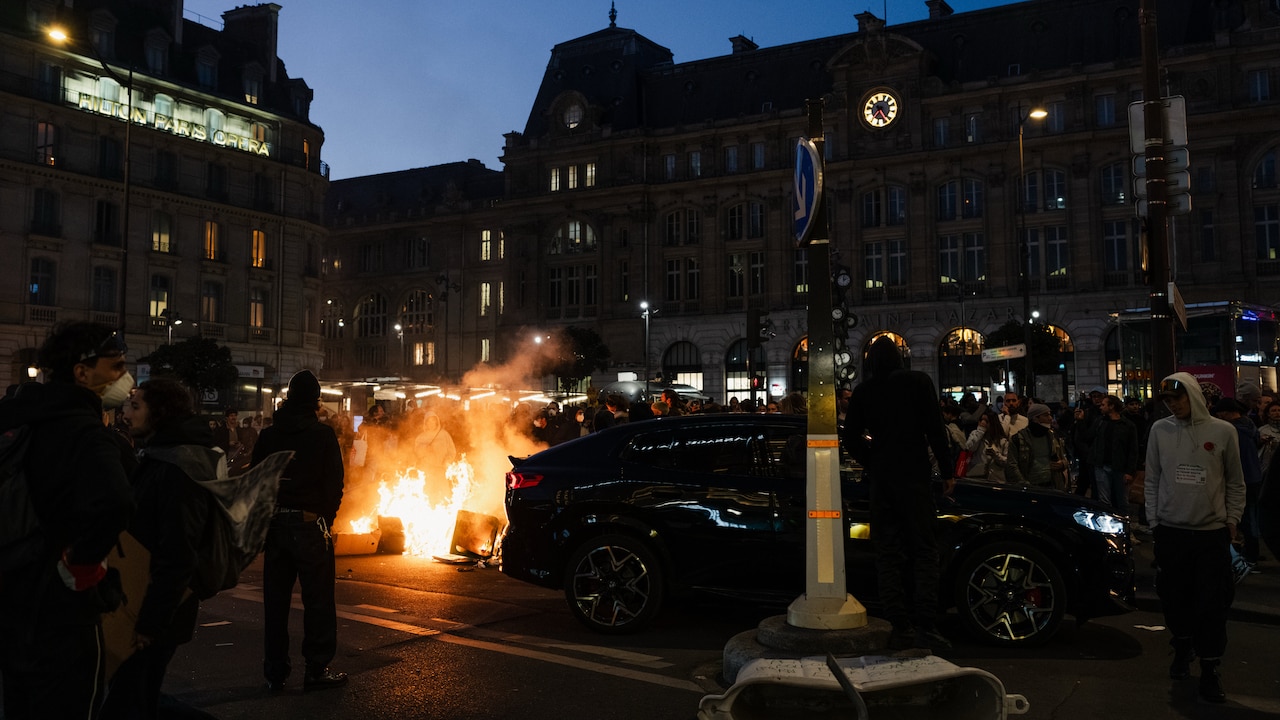
Embassy advisories tell you to avoid protest sites and check transit apps. That advice is lazy, late, and built for the wrong threat model.
When headlines announce that the Indian Embassy in Paris issued a safety advisory amid France unrest, most coverage repeats the exact same script. Stay vigilant. Avoid crowds. Follow local authorities. Call the emergency helpline if things go sideways. It reads like a checklist written by a committee terrified of liability rather than someone who actually understands how French street protests mutate into property damage, localized curfews, and cascading transit paralysis. Building on this theme, you can find more in: Buying a 650-Acre Texas Ranch State Park Is a Trap Nobody Wants to Admit.
The real danger during unrest across France is rarely a coordinated attack targeting foreign visitors or Indian nationals. The real danger is spatial miscalculation—assuming a march in one arrondissement leaves a neighboring district unaffected, or assuming the Metro and regional rail networks will behave like normal infrastructure on a Saturday afternoon.
What Standard Advisories Miss About Unrest Across France
Diplomatic alerts are reactive by design. By the time an embassy publishes an advisory pointing citizens toward official channels and emergency hotlines, demonstrations over cost of living, public services, or school conditions have already been building momentum, and municipal authorities have already begun weighing localized curfews or heavy security deployments. Experts at The Points Guy have also weighed in on this trend.
Standard coverage treats "protests" and "riots" as a single cloud hanging over the entire country. They are not.
- Demonstrations vs. Opportunistic Rioting: Large marches tied to unions, cost-of-living grievances, or student walkouts follow known routes and timetables. Rioting and looting often flare afterward or along splinter paths, creating localized flashpoints where shops get shuttered or damaged even blocks away from the main rally.
- Curfews Create Bottlenecks, Not Instant Calm: When authorities introduce localized curfews or step up police and military patrols such as Operation Sentinelle, movement restrictions can tighten abruptly. Travelers waiting until late evening to cross town can get trapped by station closures, rerouted buses, or sudden checkpoints.
- Transit Is the First Domino: You do not need to stand anywhere near a demonstration to get burned by it. Station closures, strike action, and police perimeters routinely sever rail and Metro links, turning a twenty-minute hop into a two-hour detour on foot.
I have watched travelers and corporate teams burn tens of thousands of dollars making both extremes of the same mistake. Some cancel non-refundable trips across the entire country because a viral clip showed smoke near a landmark in Paris while their itinerary was in a quiet coastal town. Others treat an advisory as background noise, walk straight into a closed transit corridor, and lose half a day trying to reach a train station or airport. Both reactions come from reading a broad headline instead of reading street-level mechanics.
Are You Asking the Wrong Question About Safety in France?
Most people searching for news on an embassy safety advisory in France are really asking one of two questions: Is France safe to visit right now? or Will my trip get ruined?
Those questions are too blunt to be useful. France is not a binary switch flipped from "safe" to "warzone." A quieter morning in Lyon or Marseille does not erase a disrupted afternoon in Paris, and a tense weekend of demonstrations does not shut down every museum, restaurant, or hotel across the hexagon.
Even "People Also Ask" style questions usually miss the real friction points:
- "Should I cancel my trip because of the advisory?" Only if your plans depend on tight, inflexible connections through a city experiencing active demonstrations, curfews, or strike action—or if you cannot tolerate schedule friction. Canceling an entire trip over generalized unrest headlines often sacrifices non-refundable spend for risk that sits miles away from your actual footprint.
- "Are tourists specifically targeted during protests?" No. Unrest in France is overwhelmingly driven by domestic grievances—household costs, public services, labor disputes, and local policing—rather than hostility toward foreign visitors. Being caught in the wrong place at the wrong time is a proximity and timing problem, not a targeting problem.
- "Will calling the embassy get me out of a jam?" Diplomatic missions provide consular guidance, crisis coordination, and emergency contact points such as the Indian Embassy in Paris or the Consulate General in Marseille, but they cannot magically reopen a shuttered Metro line or override a local prefecture's curfew order.
Imagine a scenario where you have a 4:15 PM train out of Gare du Nord on a Saturday scheduled for major demonstrations. Even if you never step foot near the march route, a station lockdown or bus diversion along your approach corridor can cost you ninety minutes before you even reach the platform. Your problem is not street violence; it is slack time.
How Crisis Analysts Actually Read Civil Unrest
In risk intelligence and security consulting, analysts look at spatial contagion, state response capacity, and infrastructure choke points rather than cable-news drama. Think of political risk specialists like Ian Bremmer at Eurasia Group or security researchers studying crowd dynamics and urban policing: serious observers track how authorities manage escalation, whether curfews or extra deployments contain flashpoints, and how transport operators adjust service.
That distinction matters when you look at the broader picture. Demonstrations in France have repeatedly collided with political gridlock, cost-of-living frustration, and economic strain—including market jitters over public finances and borrowing costs. When governments lean on curfews, union talks, and heavier security deployments, the state is trying to draw a hard boundary around disorder. Sometimes that boundary holds; sometimes spillover still happens.
The Honest Downside of My Approach
Treating advisories as a starting point rather than a stop sign carries a real catch. If you travel with zero buffer, ignore local prefecture rules, or assume a calm morning guarantees a calm evening, you can get blindsided when a peaceful gathering fractures late in the day. Contrarian judgment only works when paired with discipline. If you are traveling with young children, high medical needs, or rigid deadlines where a missed flight or train is catastrophic, playing it conservative is often the smarter call.
What to Do Instead of Just "Staying Vigilant"
Generic vigilance is a feeling, not a plan. Replace vague caution with concrete habits that cut your exposure to delays and flashpoints:
- Build a 90-minute buffer before any fixed departure. Never book a tight rail transfer or airport run on a protest day or strike window without extra margin.
- Book refundable or flexible legs during peak protest windows. Weekends and declared action days carry higher odds of route changes and curfews. Pay a little more for flexibility rather than eating total losses.
- Check local prefecture and transit alerts, not just social media. Official municipal notices and regional transit updates tell you what is actually closed or restricted, whereas viral clips strip away scale and distance.
- Keep a walking-distance fallback. Choose lodging and dining options within a short walk of where you actually need to be if rideshares surge or lines stop running.
- Save consular contacts offline before you leave. Keep the emergency numbers and emails for the Indian Embassy in Paris (
+33 6 48 34 00 63/cons.paris@mea.gov.in) and the Consulate General in Marseille (+33 7 43 16 25 59) saved locally so you are not hunting for signal in a crowded street.
Do not wait for an embassy alert to tell you the city is tense. Watch the calendar, pad your transit time, and walk the other way before the crowd gets thick.