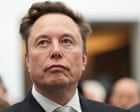
When the richest person on earth decides to buy into an election cycle, standard political strategy stops working. Elon Musk didn't just back candidates during the U.S. midterm elections; he effectively rewrote the financial scale of modern congressional races. By pouring hundreds of millions of dollars into Republican-aligned super PACs and voter turnout operations, he became the single biggest individual donor of the midterms.
Yet the real story isn't just about the eye-watering $366 million—or even the nearly half a billion dollars his broader network ultimately dropped. It's about what happens when a tech titan uses personal wealth to run what looks less like a traditional donation campaign and more like a corporate acquisition.
The Mechanics of Mega-Donor Politics
For years, political pundits talked about billionaires influencing elections through discrete maxed-out checks and quiet fundraisers. Musk shattered that playbook. Through organizations like America PAC, his capital funded aggressive ground operations aimed at low-propensity voters in competitive Senate and House districts.
Instead of relying purely on television ads, the strategy mirrored a massive direct-to-consumer user acquisition funnel. Paid canvassers flooded swing states. Data infrastructure scaled up overnight. When you have a net worth touching historic highs, dropping hundreds of millions of dollars represents a tiny fraction of total wealth—less than a fraction of one percent. That mathematical reality creates an entirely asymmetric playing field. Traditional donors, even wealthy ones writing seven-figure checks, simply cannot compete with an individual who treats multi-million-dollar contributions like rounding errors.
Where the Money Actually Went
The distribution of Musk's cash reveals clear tactical priorities. A massive slice went directly toward keeping Republican majorities afloat in Congress, channeling funds through heavy-hitting groups like the Senate Leadership Fund. Key battlegrounds in states like Texas received a relentless flood of advertising and field organizing dollars.
Yet money doesn't automatically buy electoral outcomes. Despite the historic capital injection, the results turned into a harsh lesson on the limits of brute-force spending. Voters cared deeply about local issues, economic pressures, and regional dynamics that elite-driven super PAC messaging sometimes missed. When the dust settled on election night, many of the high-priced campaigns backed by these mega-donations fell short, proving that voter sentiment remains stubbornly resistant to pure financial saturation.
The Long-Term Fallout for Tech and State Power
Beyond the win-loss columns of individual senate races, this massive financial footprint alters the relationship between Silicon Valley and Washington permanently. Musk's deep financial entanglement with the Republican party creates immediate friction. Companies like SpaceX and Tesla rely heavily on federal contracts, regulatory approvals, and state-level cooperation.
When a corporate leader becomes a polarizing partisan anchor, everyday governance gets complicated. Lawmakers who view these immense political expenditures with suspicion are already looking closer at government contracts and regulatory frameworks.
We are moving past the era where tech executives could stay quietly behind the scenes while lobbying both sides of the aisle. The open checkbook approach forces everyone's hand. If you have the capital to single-handedly bankroll a party's legislative rescue mission, you also own every single target painted on your back when the political winds shift. The baseline for American political financing has changed, and there is no going back to the old rules.