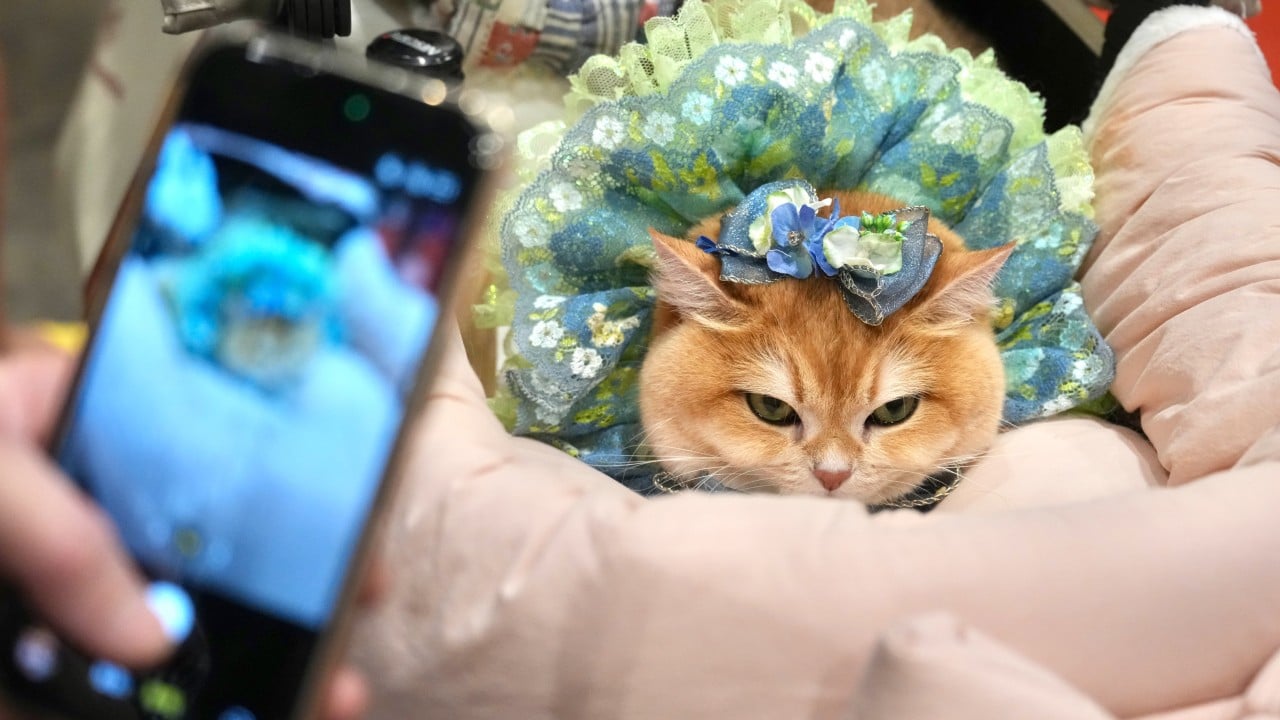
The air inside the convention center smells distinctly of dried bonito flakes, crushed valerian root, and the quiet desperation of thousands of people trying to carry fifty-pound bags of imported soy-based litter without tearing their shoulders out of their sockets.
Outside, the concrete canyons of Hong Kong trap the summer humidity like a steaming palm. Inside, a hundred thousand square feet of exhibition space hums with an entirely different kind of weather. It is the climate of modern devotion. In other developments, read about: The Grandmother Who Forgot Her Native Tongue But Found Six Voices.
Consider a woman named Carmen, a hypothetical composite based on half the faces in this room. Carmen lives in a forty-story tower in Kowloon. Her apartment measures three hundred square feet. Her landlord strictly forbids live animals. Her work schedule regularly stretches to ten at night. By all traditional metrics of human habitation, Carmen should not have a cat.
Yet she is currently standing in front of a glass-fronted incubator watching a mechanical kitten blink its silicone eyes and emit a low-frequency, perfectly calibrated purr that costs roughly four hundred US dollars. Vogue has provided coverage on this critical issue in extensive detail.
She reaches out a hesitant finger. The artificial fur is warm. It has a built-in heating element designed to mimic a mammalian body temperature of 38.5 degrees Celsius.
"Does it knead?" she asks the attendant.
"Only when you scratch behind the left ear," the vendor replies, entirely serious.
This is the Hong Kong Cat Expo. It is not merely a trade show. It is an archaeological dig into the psyche of urban loneliness.
The Architecture Of Small Spaces
Urban density changes the way we love. When your bedroom is also your hallway, your kitchen, and your office, every square inch carries a heavy tax. Traditional pet ownership requires a certain amount of spatial arrogance. A dog needs a yard, or at least a long stretch of hallway to chase a ball. Even a real cat demands vertical real estate, scratching posts that tear up rental drywall, and litter boxes that inevitably perfume a tiny studio apartment.
Hong Kong has one of the highest population densities on the planet. More than seven million people pack into a fraction of the territory's total land area. In these vertical filing cabinets of human life, pets have become the ultimate luxury item. Not because of their price tag, though premium organic rabbit-meat treats from New Zealand certainly add up, but because of the emotional real estate they occupy.
Walk down aisle four of the exhibition. The atmosphere shifts from mechanical novelties to ancient apothecaries. Here, the traditional meets the bizarre.
A traditional Chinese medicine practitioner is explaining the microscopic properties of feline ginseng to an intensely focused crowd of middle-aged men. The stalls are piled high with amber-colored tinctures, dehydrated duck hearts, and powdered antler velvet formulated to boost the immune systems of British Shorthairs and stray rescues alike.
It sounds eccentric. It is actually profound.
When you cannot offer your animal a patch of grass or a sun-drenched balcony, you compensate in other ways. You buy the ginseng. You purchase the ceramic water fountain that filters through medical-grade charcoal. You invest in automated laser toys that keep your tabby active while you are stuck on the MTR during rush hour.
We throw our surplus care at the things that fit through the door.
The Irony Of The Artificial Companion
There is something slightly heartbreaking about the popularity of robotic pets in a room dedicated to living creatures. A few booths away from the ginseng seller, a demonstration of robotic companions draws gasps of genuine delight. These are not simple wind-up toys. They have microchips that track facial expressions, AI routines that learn your routine, and sensors that respond to the specific cadence of your voice.
Critics call it dystopian. They look at a woman cradling a piece of plastic and steel and see the final, terminal stage of human alienation. They see a society too tired, too busy, and too emotionally bankrupt to handle the messy, clawing reality of a living beast.
They are missing the point.
Carmen does not buy the robot because she hates real animals. She buys it because she loves them too much to subject them to the cruelty of her absence. To leave a living, breathing feline alone in a three-hundred-square-foot box for fourteen hours a day is a quiet cruelty born of modern work culture. The robot is an admission of limits. It says: I want the comfort of a heartbeat, even if I have to fake the pulse.
We have engineered our cities into places where natural affection has become an engineering problem. And so we solve it with engineering. We build better litter boxes that self-clean using ultraviolet light. We construct smart collars that translate meows into push notifications on our smartphones. Low water intake. Restless behavior detected. Time for a cuddle.
We have quantified our love so we do not fail at it.
What The Vendors Know That We Don't
The true genius of the expo isn't the technology. It's the empathy.
Every vendor here understands a fundamental truth about the modern city dweller: we are profoundly, exhaustively tired, and we are looking for something that doesn't judge our exhaustion.
A real cat looks at you with ancient, slit-pupiled indifference. It demands your attention on its own terms. It knocks your coffee mug off the table while maintaining direct eye contact. That is the beauty of a real cat. It forces you out of your digital bubble.
Yet the market here hedges its bets. For every live cat owner looking for grain-free kibble, there is someone like Carmen looking for a proxy. The exhibition hall swells with noise. Microphones blare demonstrations of multi-tiered climbing trees that mount to the ceiling without screws, saving precious rented floor space.
Listen closely to the conversations. No one is talking about money. They are talking about guilt.
"Will he get lonely?" a man asks a specialist in feline behavioral pheromones. He is holding a diffuser that claims to emit the scent of a nursing mother cat.
The specialist doesn't laugh. She nods with the grave authority of a priest hearing confession. "They all get lonely," she says softly. "That is why we are all here."
The Residue Of Need
The convention winds down. The lights in the giant hall begin to flicker, signaling the end of the weekend. The massive fifty-pound bags of soy litter have mostly vanished, hauled away in shopping carts and taxis by weary owners.
Outside, the Hong Kong night is thick and neon-lit. The harbor reflects a million windows, behind each one a small, sealed universe of television light and quiet rooms.
Carmen walks out into the damp street. She didn't buy the robot. She didn't buy the ginseng. But she bought a small, ceramic bowl shaped like a lotus flower, painted with whiskers along the rim. It is entirely impractical. It will take up precious counter space in her tiny kitchen.
She carries it carefully in her canvas bag, protecting it from the jostling crowd on the MTR platform as if it were made of genuine porcelain instead of cheap clay.
The train arrives with a rush of pressurized air. She steps inside, holds the bag against her ribs, and watches her own reflection in the dark glass of the carriage door as the tunnel swallows the light.