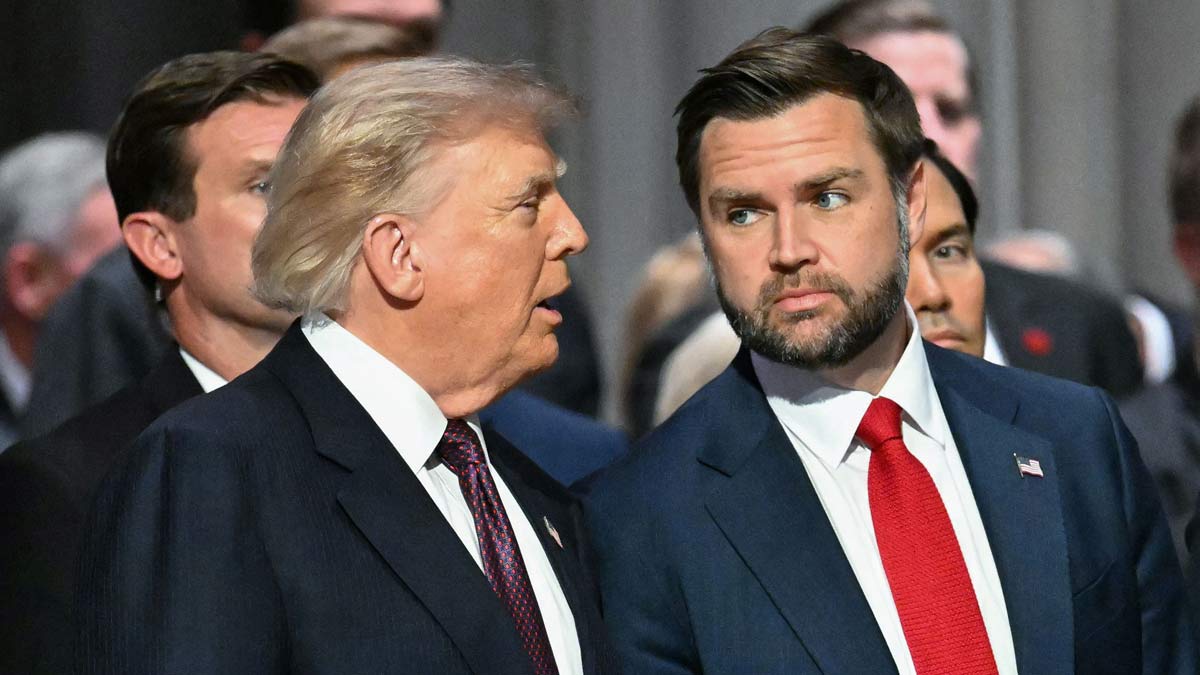
When a coalition built on non-interventionism and domestic affordability launches a prolonged military conflict, the electoral penalty arrives not through low base turnout, but through active defection among voters who feel their core contract was broken. Following the November 2026 midterm elections, in which Democrats flipped control of both chambers of Congress after the conflict with Iran that began alongside Israel in February, Vice President JD Vance publicly argued that the war was the primary driver of the Republican defeat. A rigorous strategic audit of that claim reveals why standard political reporting—which treats a single-factor blame statement as an explanation—misses the underlying mechanics. Winning coalitions fracture when foreign military commitments collide with household cost pressures, creating a measurable rift between executive foreign policy and voter expectations.
To analyze the 2026 midterm collapse accurately, we must separate the coalition breach hypothesis (Vance's central claim that prior Trump-Vance voters switched to Democrats over the war and related grievances) from adjacent structural pressures (such as grocery and fuel inflation, shifting views on the U.S.-Israel relationship, and candidate-level or district-level dynamics that are not yet fully disaggregated in post-election precinct data). Treating an executive's post-mortem as complete empirical proof is a classic analytical error; treating it as a diagnostic signal of coalition strain is far more useful.
Deconstructing the Competitor Narrative
Conventional coverage of Vance's post-election remarks centers on intra-party friction and 2028 positioning. While political positioning is an obvious subtext—especially given Vance's prior involvement in diplomatic talks with Tehran and his public contrast with President Donald Trump's assertion that the conflict was justified—focusing solely on personalities obscures the decision tree facing voters in autumn 2026.
A headline-driven summary typically stops at three surface observations: Vance blamed the Iran war, Trump defended the decision despite losing Congress, and Iranian officials interpreted the results as a voter rejection of the conflict. Those points identify events, but they do not explain vote switching. In midterm elections, parties frequently suffer losses due to thermostatic backlash or enthusiasm gaps. Vance's specific claim is sharper: he argued that core supporters turned out to vote, yet crossed over to the opposing party rather than staying home.
When an analyst accepts "the war caused the loss" without modeling intermediate variables, three logical gaps appear:
- Conflating proximate triggers with transmission channels. Military escalation does not move votes in a vacuum; it acts on voters through energy markets, household budgets, perceived distraction from domestic priorities, and disputes over alliance commitments.
- Treating coalition preferences as static. A voter who backed a ticket in 2024 may hold heterogeneous weights on anti-interventionism, inflation control, and regional alliances. A conflict that satisfies one faction can alienate another.
- Overstating single-cause attribution before granular precinct audits. Knowing that voters cited four broad themes—ending the Iran war, cost of living and inflation, an "America first" posture, and altering the U.S. relationship with Israel—does not establish the exact marginal weight of each factor in every congressional or Senate race.
The Four-Vector Defection Framework
Rather than treating Vance's four cited voter grievances as an unstructured list, we can model them as Four Vectors of Coalition Strain. Each vector represents a distinct mechanism through which an eight-month regional war erodes a populist-nationalist voting bloc.
1. The Sovereignty and Non-Intervention Vector
Populist-nationalist coalitions rely heavily on an explicit or implicit promise to restrain overseas entanglements and prioritize domestic resources. When an administration enters a sustained conflict in the Middle East—particularly after earlier diplomatic efforts stall or collapse—voters who joined the movement specifically to curb foreign interventions experience promise violation. For these voters, casting a ballot for the opposition in a midterm election functions as a punishment mechanism aimed at constraining executive war-making authority and signaling disapproval of prolonged military commitments.
2. The Cost-of-Living and Energy Transmission Vector
Foreign policy rarely stays confined to security desks when conflict touches energy-sensitive regions or global trade routes. Even where exact household-level elasticity varies by income tier, rising fuel and grocery prices act as an immediate tax on working- and middle-class voters. In political economy terms, salience follows pocketbook pain: a voter may be ambivalent about distant geopolitical maneuvering on day one of a strike, yet turn decisively against the incumbent party when pump prices or shipping-linked retail costs squeeze monthly budgets over several months.
3. The Alliance Alignment Vector
Vance also pointed to pressure among voters seeking a change in the U.S. relationship with Israel. When military operations are closely tied to regional partner actions—as with the U.S.-Israeli campaign initiated in February 2026—voters who favor strict bilateral restraint or who view foreign security commitments as a drain on domestic priorities can defect across ideological lines that previously held them inside the GOP tent. This creates a two-front squeeze: hawkish critics may argue the administration failed to achieve decisive resolution, while restraint-minded supporters argue Washington was drawn into an open-ended regional fight.
4. The Credibility and Intra-Party Friction Vector
Public divergence between senior leaders creates a signaling problem for persuadable and base voters alike. When the president frames the war as a necessary measure with no regrets while the vice president argues that losing the Senate for six years is a steep price that demands an honest reckoning, voters receive mixed signals about strategic coherence and internal unity. That friction can accelerate defection among swing-leaning former supporters who look for clear accountability rather than contested rationales.
Why Turnout vs. Defection Changes Campaign Math
One of the most important operational insights embedded in Vance's commentary is the distinction between demobilization and crossover defection. Traditional midterm post-mortems often assume a party loses because its base stays home. Crossover defection is structurally harsher for two reasons.
First, a voter who stays home subtracts one vote from the incumbent total, leaving the net margin unchanged relative to a non-voter. A voter who switches from the incumbent party to the challenger creates a two-vote swing in the margin between candidates. Across competitive Senate and House districts, modest crossover rates among prior supporters compound rapidly.
Second, crossover defection signals issue salience asymmetry. Voters rarely cross party lines over minor rhetorical disputes; they cross over when a specific policy failure overrides partisan loyalty. When prior supporters vote for the opposing party to register anger over war, inflation, or foreign entanglements, standard base-mobilization tactics—such as rallies emphasizing loyalty or abstract partisan identity—lose efficiency because the underlying friction is substantive rather than logistical.
Consider a district where 100 prior supporters are dissatisfied over fuel costs and war escalation. If 20 stay home, the incumbent loses 20 votes. If 20 instead vote for the challenger, the incumbent loses 20 votes while the challenger gains 20, widening the gap by 40 votes. Campaign operations calibrated for turnout gaps misallocate resources when the real leak is persuasion and retention.
Operational Lessons and Strategic Limits
For strategists, candidates, and party leaders evaluating what comes next after the 2026 midterms, diagnosing the failure is only step one. Turning diagnosis into durable recovery requires disciplined execution alongside a clear-eyed look at constraints.
Tactical Playbook for Post-Loss Realignment
- Audit precinct-level crossover before locking messaging. Pair statewide polling with county- and precinct-level comparisons against 2024 benchmarks to separate genuine crossover defection from lower-propensity midterm drop-off. Do not treat every competitive district as having the same grievance mix.
- Establish a unified, verifiable policy posture on conflict and costs. Voters punish mixed messages when leaders dispute whether a war was worth its political and economic price. Aligning executive and legislative messaging around concrete de-escalation criteria and tangible cost-of-living relief reduces ambiguity.
- Separate domestic affordability metrics from foreign policy debates. Voters evaluate inflation and household expenses in concrete, everyday terms—fuel, groceries, utilities—rather than macroeconomic averages or geopolitical rationales. Messaging must address household cost pressures directly rather than asking voters to accept economic strain as a byproduct of foreign strategy.
- Calibrate diplomatic and military commitments to domestic sustainability. Any foreign policy initiative that carries prolonged escalation risk must be stress-tested against domestic political endurance and energy-market exposure before commitments deepen.
Limitations and Boundary Conditions
No analytical framework or messaging adjustment acts as a silver bullet. First, external actors control escalation dynamics: regional adversaries and partners—including Iranian leadership and regional allies—make independent strategic decisions that can prolong instability or disrupt diplomatic off-ramps regardless of U.S. domestic electoral cycles. Second, divided government constrains rapid legislative fixes: with Democrats holding control of Congress following the 2026 midterms, the administration faces structural institutional checks that limit unilateral policy shifts and intensify scrutiny. Third, short-term price relief does not automatically erase trust deficits: even if energy prices stabilize or fighting pauses, voters who feel misled or ignored over an extended period may require sustained proof of restraint before returning.
Strategic Recommendation for the Next Cycle
The decisive strategic move for Republicans heading toward 2028 is to institutionalize strict foreign-intervention guardrails tied directly to domestic cost stability, rather than relitigating past blame in public. That means replacing reactive, personality-driven finger-pointing with a clear, enforceable doctrine: define explicit exit and de-escalation thresholds for overseas military operations, protect energy and supply-chain stability as a core national-security metric, and run candidates who treat household affordability as a non-negotiable baseline rather than a secondary talking point. A party that proves it can avoid open-ended foreign entanglements while keeping daily living costs manageable will recapture defectors far faster than one that argues over who deserves credit or blame for a costly war.