Four seconds.
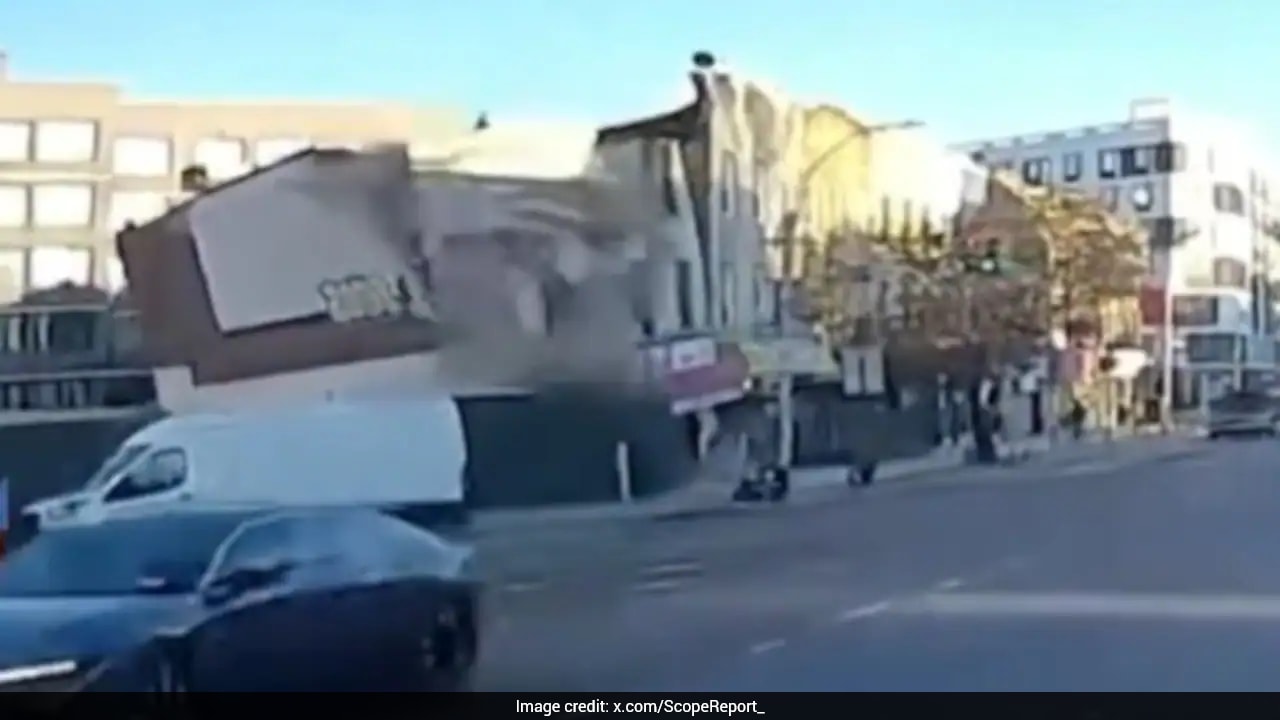
That is all the time it takes for a five-story brick structure in Brooklyn, built before the First World War and patched together across a dozen different administrations, to forget how to stand up. On a grainy, timestamped surveillance feed recovered from a bodega across the street, you do not see a dramatic Hollywood explosion, nor do you hear the cinematic roar of twisting steel. You see a quiet Tuesday morning pause, a sudden, sickening exhale of pulverized lime mortar from the second-floor lintels, and then gravity simply collects a debt that had been compounding for forty years.
Eight people did not come home for dinner that night.
When breaking news alerts flash across our phones, tragedies like this are immediately compressed into sterile, digestible metrics—death tolls, square footage, municipal violation numbers, and the cold, looping choreography of security camera footage. We watch the clip on mute while waiting for our coffee, wince at the grey plume swallowing a parked sedan, and scroll onward toward the weather forecast. Yet behind that pixelated collapse lies an invisible architecture of neglect, human resilience, and the terrifying fragility of the spaces we trust to keep the sky off our heads.
The Architecture of an Ordinary Morning
To understand what actually happened in those four seconds, we have to step away from the grainy video and walk through the front door ten minutes before the first brick shifted.
Consider a hypothetical composite of the people who lived behind that weathered brownstone and red-brick facade—let us call her Elena, a retired transit worker on the third floor who kept potted geraniums on her fire escape, and Marcus, a night-shift hospital orderly on the ground level who had just set a kettle on the stove. For Elena and Marcus, the building was not a real estate asset, an investment portfolio line item, or a pending docket number at the Department of Buildings. It was the smell of cardamom and radiator steam in January. It was the familiar groan of the stairwell banister that leaned two degrees to the left.
We are conditioned to believe that buildings are permanent. Unlike cars, which rattle and sputter when a belt is fraying, or human bodies, which spike fevers to announce an infection, masonry suffers in silence.
Think of an aging load-bearing brick wall like a stack of dry crackers supporting a heavy cast-iron skillet. For years, the stack holds steady, even if moisture seeps into the bottom layer and crumbles a corner away. You can add another plate on top, hang heavy cabinets from the side, or drill channels through the middle for new copper plumbing, and nothing visibly moves. The structure compensates, redistributing thousands of pounds of downward pressure onto whatever healthy brick remains. Until one Tuesday morning, when a delivery truck rumbles over a pothole outside, a single overstressed joint shears, and the entire stack turns to powder at once.
That silent redistribution of weight is what makes urban structural failures so insidious. In New York City, where the median residential building is nearly a century old, thousands of structures are quietly carrying loads they were never engineered to bear. Roofs get layered with heavy waterproofing membranes without stripping the old ones. Ground-floor storefronts have interior walls knocked out to create open-concept cafes, robbing the upper stories of lateral bracing. Water—the relentless, patient enemy of all masonry—sneaks behind parapet walls during freeze-thaw cycles, turning solid mortar into damp sand.
What the Surveillance Video Actually Reveals
Look closely at the newly released footage, frame by frame, and the narrative shifts from a freak accident to an autopsy of warning signs.
In the upper left corner of the frame, just before the facade buckles outward, there is a distinct horizontal bulge along the third-floor masonry. Structural engineers call this "out-of-plane buckling," and it rarely happens overnight. Long before a wall bows outward into the street, doors inside the apartments begin to stick in their frames. Hairline stair-step cracks appear in the plaster above windows. Dust sifts down from ceiling moldings whenever someone walks heavily across the upstairs floorboards.
Living in a city like Brooklyn teaches you a dangerous kind of fluency in ignoring these whispers. Every New Yorker knows the symphony of an old building settling—the hiss of pipes, the uneven slope of a pre-war hallway where a dropped marble rolls straight toward the kitchen sink. When you live with quirks every day, it becomes nearly impossible to tell the difference between benign old age and lethal fatigue. You put a folded piece of cardboard under the table leg, repaint over the crack in the hallway, and go to work.
I remember standing in the basement of a similar walk-up in Crown Heights several years ago, shining a flashlight onto a main support beam that had been notched halfway through by a careless plumber decades earlier. The wood was split along the grain, weeping dark sap under the weight of four apartments above it. What struck me wasn't just the danger; it was the sheer ordinariness of the room. Next to that compromised beam sat a child's red tricycle, a stack of holiday decorations, and a washing machine mid-cycle. Danger in dense cities rarely wears a warning label. It sits quietly beside our laundry.
The Invisible Ledger of Deferred Maintenance
Why do buildings reach the brink of catastrophic collapse in one of the most heavily regulated cities in the world? The answer sits in the gap between paper compliance and physical reality.
Every major urban center maintains an intricate web of building codes, facade inspection laws, and violation databases. On paper, the system looks airtight. If a tenant calls 311 to report a bowing wall or crumbling bricks, an inspector is dispatched, a violation is logged, and fines begin to accrue.
But a violation notice taped to a lobby door does not hold up a lintel.
When ownership changes hands through opaque limited liability companies, or when a landlord calculates that paying incremental municipal fines is cheaper than erecting sidewalk scaffolding and rebuilding a load-bearing wall, the building enters a perilous limbo. Enforcement agencies are chronically outmanned, forced to triage tens of thousands of open complaints with a fraction of the engineers required to verify repairs. Meanwhile, unpermitted interior renovations—often performed quickly over weekends without architectural sign-offs—hollow out the structural skeleton from the inside while the exterior brick still looks passable from the sidewalk.
The eight people killed in Brooklyn were trapped inside that bureaucratic blind spot. In the days following a collapse, officials inevitably recite the history of open permits, past complaints, and pending court dates. Those records always read like a slow-motion prophecy. Every missed inspection and every delayed repair order becomes a brick removed from the foundation, long before the surveillance camera ever captured the final fall.
The Anatomy of the Aftermath
Once the dust cloud settles—literally coating neighboring windshields and bodega awnings in a fine, chalky grey—the nature of the tragedy changes from structural to visceral.
First comes the eerie, unnatural silence that always follows a collapse. Car alarms wail in the distance, and broken water mains hiss beneath the rubble, yet the human voices vanish for several long, suspended heartbeats. Neighbors emerge from adjacent storefronts with hands over their mouths, unable to process that a familiar skyline silhouette has simply vanished into a two-story mound of timber, brick, and twisted radiator pipes.
Then arrive the search-and-rescue teams, working in shifts that defy human exhaustion. Rescuing survivors from a pancake collapse is agonizingly delicate work. You cannot simply bring in excavators and scoop away the debris; shifting a single steel I-beam by three inches can trigger a secondary shift that crushes air pockets deep below. Firefighters and urban search specialists crawl into spaces barely wider than their shoulders, listening through acoustic sensors for the faintest tap of a fingernail against a pipe, shoring up unstable concrete slabs inch by inch with hydraulic struts and timber cribbing.
Eight times, those rescue teams carried someone out under a white sheet instead of onto a waiting stretcher.
Each of those eight lives carried an entire universe of unfinished plans—unanswered text messages on kitchen counters, groceries waiting in refrigerators, shifts scheduled for the following week. When we reduce them to an integer in a headline, we insulate ourselves from the true cost of structural apathy.
Reading the Walls Around Us
It is terrifying to realize how completely we surrender our safety to unseen math every time we step inside a building. We do not inspect the welds on the elevator cables, nor do we calculate the compressive strength of the mortar above our beds. We rely on an unspoken social contract: that the builders built honestly, that the owners maintained diligently, and that the city watched vigilantly.
Most of the time, that contract holds. Millions of people sleep safely beneath century-old roofs every night across the five boroughs. Yet the Brooklyn collapse strips away the illusion that catastrophic failure is something that only happens in distant earthquakes or developing nations with lax codes. It happens right here, on quiet residential blocks, whenever profit, bureaucracy, and apathy align against basic physics.
Watch that security footage one more time, not as a spectacle of destruction, but as a warning written in brick and dust. Notice how fast the ordinary turns into the irreversible. Notice how there is no warning siren, no countdown, and no second chance once the mortar gives way.
Somewhere in the city tonight, a landlord is staring at an engineer's estimate for a structural repair and deciding to put it off until next spring, while upstairs, a kettle begins to whistle on a kitchen stove.


