The alarm rings at four-fifteen in the morning. Outside, the world is dead quiet, wrapped in a heavy, freezing fog that clings to the pavement like wet wool. Inside a small, dimly lit kitchen, Elena stands barefoot on the cold tile floor, staring intently at the tiny digital scale on her counter. She is weighing three grams of white powder.
Her muscles still ache from yesterday's threshold intervals—a deep, dull throb that feels like bruised iron embedded deep in her thighs. She is thirty-four, an age when the sports science textbooks quietly suggest that recovery should take twice as long, and her window to qualify for the Olympic trials is shrinking like a shadow at noon.
She pours the powder into a shaker bottle, adds water, and drinks. It tastes bitter, chemical, and sharp.
She does not take it because she loves the ritual. She takes it because survival in modern athletics requires every microscopic advantage science can squeeze out of human biology.
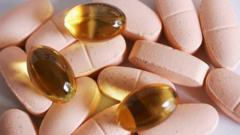
We talk about sports through the lens of character, grit, and sacrifice. We worship the sweat, the bleeding calluses, the shattered records. But beneath the romantic poetry of athletic achievement lies an invisible chemistry lab. Thousands of athletes wake up every day and consume precise combinations of amino acids, nitrates, vitamins, and cellular fuel.
They are not looking for shortcuts. They are looking for the exact edge that separates a gold medal from a forgotten fourth-place finish.
To understand what top competitors consume, we have to strip away the glossy supplement marketing and look at the raw mechanics of human breakdown and repair.
The Engine and the Burn
Consider what happens inside Elena's body when she hits the track. Her lungs are pulling in air at forty liters per minute. Her heart is hammering at one hundred and eighty beats per minute, pumping oxygen-rich blood to starved muscle fibers. Within seconds, her cells begin tearing through stored glycogen.
As intensity climbs, metabolic waste products accumulate. Hydrogen ions flood the muscle tissue, dropping the pH balance. That burning sensation in her legs? That is acid accumulation shutting down her muscular contractions.
This is where the first major class of athletic fuel enters the story: creatine and beta-alanine.
Creatine monohydrate is perhaps the most misunderstood molecule in fitness. People still whisper about water weight or kidney strain, ignoring decades of peer-reviewed data showing it is one of the safest, most effective ergogenic aids on earth. Think of your muscles as a rechargeable battery pack. Adenosine triphosphate, or ATP, provides the instantaneous energy for explosive movement. But your body only stores enough ATP for about two seconds of maximal effort.
Creatine acts as a rapid-response logistics team. It donates a phosphate molecule back to depleted adenosine diphosphate, instantly regenerating ATP. For Elena, taking creatine daily means she can push through one more interval at peak power before her muscles wave the white flag.
Beta-alanine works on a different front. It combines with histidine inside the muscle to form carnosine, a natural buffer against those acid-induced burn symptoms. When Elena consumes beta-alanine consistently, her muscles acquire a higher buffering capacity. The burn arrives later. The wall moves back.
The Architect of Repair
Training does not actually make you stronger.
That is the dirty secret of athletics. Hard training breaks you down. It micro-fractures muscle fibers, depletes hormonal reserves, and stresses the nervous system to its absolute limit. Strength, speed, and endurance are forged in the quiet hours after the workout, during the body's frantic reconstruction phase.
If you starve the body during this window, adaptation stalls.
Elena knows this better than anyone. Two years ago, she tried to train through persistent fatigue, cutting calories and ignoring her post-workout nutrition. She ended up with a severe stress fracture in her tibia that sidelined her for six months. The human body is a fiercely protective machine; if it does not have the raw building blocks to repair tissue, it simply stops responding to stress.
Enter the heavy hitters of recovery: whey protein and branched-chain amino acids, specifically leucine.
When Elena finishes a grueling two-hour session, her muscle protein synthesis is screaming for raw materials. Whey isolate delivers a rapid spike of essential amino acids directly into her bloodstream within twenty minutes. Leucine acts as the master switch, flipping on the cellular machinery required to rebuild torn muscle tissue thicker and stronger than before.
Yet, nutrition is not just about muscle tissue. It is about the invisible mechanics of oxygen transport.
Nitrates, usually harvested from concentrated beet juice, act as a vasodilator. When Elena drinks a concentrated nitrate shot ninety minutes before a time trial, her body converts those nitrates into nitric oxide. This gas relaxes the smooth muscle lining her blood vessels, causing them to widen. Wider highways mean more blood flow, lower oxygen cost for the same speed, and delayed exhaustion.
It is legal doping engineered by nature.
The Psychology of the Edge
There is a psychological weight to supplementation that sports scientists rarely talk about in their white papers.
When you swallow a capsule or mix a powder, you are performing a ritual of intent. You are telling your brain that you are doing everything humanly possible to win. Placebo effect or not, that mental certainty matters when you are standing on the starting line, staring down competitors who look just as hungry as you are.
Elena shakes out her legs as she steps out the front door into the dark, pre-dawn chill. The air bites at her face. Her stomach feels slightly heavy from the supplement stack she just ingested.
She jogs down the driveway, her joints stiff, her breath pluming white in the streetlamps. The first mile hurts. It always hurts. But somewhere around the second mile, her stride smooths out. The chemicals in her bloodstream begin to do their quiet, invisible work, buffering the acid, firing the ATP, opening the blood vessels, holding her together against the relentless pull of fatigue.
She leans into the dark, chasing the clock.