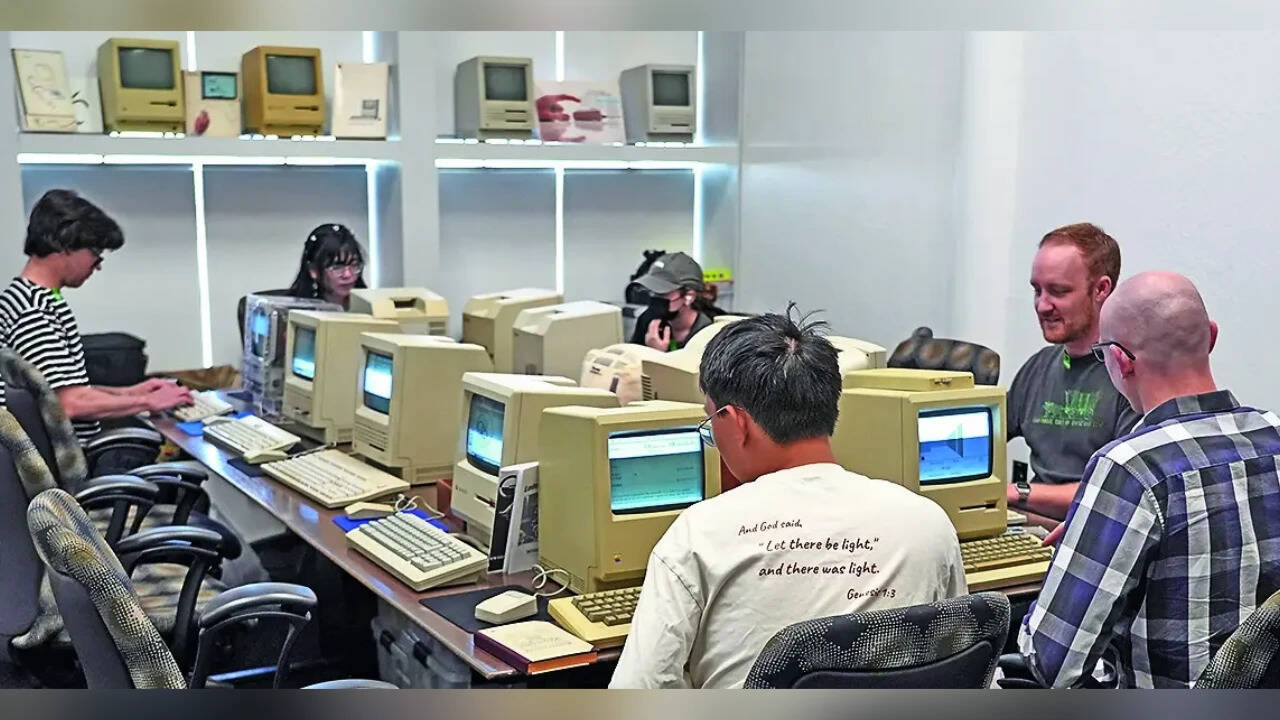
Asset appreciation in vintage computing is driven by a convergence of cognitive nostalgia, hardware mortality, and finite physical supply. As contemporary digital interfaces become increasingly abstracted, opaque, and cloud-dependent, a distinct market segment is reallocating capital toward tangible, transparent, and historically significant computational hardware. This shift is not merely sentimental; it reflects a calculated valuation model where scarcity, architectural uniqueness, and historical precedence dictate market liquidity. Understanding why early hardware commands premium valuations requires deconstructing the primary cost drivers, failure modes, and structural asymmetries defining the vintage technology market.
The Supply Side Dynamics of Obsolete Hardware
The fundamental variable governing the vintage computer market is absolute supply contraction. Unlike traditional collectibles such as fine art or numismatics, early consumer and enterprise electronics were engineered without preservation in mind. They were tools subjected to heavy depreciation, physical degradation, and eventual disposal. For a different perspective, see: this related article.
The mortality rate of vintage computers operates on three distinct vectors:
- Component Degradation: Electrolytic capacitors dry out, lithium batteries leak and corrode printed circuit boards, and plastics become brittle through photo-oxidation. Restoring functional utility requires specialized micro-soldering and component harvesting, introducing a high barrier to entry for prospective collectors.
- Consumable Depletion: Storage media such as magnetic core memory, 5.25-inch floppy disks, and early hard disk drives possess finite lifespans. As these physical media degrade, the operational integrity of the system drops to zero unless accompanied by functional software archives.
- Enterprise Scrappage: Institutional computers—such as early mainframes, minicomputers, and specialized workstations—faced aggressive corporate scrapping cycles to reclaim floor space and secure proprietary data. Consequently, survival rates for high-end enterprise hardware are significantly lower than mass-market consumer devices.
These vectors create a fixed supply curve. Unlike modern manufacturing, where supply elasticity responds to price signals, the supply of a specific 1970s or 1980s computer architecture is permanently fixed or slowly declining. Further analysis on this trend has been provided by ZDNet.
Architectural Significance and the Valuation Hierarchy
Market pricing does not scale linearly with age. A forty-year-old generic terminal holds negligible value compared to a commercially unsuccessful yet architecturally pivotal microcomputer from the same era. Capital concentration targets specific nodes within technological history.
The Innovation Catalyst
Systems that introduced a paradigm shift in human-computer interaction command the highest valuation multiples. The inclusion of a graphical user interface, a mouse-driven operating system, or a novel microprocessor architecture transforms a utilitarian electronic device into a historical artifact. The valuation reflects its distance from the baseline of computing evolution; machines that forced an industry pivot retain enduring desirability.
Manufacturing Run Volume
Inverse scarcity governs the asset class. Units produced in low volumes due to commercial failure often become the most sought-after collector items because their absolute scarcity guarantees liquidity constraints. Conversely, mass-market units produced in the millions require extraordinary condition metrics to achieve notable secondary market pricing.
Provenance and Documentation
Original packaging, factory documentation, unblemished serial number plates, and verified chain of ownership act as cryptographic proofs of authenticity in an unregulated market. Hardware with verified enterprise or developer provenance trades at a substantial premium over loose, unverified units sourced from secondary liquidators.
The Psychological and Sociological Drivers of Capital Allocation
The capital driving this market originates primarily from individuals who experienced the formative years of personal computing during their youth. This cohort has reached peak earning potential, enabling discretionary spending on high-value emotional assets.
The psychological motivation centers on tactile autonomy. Modern computing environments abstract hardware layers behind layers of software virtualization, operating system restrictions, and remote service dependencies. Vintage hardware offers complete mechanical and logical transparency. Every transistor, trace, and register is accessible, understandable, and modifiable by a single operator. This sovereignty over the machine represents a stark counter-balance to contemporary software ecosystems characterized by forced updates, telemetry, and closed architectures.
Furthermore, ownership functions as a form of curation. Collectors act as decentralized archivists, preserving physical instances of technological history that institutional museums often lack the space or specialized engineering talent to maintain.
Market Inefficiencies and Information Asymmetries
The vintage computing ecosystem lacks the standardized pricing indices found in traditional equity or commodity markets. This structural inefficiency creates distinct risks for capital deployment.
- Condition Ambiguity: Grading standards are subjective. A unit described as "untested" frequently masks unrecoverable logic board corrosion or blown power supply units. Without rigorous diagnostic testing documentation, valuation is speculative.
- Restoration Risk: Professional restoration requires scarce skill sets. The cost of labor, specialized diagnostic equipment, and rare replacement silicon often exceeds the post-restoration market value of the hardware.
- Counterfeiting and Part Swapping: High-value systems are vulnerable to component hybridization, where reproduction cases or non-original internal boards are assembled to mimic rare configurations.
Navigating these inefficiencies requires treating acquisitions with the rigor of distressed asset investing. Due diligence must prioritize physical inspection of critical sub-assemblies, verification of proprietary integrated circuits, and assessment of structural chassis integrity.
Long-Term Capital Preservation and Strategic Positioning
As physical degradation accelerates and the pool of operational machines shrinks, the market bifurcates. Common systems in average condition will transition into decorative novelties with stagnant pricing, constrained by the ongoing cost of maintenance. Conversely, pristine, historically critical units with documented provenance will continue to behave as ultra-scarce alternative assets, decoupled from broader macroeconomic cycles.
Future valuations will not be driven by nostalgic impulse alone, but by the availability of functioning reference hardware capable of demonstrating the physical foundations of the digital age. Long-term custodianship demands climate-controlled storage, proactive component stabilization, and the systematic digitization of accompanying software libraries to ensure the underlying assets retain both their historical integrity and their economic utility.