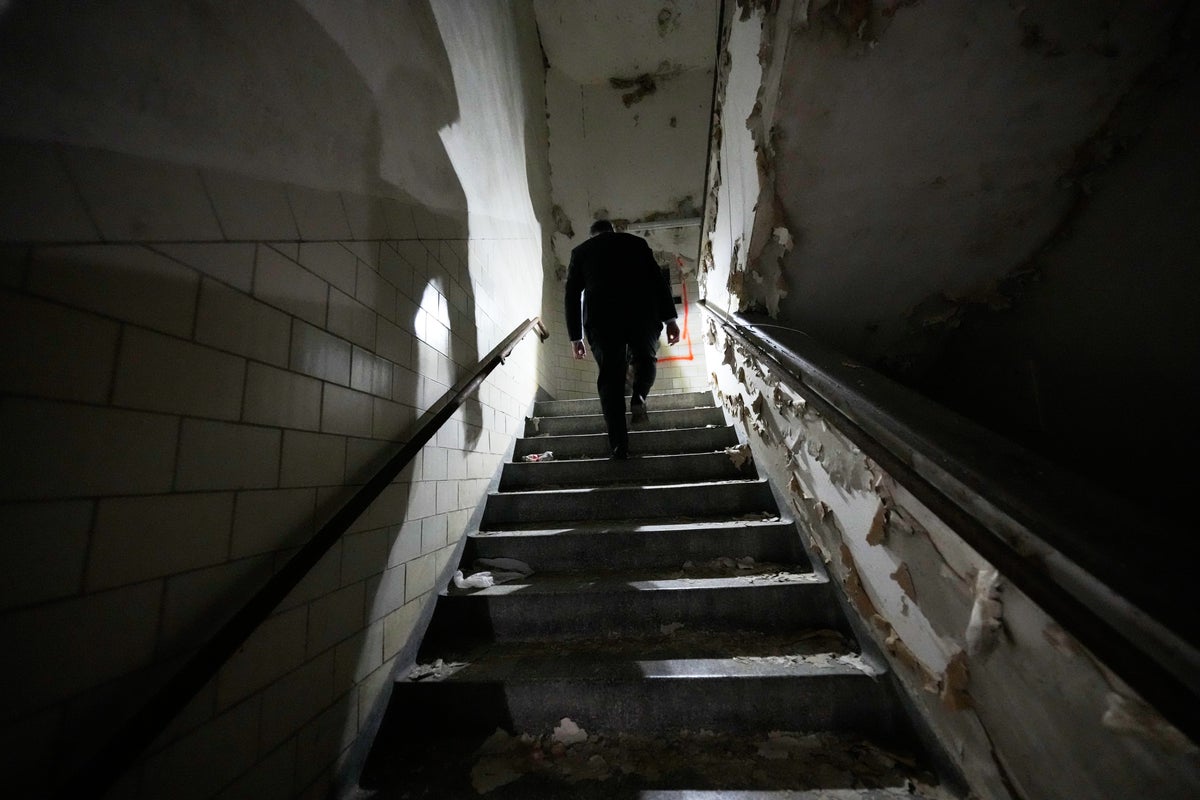
Urban assets damaged by catastrophic exogenous shocks face a distinct economic lifecycle, characterized by extended periods of blight followed by complex capital allocation maneuvers. The multi-decade dormancy of New Orleans' historic Charity Hospital offers a case study in how institutional inertia, structural degradation, and shifting municipal healthcare delivery models interact. Tulane University's commitment to spearhead a five hundred million dollar conversion of the million-square-foot art deco property into a biomedical research hub highlights the financial mechanisms necessary to reverse long-term urban decay.
The Mechanics of Structural Abandonment
When an institutional asset of this scale is removed from active circulation, it triggers a multi-variable decay function across the surrounding micro-economy. The closure of the Charity Hospital system in 2005 following the systemic failure of regional flood protection infrastructure created an immediate vacuum in urban healthcare safety nets.
The subsequent inaction spanned more than two decades due to three core friction points:
- The Capital Deficit: Restoring a million-square-foot 1930s-era structure requires capital expenditure thresholds that traditional municipal balance sheets cannot absorb without heavy reliance on federal disaster relief allocations or private institutional endowments.
- Asset Valuation Discrepancies: Disagreements between operating entities like Louisiana State University and local community stakeholders regarding structural integrity post-flooding created analytical paralysis. Remediation costs were initially projected against outdated operational models rather than modern adaptive reuse parameters.
- Opportunity Cost Stagnation: The physical footprint remained a zero-yield asset, depressing adjacent commercial land values and preventing agglomeration economies from forming in downtown New Orleans.
The Shift from Acute Care to Biomedical R and D
The operational pivot from a safety-net hospital to a biomedical research and startup ecosystem reflects a broader evolution in urban real estate recovery. Modern municipal revitalization strategies abandon traditional high-volume inpatient care models for high-margin, knowledge-intensive sectors.
By integrating laboratory spaces, public health classrooms, and incubator environments targeted for completion by 2029, the initiative alters the economic multiplier of the property. Research hubs generate high-density, high-wage employment clusters that induce secondary service-sector growth, diverging sharply from the direct-cost burdens associated with legacy public hospital frameworks.
Risk Factors in Mega-Scale Adaptive Reuse
Transforming storm-damaged historic architecture involves severe execution risks that standard project management frameworks must account for:
- Supply Chain and Material Constraints: Sourcing specialized remediation materials compatible with 1930s art deco structural requirements while incorporating contemporary climate resilience standards introduces severe timeline volatility.
- Integration Friction: Merging academic research infrastructure with commercial startup spaces inside a historic envelope creates mechanical, electrical, and plumbing engineering bottlenecks.
- Macroeconomic Exposure: A five-hundred-million-dollar capital deployment timeline extending across multiple years exposes the balance sheet to interest rate fluctuations and localized labor shortages.
To maximize the long-term utility of the asset without repeating historical redevelopment failures, project stakeholders must prioritize modular construction phasing and establish strict milestone gatestied to federal compliance frameworks.