Large-scale private land acquisition in the American West represents a distinct intersection of ecological restoration and private asset management. When capital is deployed into multi-thousand-acre landholdings, the underlying economic mechanics differ fundamentally from traditional real estate speculation or standard agricultural production. The transformation of a working cattle property into an apex-predator and ungulate sanctuary involves specific trade-offs between biological carrying capacity, carrying costs, and institutional permanence. Deconstructing this asset class reveals how private wealth can alter regional biodiversity metrics through long-term capital commitment rather than short-term extraction.
The Asset Architecture of Large-Landscape Conservation
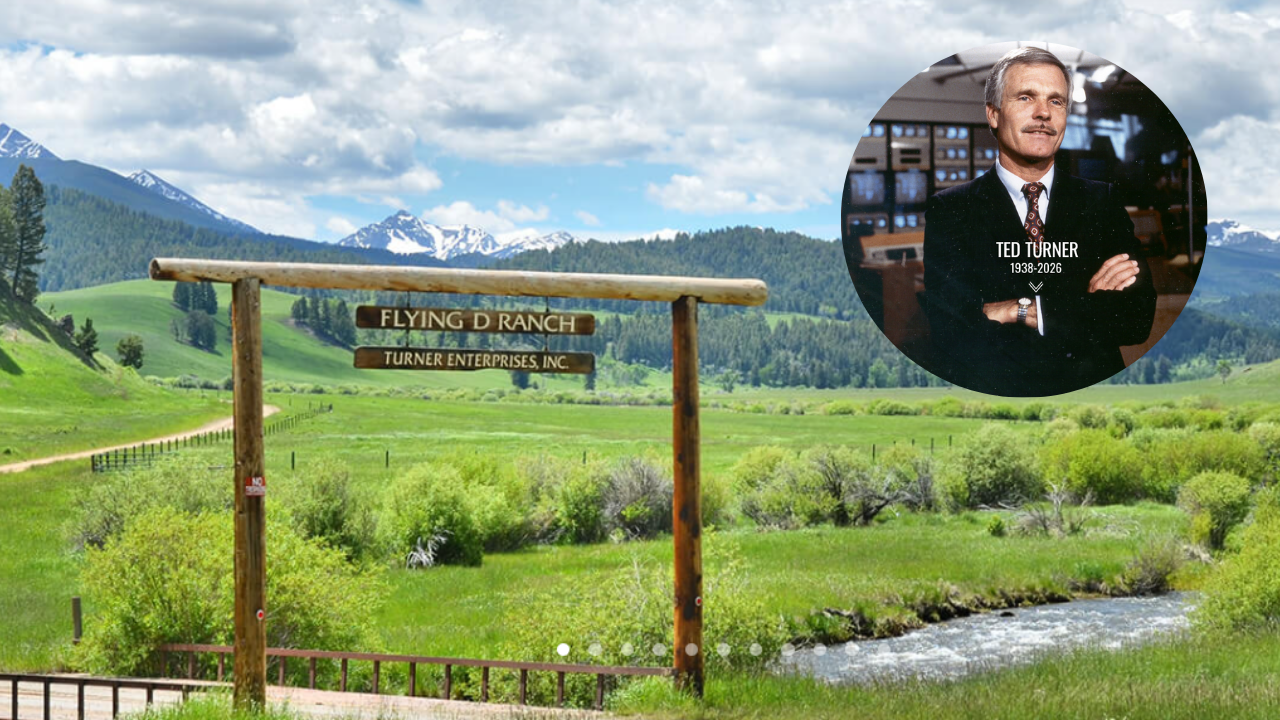
The acquisition of contiguous tracts exceeding one hundred thousand acres—typified by properties like the Flying D Ranch south of Bozeman, Montana—creates a self-contained ecological matrix. Standard agricultural economics evaluates land primarily through yield per acre of a single commodity, such as beef or timber. Conservation-oriented land management alters this equation
Land Capitalization and Ecological Scale The Economics of Ted Turner and Private Conservation
business, travel
Large-scale private land acquisition operates on a distinct set of economic, ecological, and logistical variables. When private capital converts millions of acres of working landscapes into conservation reserves, it alters regional land-use patterns, shifts local tax structures, and changes the carrying capacity of native wildlife populations. Examining the historical accumulation of over two million acres by media entrepreneur Ted Turner across the American West reveals the underlying structural mechanics of private land stewardship, wildlife reintroduction dynamics, and the hidden cost functions of managing macro-scale ecosystems.
Private conservation at a continental scale is fundamentally an exercise in asset management, capital allocation, and boundary negotiation. Public lands are subject to shifting legislative priorities, multiple-use mandates like grazing and timber extraction, and bureaucratic friction. Private land bypasses these constraints, allowing a single entity to execute uniform management decisions across vast geographic gradients. This operational autonomy creates a unique laboratory for rewilding initiatives, predator-prey dynamics, and capital-intensive land restoration.
The Capital Structure of Large-Scale Land Acquisition
Acquiring contiguous or semi-contiguous tracts of land totaling over two million acres requires sophisticated deployment of liquidity, debt instruments, and asset-holding entities. Real estate at this scale is rarely purchased as a single contiguous block; it represents an aggregation of ranches, homesteads, and agricultural parcels acquired over decades.
The acquisition vector follows a distinct economic lifecycle:
- Undervalued Agricultural Asset Identification: Purchasing distressed or marginally profitable cattle ranches where the primary asset value lies in the underlying dirt and water rights rather than operational agricultural yield.
- Enterprise Conversion: Shifting the land use from high-impact livestock grazing to low-intensity native herbivore grazing, specifically American bison, combined with strict hunting and public access restrictions.
- Carrying Cost Mitigation: Utilizing agricultural tax exemptions, conservation easements, and eco-tourism revenue to offset the ongoing operational expenditure of land maintenance, property taxes, and habitat restoration.
The primary constraint in this model is not acquisition capital, but ongoing operational liquidity. Land does not generate a cash flow equivalent to commercial real estate or equity portfolios. Consequently, private conservationists must subsidize the holding costs through auxiliary revenue streams, such as commercial bison meat production, high-end hunting permits, and ecotourism ventures. Without these monetization mechanisms, private reserves risk forced liquidation or subdivision during macroeconomic downturns.
The Ecological Cost Function of Apex Predators and Megafauna
Reintroducing species such as wolves, grizzly bears, and bison onto private holdings changes the local ecology, but it also introduces complex operational liabilities. An ecosystem is not a static canvas; it is a dynamic network characterized by feedback loops, carrying capacities, and boundary permeability. Wildlife does not recognize property lines.
When apex predators and large ungulates occupy a landscape, they impose direct economic externalities on neighboring landowners. Wolves and grizzly bears cross private boundaries to predate on neighboring livestock. Bison damage perimeter fencing designed for domestic cattle. This spatial bleed creates friction between private conservation reserves and surrounding agricultural communities, leading to intense political and social pushback.
To analyze this system, we must examine the ecological cost function:
$$C_{total} = C_{acquisition} + C_{operations} + C_{externalities}$$
Where $C_{externalities}$ includes neighbor relations, fence maintenance, livestock depredation compensation, and regulatory compliance. In a public land model, externalities are absorbed by taxpayers and local communities. In a private model, the landholder must internalize these costs to maintain social license and legal compliance.
Managing bison at scale requires specialized infrastructure. Unlike domestic cattle, bison are physically powerful, unpredictable, and capable of jumping or breaking standard barbed-wire fencing. Turner Enterprises addressed this by constructing heavy-duty multi-strand wire fencing, establishing handling facilities capable of processing massive animals, and implementing rotational grazing protocols that mimic historic migratory patterns without destroying riparian zones.
Water Rights, Irrigation, and Hydrological Economics
In the semi-arid American West, land ownership is functionally secondary to water ownership. A ranch without senior water rights is an ecological desert during drought cycles. Private conservation requires the acquisition and protection of instream flow rights, ditches, and headwaters.
The traditional Western water doctrine operates on the principle of prior appropriation, colloquially known as "first in time, first in right." To secure the ecological health of a massive landholding, an owner must not only control the land surface but also buy out upstream diversion rights to ensure that rivers and streams maintain sufficient volume to support native fisheries, riparian vegetation, and wildlife populations.
This creates a zero-sum economic conflict between agricultural irrigation and ecological restoration. When water is left in the stream to support native cutthroat trout or downstream wetlands, upstream agricultural users lose access to irrigation volume. Private conservationists must navigate this friction by purchasing senior water rights and voluntarily retiring them or converting them to conservation use—a process fraught with state-level administrative hurdles and local opposition.
The Mechanics of Enterprise Bifurcation: Conservation vs. Commercial Operations
Operating a multi-million-acre conservation footprint requires bifurcating the enterprise into two distinct operational units: the preservation core and the commercial engine.
The preservation core focuses on biodiversity metrics, soil carbon sequestration, invasive weed eradication, and wildlife monitoring. This division operates at a net financial loss, functioning as a philanthropic or legacy asset.
The commercial engine must generate sufficient revenue to subsidize the preservation core. In the Turner model, this is achieved primarily through the commercial harvest and sale of bison meat, branded as an environmentally sustainable red meat alternative. By transforming a conservation asset (a growing bison herd) into a marketable commodity, the enterprise creates a self-reinforcing financial feedback loop:
[Habitat Expansion]
       │
       ▼
[Bison Population Growth]
       │
       ▼
[Commercial Harvest & Sale]
       │
       ▼
[Revenue Generation]
       │
       ▼
[Land Acquisition & Maintenance]
This model challenges the traditional conservation paradigm, which posits that land must be entirely removed from economic productivity to be preserved. Instead, it demonstrates that sustainable utilization of native species can fund the restoration of native landscapes, provided the scale of the operation is large enough to absorb market fluctuations and high overhead costs.
Evaluating the Scalability and Limitations of Private Land Conservation
While private reserves demonstrate the viability of large-scale habitat restoration, the model has structural ceilings.
First, it relies entirely on the concentration of immense private wealth. The longevity of the conservation effort is tied to estate planning, foundation governance structures, and the post-mortem intent of the primary benefactor. If future generations or governing boards alter the mandate, vast tracts of restored land could be subdivided, resold for real estate development, or returned to intensive agricultural production.
Second, private conservation cannot replace public land management in regions requiring landscape-scale connectivity. While two million acres represents an enormous footprint, it remains an island in a fragmented sea of federal lands, state parcels, and private ranches. True ecological resilience requires cross-boundary cooperation between private entities and federal agencies like the Bureau of Land Management and the U.S. Forest Service.
Private land conservation at this scale is not a scalable public policy solution; it is an idiosyncratic, capital-intensive intervention. It succeeds where individual vision, massive liquidity, and strategic asset management converge to alter the trajectory of specific regional ecosystems. The enduring legacy of these mega-ranches lies not in their isolation, but in their demonstration that working landscapes can be re-engineered to support biodiversity without collapsing the underlying economic engine required to sustain them.