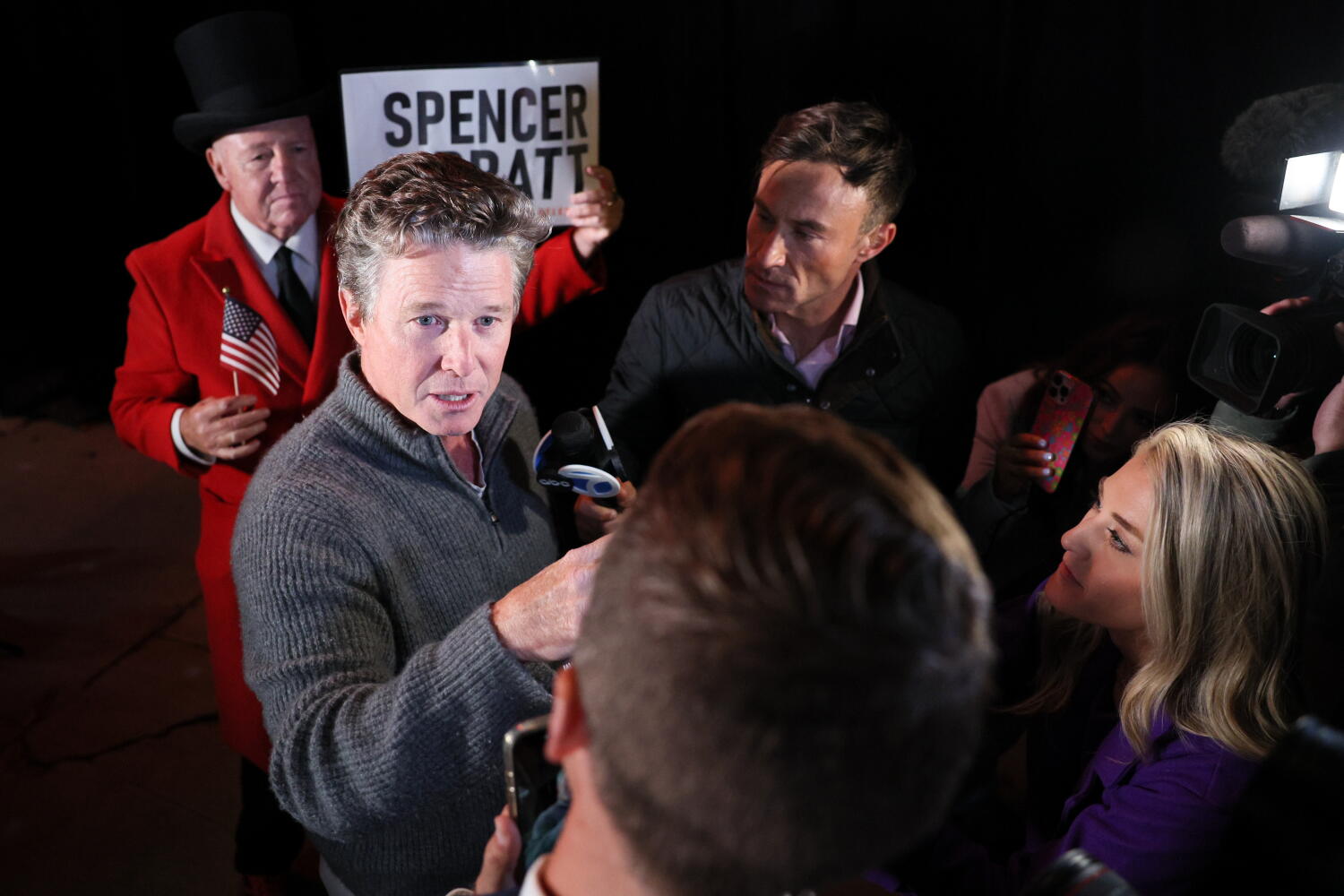
The trajectory of a public figure's exile from elite media is rarely a function of moral absolute. Instead, it is an economic calculation governed by brand toxicity, audience amortization, and the structural clearing price of institutional risk. When a talent is severed from a flagship platform—such as an anchor losing a morning franchise following a leaked archival recording—the market undergoes a period of liquidity drying. The duration of that exile is determined by the rate at which the asset's utility outweighs the liability of its historical association.
The ten-year timeline separating a high-profile termination and a subsequent high-profile network acquisition offers a clear case study in reputational depreciation curves. This analysis deconstructs the mechanics of media rehabilitation, the valuation of legacy talent in a fractured ecosystem, and the structural incentives that govern corporate talent acquisition in polarized broadcasting.
The Decay Constant of Brand Toxicity
When institutional capital abruptly dissociates from a personality, the immediate consequence is a complete write-down of short-term commercial value. Advertisers flee, syndication partners exercise moral clauses, and network executives prioritize risk mitigation over revenue optimization. This creates an initial steep drop in the talent's market value, rendering them radioactive to mainstream distributors.
However, brand toxicity is not a permanent state; it decays over time according to a predictable function. The rate of this decay is dictated by three primary variables:
- Frequency of Incident Reinforcement: Whether the market is forced to continuously re-engage with the scandal through ongoing litigation, recurring public statements, or overlapping controversies. If the event remains isolated in a fixed point in the past, the decay curve accelerates.
- Ecosystem Evolution and Fatigue: The rate at which the media landscape introduces newer, more volatile controversies that displace the historical event in the public consciousness. As media attention spans compress, older infractions lose their relative shock value.
- Re-Entry Positioning: The deliberate pivot of the individual from mainstream neutrality to a specialized, highly engaged niche where the historical infraction is either neutralized or converted into a badge of anti-establishment resilience.
During the early phase of exile, any attempt at re-entry fails because the cost-benefit ratio for a major network is overwhelmingly negative. The legal and public relations overhead of managing backlash eclipses the projected ratings lift. Consequently, the exiled figure must operate in low-margin, independent digital channels to maintain baseline visibility without incurring institutional overhead.
The Mechanics of Strategic Re-Anchoring
A return to a major linear or cable network after a prolonged absence requires a fundamental shift in the supply-and-demand dynamics of television talent. Networks do not hire for rehabilitation; they hire for audience capture and demographic alignment. For an acquisition of this nature to occur, the hiring entity must evaluate three specific economic pillars:
Audience Migration and Demographic Fit
The target network must calculate whether the incoming personality brings an audience segment that compensates for churn among existing viewers. In contemporary cable news, homogeneity of viewpoint and cultural resonance outweigh broad-market appeal. If a personality's post-exile public positioning aligns precisely with the core ideological consumer base of the acquiring network, the historical scandal transforms from a liability into a signal of ideological alignment.
Production Cost Versus Risk Arbitrage
Exiled talent typically enters negotiations from a position of weakened leverage. The compensation structure heavily favors the network, often featuring performance-based incentives, lower guaranteed base salaries, and shorter contract durations. This risk arbitrage allows the network to acquire high-visibility production experience at a significant discount relative to traditional top-tier anchor valuations.
The Normalization of Historical Scandals
As political and media norms shift over a decade, the definition of corporate risk changes. Incidents that once triggered immediate institutional expulsion become normalized within an environment accustomed to hyper-polarized discourse. The passage of time acts as a natural statute of limitations, lowering the perceived litigation and sponsor-boycott risk for the hiring corporation.
Structural Asymmetries in Talent Rehabilitation
The capacity to successfully complete a professional comeback is unevenly distributed across the media landscape. Factors such as pre-existing institutional capital, familial network density, and access to private capital reserves dictate whether an individual can survive a multi-year liquidity drought.
Talent without independent financial runway is forced into permanent early retirement or peripheral digital commentary, permanently losing access to high-end production facilities and distribution muscle. Conversely, individuals backed by deep legacy networks or alternative revenue streams can afford to wait out the amortization period, preserving their optionality until market conditions shift in their favor.
This creates a structural filter. Those who successfully return to top-tier networks are rarely those who have undergone profound institutional penance, but rather those whose personal brand equity survived long enough for the market's risk appetite to cycle back toward their specific demographic utility.
Strategic Forecast for Institutional Talent Integration
The integration of long-exiled media figures into partisan or specialized news networks signals a mature phase in audience fragmentation. Broad-market consensus programming is continuously losing ground to niche, identity-driven broadcasting. In this environment, historical controversies no longer function as universal disqualifiers; instead, they serve as filters that sort talent into precise ideological slots.
Networks will increasingly view past institutional exile not as a moral stain, but as an indicator of battle-tested resilience within a hostile media climate. The economic incentive for corporate media buyers remains clear: maximize engagement via high-recognition names while leveraging historical discounting to protect the balance sheet against downside volatility.
Billy Bush Says 'Access Hollywood' Donald Trump Tape Is Real
This archival footage provides direct context regarding the initial 2016 broadcast scandal that initiated a decade-long restructuring of the subject's career trajectory and public positioning.