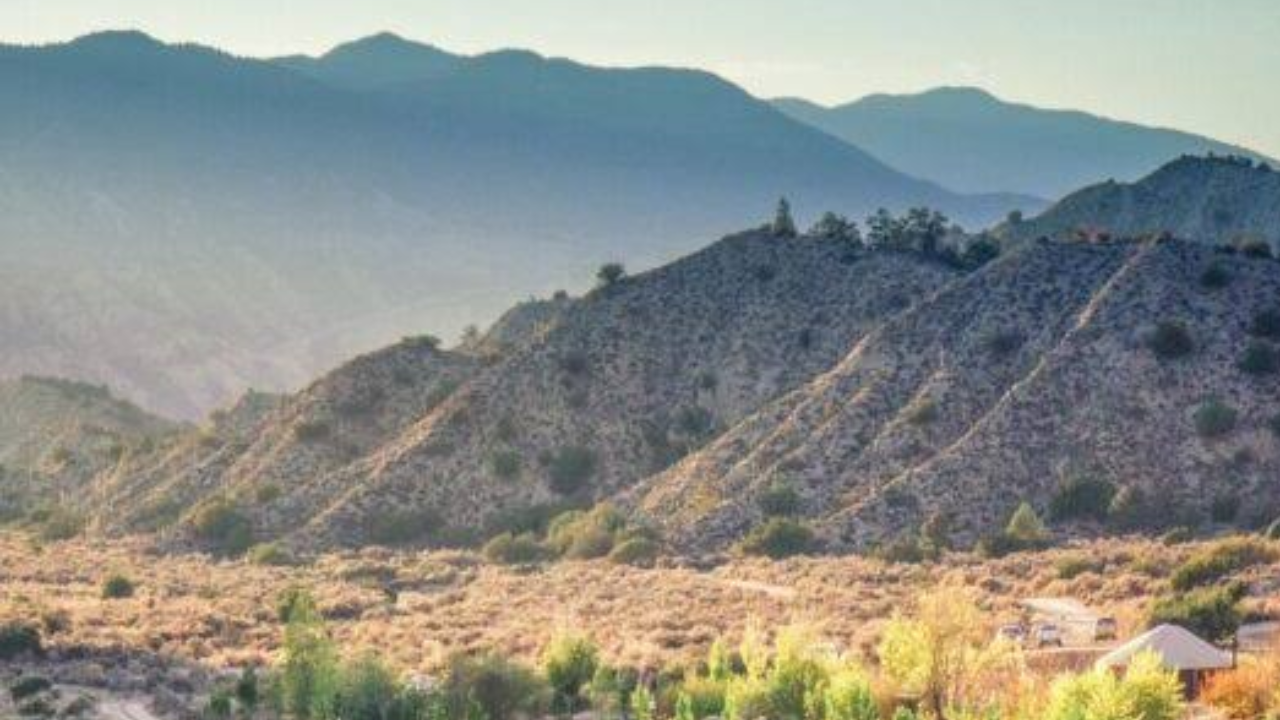
Capital preservation across centuries requires navigating structural pressures that consistently favor parcelization, liquidation, and land conversion. When the Mexican government issued a twenty-two-thousand-acre concession in the Cuyama Valley as Rancho Cuyama in eighteen forty-three, the prevailing economic model relied on extensive pastoralism and the hide-and-tallow trade. One hundred and eighty-three years later, the largest surviving contiguous fragment of that original holding—the five-thousand-six-hundred-and-fifty-acre Spanish Ranch—secured permanent protection via a capital-backed conservation easement. Examining this trajectory reveals the mechanics of asset fragmentation, the cost functions of land stewardship, and the financial instruments required to arrest real estate subdivision.
The Mechanics of Asset Fragmentation
Land assets under private ownership face constant pressure toward subdivision due to inheritance laws, estate taxes, and shifting agricultural yield profiles. A large historical land grant functions initially as an undivided capital pool. Over time, three primary vectors drive the break-up of these holdings:
- Generational Partition: As ownership passes through multiple heirs, fractional interests multiply, forcing either physical partition or liquidation to satisfy equity distribution requirements.
- Capital Liquidity Pressures: Rangeland and dry-farming operations often operate on narrow operating margins. When cash flow dips, parts of the asset base are sold off to service debt or cover operational deficits.
- Alternative Highest-and-Best-Use Valuations: The market value of land for intensive agriculture, residential development, or industrial extraction frequently exceeds its capitalization value as open rangeland.
In the case of the Cuyama Valley, the original twenty-two-thousand-acre grant fractured across the nineteenth and twentieth centuries as portions were sold to traders, partitioned for agricultural diversification, or developed to match regional economic shifts. The survival of the five-thousand-six-hundred-and-fifty-acre core represents an exception to the mean of historical land parcelization.
The Cost Function of Working Landscapes
Maintaining a contiguous tract of thousands of acres involves distinct economic trade-offs. The owner of a working landscape absorbs fixed overhead costs—including property taxes, liability management, water rights maintenance, and ecological stewardship—while generating revenues tied to volatile commodity markets such as cattle or feed crops.
When the opportunity cost of holding land for conservation or traditional ranching outpaces the financial return, asset conversion accelerates. The capital required to resist this pressure cannot be generated through operational revenue alone, especially in arid or semi-arid valleys where water scarcity caps intensive yield expansion.
To solve this capital deficit, landowners and conservation entities utilize conservation easements. By separating development rights from the underlying fee-simple title, an easement strips away the speculative real estate value of the property. This structural adjustment lowers the property valuation, which in turn reduces estate tax exposure and provides an injection of capital without transferring ownership. The one-million-dollar funding campaign executed to protect the Spanish Ranch represents a capitalized valuation of the ecosystem services, wildlife corridors, and open-space continuity provided by the tract across San Luis Obispo and Santa Barbara counties.
Regulatory and Environmental Variables
The longevity of historical agricultural holdings depends heavily on regulatory frameworks governing water access and land use. The Cuyama Valley groundwater basin has faced severe overdraft conditions, changing the economic calculation for agricultural operators. Water rights security dictates asset viability. Land holdings that lack firm, senior water allocations face steep depreciation in productive capacity.
Simultaneously, public and private institutional priorities have shifted toward valuing contiguous open space for carbon sequestration, watershed protection, and biodiversity preservation. The alignment between private family stewardship and institutional capital—such as the California Rangeland Trust and regional foundation grants—creates a synthetic revenue stream for landowners who agree to permanently forego industrial or residential conversion.
Strategic Deployment of Conservation Capital
Protecting historical working landscapes requires treating conservation not as a charitable expense, but as a long-term capital allocation strategy.
- Quantify the ecological and economic baseline of the asset to establish clear valuation metrics for easements.
- Match private equity and philanthropic capital pools with generational landowners to absorb the developmental opportunity cost.
- Align land management protocols with regional water security and watershed management frameworks to ensure operational continuity.
By locking in the development rights of remaining historical cores, stakeholders can halt the compounding fragmentation that erodes rural economies and ecological connectivity. The preservation of the Spanish Ranch demonstrates that maintaining historical scale requires externalizing the value of open space through structured financial instruments rather than relying solely on traditional agricultural yield.