The valuation of historic, multi-use residential properties operates on a specific financial vector: the trade-off between preservation-driven capital expenditure and the resultant scarcity premium. When a property shifts from a institutional asset—such as a bishop's residence—to a private dwelling, the transaction price is not merely a reflection of square footage or location. It represents the amortization of nine years of specialized labor against the market demand for architectural rarity. The recent listing of a century-old Indiana estate, characterized by a 1935 private chapel, offers a diagnostic case study in how value is synthesized from non-standard real estate assets.
The Asset Transformation Lifecycle
The property in question transitioned through at least four distinct utility phases since its 1910 construction: private estate, episcopal residence, monastic facility, and social services center. Each phase leaves a structural footprint. A property's value is often inversely proportional to the cost of retrofitting these legacy utility designs for modern residential comfort. Don't miss our recent post on this related article.
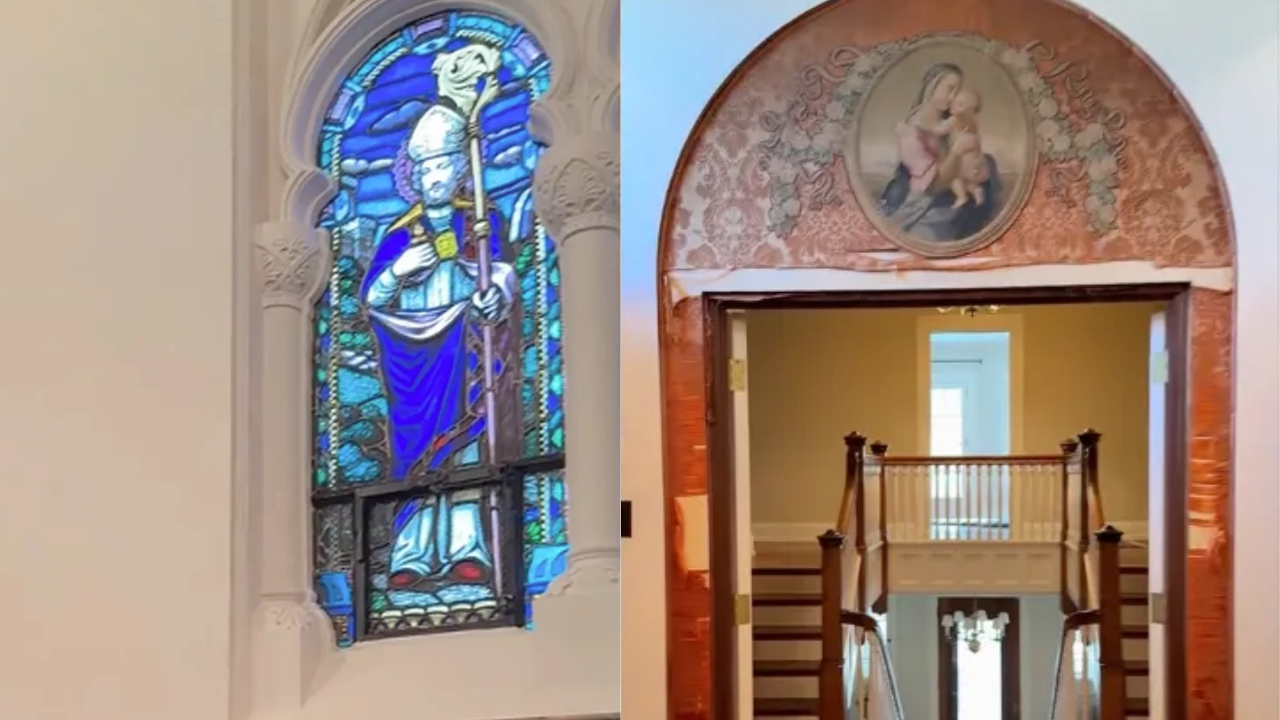
Successful capital appreciation in this niche relies on the "restoration-to-market" ratio. The owners acquired the asset at auction in 2016, likely at a discount reflecting the high risk and undefined scope of deferred maintenance. The subsequent nine-year restoration period functions as a capital improvement project that stabilizes the asset's "historic integrity"—a key metric in appraisal for high-end, period-specific homes. By preserving technical features like rose marble pillars, ornate plaster ceilings, and German-imported stained glass, the owners successfully institutionalized the property's provenance, effectively transforming "obsolete" institutional space into "premium" cultural amenity space.
The Preservation Value Function
The valuation at $1.284 million is the output of three primary variables: If you want more about the context of this, The Motley Fool provides an excellent breakdown.
- Fixed Cost Recovery: The total expenditure during the nine-year restoration cycle. This includes not only material costs but the "opportunity cost of labor," where family-led restoration functions as a substitute for professional contractor oversight.
- Scarcity Premium: The chapel addition (1935) acts as a unique differentiator. In residential real estate, market liquidity usually favors properties with standardized room functions (bedrooms, bathrooms, open-concept kitchens). A property with a consecrated, highly ornate chapel deviates from this norm. It limits the total addressable market to buyers who value cultural or aesthetic utility over sheer utilitarian efficiency.
- Risk Mitigation: By maintaining the property's architectural narrative, the sellers have effectively "de-risked" the asset for the next buyer. An un-restored 1910 structure presents an existential threat to capital (potential catastrophic system failure), whereas a fully restored one presents a "move-in ready" luxury product.
The Mechanics of Institutional Repurposing
The shift from an institutional, multi-use facility to a single-family home creates a "utility gap." In this specific instance, the property successfully bridged the gap between a 1935 ecclesiastical wing and a 21st-century residential living space.
The primary challenge in such projects is the HVAC, plumbing, and electrical load requirements. A chapel is not designed for residential thermal regulation. The value-add here was not just cosmetic; it required re-engineering the building’s internal infrastructure to support modern residential load-bearing and energy requirements without stripping the original artisanal murals or glasswork. Sellers who successfully navigate this balance can command a premium because they have resolved the "institutional-to-residential" friction that would otherwise deter conservative buyers.
Evaluating Market Exit Strategies
When assessing the liquidity of a property with an unusual, site-specific historic element, standard valuation models (comparable sales) fail. The house cannot be fairly compared to a standard suburban residence. The tactical approach to selling such an asset involves:
- Provenance Storytelling: High-value historic assets require narratives that justify the price floor. The history of the bishop's residence acts as a marketing hedge.
- Segment Targeting: Because the property requires a buyer who values the "museum-quality" elements, the target market is narrowed to ultra-high-net-worth individuals or collectors of historic architecture.
- Exit Timing: The decision to list after nine years is mathematically sound. The restoration cycle has reached a point of diminishing returns where further investment would likely exceed the incremental market value.
For the buyer, the acquisition is an entry into a pre-vetted asset. The risk is not the structure itself, but the lack of liquidity. A house with a private chapel has a lower "velocity" in the marketplace compared to a standard home. If you are analyzing this asset for acquisition or investment, ignore the Zillow list price as an anchor. Focus instead on the replacement cost of the materials—the rose marble, the stained glass, and the artisan-grade plasterwork—and determine if the current $1.284 million valuation captures the premium for these non-reproducible assets. If the market appraisal ignores these as "extra" space, there is a clear discrepancy between price and value. Focus on the cost-to-recreate these elements; if the replacement cost exceeds the current listing price, the asset is undervalued regardless of the historical "baggage" of the building.

:quality(75)/Code_Jujutsu_Shenanigans_8_330114df57.jpg)