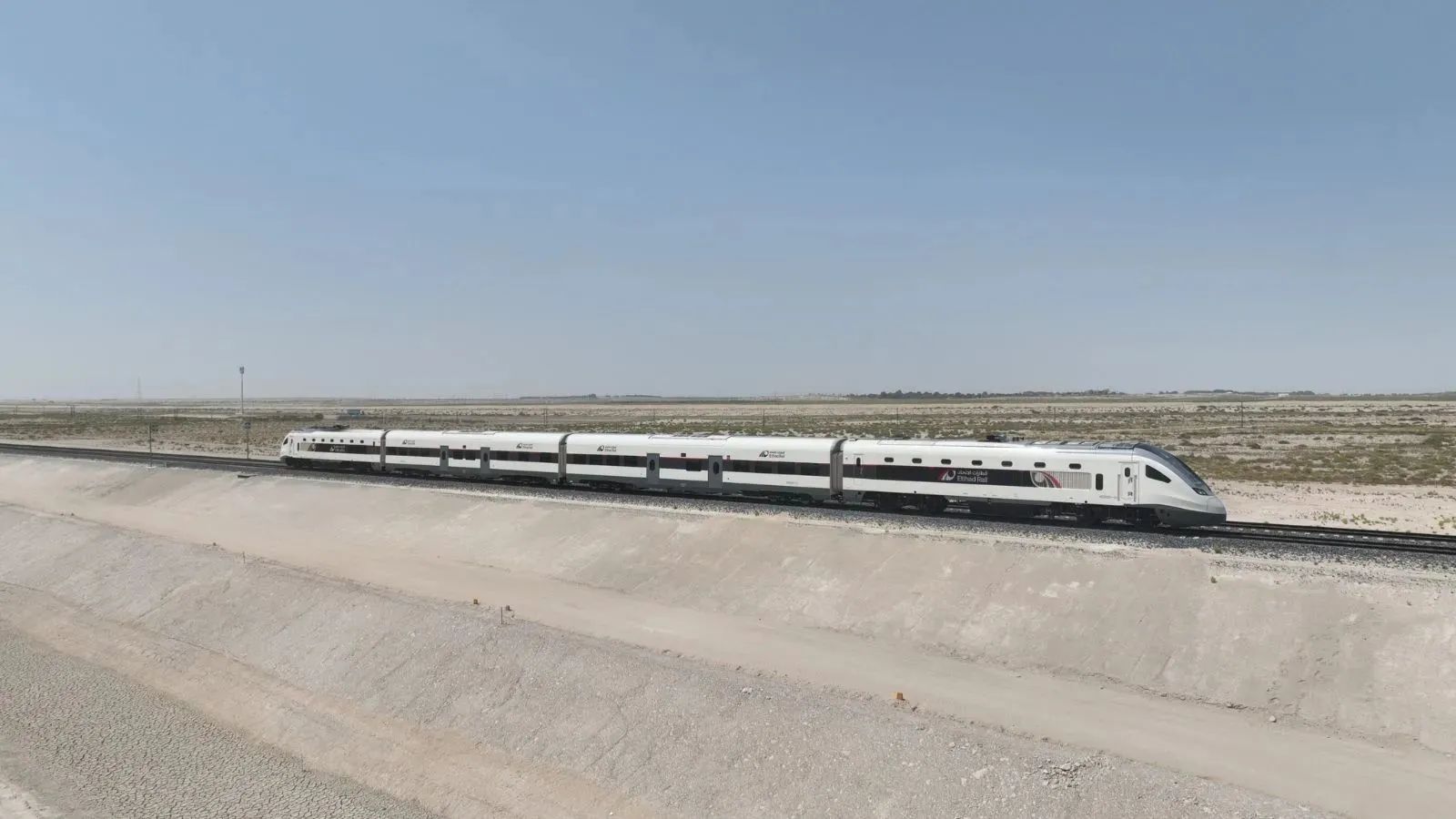
The structural shift of a nation’s logistical framework can be quantified by its initial demand velocity. Within the first 48 hours of opening reservations, Etihad Rail recorded 5,000 passenger bookings, scaling past 10,000 ticket sales by its official June 30, 2026 launch. This rapid inventory depletion reveals a major supply-demand imbalance in inter-emirate transit, indicating that the market values time-predictability over existing highway infrastructures.
To understand the long-term viability of this network, one must look past the initial public enthusiasm and dissect the macroeconomics of the system, its phased infrastructure deployment, and the fare elasticity models governing its operation.
The Phased Infrastructure Rollout Network Architecture
Large-scale rail systems require phased capacity introduction to manage operational friction and test multi-modal transit integrations. The network topology expands across four distinct phases between mid-2026 and early 2027.
| Operational Phase | Milestone Date | Primary Asset Activation | Target Transit Metric |
|---|---|---|---|
| Introductory Phase | June 30, 2026 | Abu Dhabi (Mohamed Bin Zayed City) to Fujairah Corridor | 105 Minutes |
| Official Public Launch | September 30, 2026 | Dubai Station & Al Dhaid Station Integration | 57 Minutes (AUH–DXB) |
| Al Dhafra Expansion | December 30, 2026 | Western Region Transit Stations | Variable by Route |
| Network Completion | March 30, 2027 | Sharjah Central Passenger Station Integration | Full System Integration |
The initial corridor from Abu Dhabi to Fujairah establishes a baseline for the network. Operating at a velocity of 200 km/h, the 13-train fleet bypasses the geographic bottlenecks of the Hajar Mountains, reducing transit times to 105 minutes. The structural value of this route lies in its elimination of road congestion variability, converting an unpredictable drive into a fixed-time corporate utility.
Demand Elasticity and the Core Pricing Matrix
The initial surge in bookings is heavily linked to an aggressive, temporary 50 percent price reduction. Analyzing the baseline versus promotional pricing reveals how the operator intends to shift commuter habits away from private vehicle dependency.
Comfort Class Capital Dynamics
The entry-level pricing structure target segments are high-frequency commuters and cost-sensitive travelers. Under the launch campaign, the fare stands at AED 55, down from a standardized structural price of AED 109. At the promotional tier, the cost per kilometer undercuts private vehicle depreciation and fuel costs for a solo driver traversing the cross-country corridor.
Premium Class Margin Optimization
Designed for corporate travelers demanding billable-hour utility, the Premium Class fare is set at AED 120 during the launch phase, scaling to a standard AED 239. The physical yield optimization relies on wider reclining seating configurations, expanded legroom, and built-in connectivity infrastructures designed to turn transit time into productive working hours.
Inventory Tier Structures
The network uses an airline-style yield management system, breaking down ticket classes into three functional brackets:
- Saver Tiers: The lowest priced option, imposing rigid constraints with zero refund allocations and mandatory automated seat assignments 24 hours prior to departure.
- Value Tiers: A mid-tier pricing level allowing restricted modification parameters for changing schedules.
- Flex Tiers: Premium flexibility designed for corporate entities requiring short-notice cancellations or itinerary adjustments without financial penalties.
Inter-Emirate Velocity Arbitrage
The core competitive advantage of the rail infrastructure is not velocity alone, but structural time efficiency. While a private automobile can theoretically match rail speeds on open highways, urban entry and exit bottlenecks create severe trip-time variability.
The system isolates the transit time from external variables. The Abu Dhabi to Dubai corridor, launching late September 2026, guarantees a 57-minute transit time. The Dubai to Fujairah segment will settle at 69 minutes. By anchoring these transit windows, the joint venture operator—comprising Etihad Rail and transit specialist Keolis—creates a highly predictable schedule that integrates directly with municipal transit operations, such as Abu Dhabi Mobility.
This structural shift alters the economic relationship between regional urban centers. Workers can decouple their place of employment from their residential geography, expanding the talent pool for enterprises located in Abu Dhabi and Dubai while distributing real estate demand toward peripheral emirates.
Operational Risk and Asset Utilization Constraints
The primary long-term operational hurdle facing Etihad Rail is maintaining high load factors outside of peak corporate hours. The current fleet deployment utilizes 13 train sets, each engineered for a maximum capacity of 400 passengers.
With three daily direct journeys in each direction on weekdays—dropping to two on weekends—the introductory phase offers a total daily capacity of 2,400 seats on the Abu Dhabi–Fujairah line. The early sell-outs demonstrate immediate capacity absorption, yet sustainable profitability depends on transition mechanics when fares normalize to standard rates of AED 109 and AED 239.
The second limitation is the last-mile logistical equation. A rail network is only as efficient as its terminal integration. If a passenger saves 45 minutes on the mainline but loses 50 minutes waiting for secondary transport at Mohamed Bin Zayed City Station or Fujairah Station, the systemic time advantage disappears. Capitalizing on the initial 10,000-ticket momentum requires immediate, synchronized municipal bus lines, car-sharing fleets, and point-to-point taxi zones to protect the time-arbitrage value proposition.
Fleet operators and corporate logistics managers must monitor the September 30, 2026 Dubai integration. This specific expansion will provide the first true stress test of passenger diversion from the heavily saturated E11 and E311 highway corridors. The financial play for corporate entities lies in transitioning regional staff transport contracts away from fixed asset ownership—such as company buses and fleet cars—and toward enterprise-level rail travel agreements. This shift minimizes corporate liabilities, captures volume discounts, and recovers lost productivity during transit.