The Unit Economics of Driverless Fleets
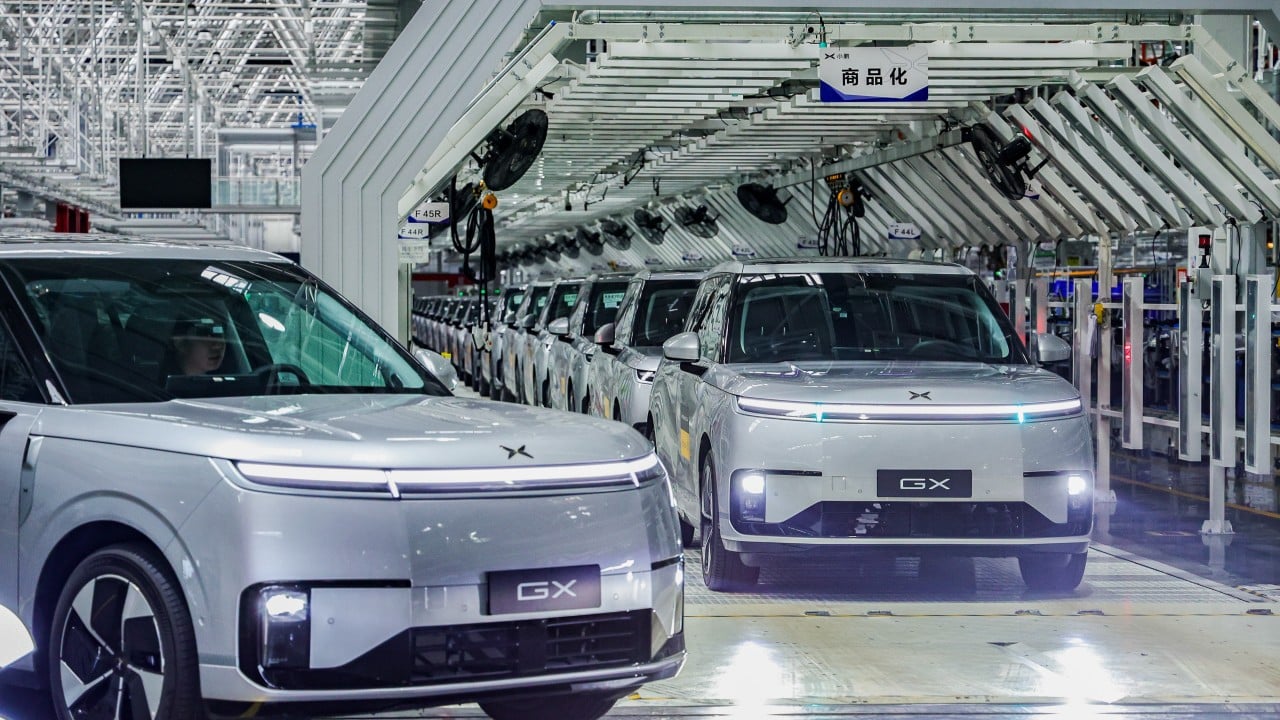
The global race for autonomous mobility is fundamentally an asset-utilization and hardware-depreciation problem, not merely a software challenge. When Xpeng announced its entry into the purpose-built robotaxi market, the strategic pivot altered the competitive dynamics previously dominated by Tesla’s Full Self-Driving (FSD) ecosystem. The commercial viability of a driverless cab network relies on a strict cost function:
$$\text{Cost per Mile} = \frac{\text{Amortized Hardware Cost} + \text{Operational Overhead} + \text{Inertial Infrastructure Cost}}{\text{Total Fleet Mileage}}$$
To challenge a competitor utilizing consumer-funded hardware, an entrant must optimize the numerator through radical manufacturing efficiencies or drastically increase the denominator via superior fleet uptime.
Tesla's architecture relies on a crowdsourced asset model. By selling FSD as a software-as-a-service (SaaS) add-on or subscription to private vehicle owners, the capital expenditure of the fleet is shifted entirely to the consumer balance sheet. Xpeng’s deployment of dedicated robotaxis introduces a hybrid model: operating specialized fleets while simultaneously deploying advanced driver-assistance systems (ADAS) across consumer vehicles to gather parallel training data.
The core divergence between these two approaches lies in the validation bottleneck. A vision-only system face different edge-case challenges compared to a multi-sensor fusion array. Understanding the structural differences between these models requires breaking down their hardware configurations, data ingestion pipelines, and regulatory pathways.
Sensor Topology and the Validation Bottleneck
The technical divide between Chinese autonomous vehicle architectures and Tesla centers on sensor redundancy versus algorithmic generalization. This choice dictates the capital expenditure of each vehicle and alters the computational requirements for the underlying neural networks.
Multi-Sensor Fusion (The Xpeng Framework)
Xpeng’s hardware stack integrates automotive LiDAR, millimetric wave radar, and high-resolution cameras. This multi-layered topology creates a deterministic safety net.
- Physical Redundancy: LiDAR provides precise spatial telemetry unaffected by ambient lighting variations or optical illusions that can degrade camera-only systems.
- Localization Accuracy: The combination of sensors allows for real-time cross-referencing against high-definition maps, reducing the computational load required for dynamic scene reconstruction.
- Edge-Case Mitigation: Direct distance measurement via photon flight-time circumvents the need for a neural network to infer depth from two-dimensional pixels, narrowing the probability of critical classification failures.
The secondary limitation of this approach is financial and architectural rigidity. LiDAR integration adds thousands of dollars to the bill of materials (BOM), complicating the path to consumer affordability. Furthermore, reliance on high-definition mapping restricts fleet deployment to predefined geographic boundaries, creating an operational dependency on local infrastructure updates.
Vision-Only Architecture (The Tesla Framework)
Tesla’s FSD strategy operates on the premise that human drivers navigate using biological vision and neural processing; therefore, an artificial intelligence system should replicate this constraint.
- BOM Optimization: Removing radar and LiDAR eliminates significant hardware costs, allowing for aggressive vehicle pricing and higher margins on software activation.
- Unbounded Scalability: Without the constraint of high-definition maps, a vision-only system can theoretically operate on any road globally, provided the neural network can interpret the visual inputs in real time.
- Unified Data Ingestion: The neural network processes a single data type (video streams), eliminating the need for sensor-fusion algorithms that resolve conflicting inputs between LiDAR and cameras.
The structural vulnerability of vision-only systems occurs when the network encounters novel visual anomalies. The system must solve a complex inverse problem: reconstructing a three-dimensional vector space from two-dimensional pixel arrays. When atmospheric conditions, glare, or unusual object geometries degrade image quality, the statistical probability of inference error increases.
The Asymmetry of Data Ingestion Engines
Data volume alone does not guarantee algorithmic superiority. The critical metric is the velocity of high-diversity data ingestion—specifically, the rate at which a system identifies, labels, and trains on complex edge cases.
Tesla possesses a massive data advantage via its millions of customer-owned vehicles globally. This fleet acts as a distributed data collection network. When a driver disengages FSD, a data snapshot containing the preceding telemetry and video clip is transmitted to central servers. This trigger-based collection ensures that the compute budget for training is spent on high-value, unresolved road scenarios rather than millions of miles of highway driving.
Xpeng counters this volume advantage through targeted intensity. Operating dedicated driverless cabs within dense Chinese urban centers generates high concentrations of complex interactions per mile driven.
[Urban Fleet Deployment] -> [High-Density Edge Cases] -> [Targeted Neural Training]
                                                                   |
[Global Consumer Fleet]  -> [High-Volume Mileage]    -> [Trigger-Based Ingestion]
Urban environments present a higher frequency of vulnerable road users, unpredictable delivery scooters, and complex construction zones than average suburban mileage. Consequently, Xpeng's data pipeline operates with higher density, extracting maximum training value from a smaller cumulative fleet mileage base.
The training bottleneck has shifted from data accumulation to compute infrastructure. The speed at which a company can process video data through end-to-end neural networks determines its deployment velocity. Supercomputing clusters running tens of thousands of specialized AI accelerators represent the true capital barrier to entry in this market.
Regulatory Ecosystems as Competitive Moats
The trajectory of autonomous driving software cannot be evaluated in a geopolitical vacuum. The regulatory frameworks of China and the United States act as distinct evolutionary pressures on these technologies.
The Chinese Structured Model
The Chinese regulatory environment for autonomous driving is top-down, localized, and infrastructure-dependent. Municipal governments establish designated demonstration zones, grant testing licenses systematically, and frequently subsidize the underlying smart-city infrastructure.
- V2X Integration: Vehicle-to-Everything (V2X) communication protocols are heavily prioritized. This allows Xpeng vehicles to receive data directly from intelligent traffic signals and municipal sensors, reducing the reliance on onboard perception.
- Data Localization: Strict data security laws mandate that all geographic and telemetry data remain within domestic borders, protecting local incumbents from foreign data harvesting while restricting their international export scalability.
- Controlled Scaling: Regulators permit the removal of safety drivers only after rigorous, multi-stage mileage thresholds are met within specific geographic coordinates.
This structured approach minimizes catastrophic public failures but limits the speed of generalized, cross-regional deployment. It favors a highly optimized, localized robotaxi service over a universally adaptable consumer software product.
The United States Decentralized Model
The regulatory framework in the United States is fragmented across state lines, emphasizing operational liability over preemptive hardware certification.
- Permissive Testing Environment: States like California and Arizona allow extensive testing of autonomous vehicles with minimal infrastructure integration, forcing developers to build systems capable of operating without external V2X assistance.
- Liability-Driven Development: The onus of safety rests on the manufacturer. This environment allows for rapid deployment updates but exposes corporations to systemic legal and reputational risks if a software update introduces regression errors.
- Fragmented Rules: A system validated in the grid system of Phoenix may fail in the unstructured, weather-heavy environments of the Northeast, creating localized optimization silos.
Capital Efficiency and the Final Fleet Equilibrium
The ultimate victor in the autonomous mobility race will not be the company with the most elegant algorithm, but the one that achieves capital efficiency at scale.
A dedicated robotaxi fleet requires substantial balance-sheet utilization for vehicle maintenance, depot cleaning, charging management, and insurance overhead. For Xpeng, scaling a driverless cab service requires either deep partnerships with ride-hailing platforms or massive capital deployment to build out physical operational infrastructure. The asset-heavy nature of this model creates a high financial floor that can constrain rapid expansion during economic downturns.
Tesla’s model avoids this infrastructure trap by turning its customer base into the fleet operators. If an autonomous network is launched, vehicle owners can opt their personal cars into a shared pool, taking a percentage of the revenue while absorbing the maintenance and depreciation costs. The challenge here is quality control and regulatory accountability; managing millions of privately maintained vehicles executing commercial passenger transit presents severe operational variables.
To compete effectively, the strategic playbook requires a dual-track deployment:
- Decouple Software from Proprietary Hardware: Xpeng must eventually license its autonomous stack to third-party fleet operators to avoid balance-sheet exhaustion. Amortizing development costs across broader vehicle volumes is the only way to offset Tesla's scale advantage.
- Accelerate End-to-End Neural Architecture: Transitioning from heuristic code (if-then safety rules) to fully deep-learning models where pixels enter and steering/braking commands exit is necessary to handle non-mapped environments.
- Exploit Localized Operational Super-Efficiency: Focus capital on dominating high-density Asian megacities where V2X infrastructure is mature, rendering the vision-only, infrastructure-agnostic advantage of competitors less relevant in the immediate term.
The market will not support multiple fragmented, region-specific autonomous networks over the long term. The network effects inherent in data collection mean that the largest fleet will continually train its models faster than smaller competitors, creating a winner-take-all or winner-take-two equilibrium. Companies attempting to straddle the line between consumer automotive sales and fleet management must rapidly choose their core competency: operating infrastructure or selling pure intelligence.