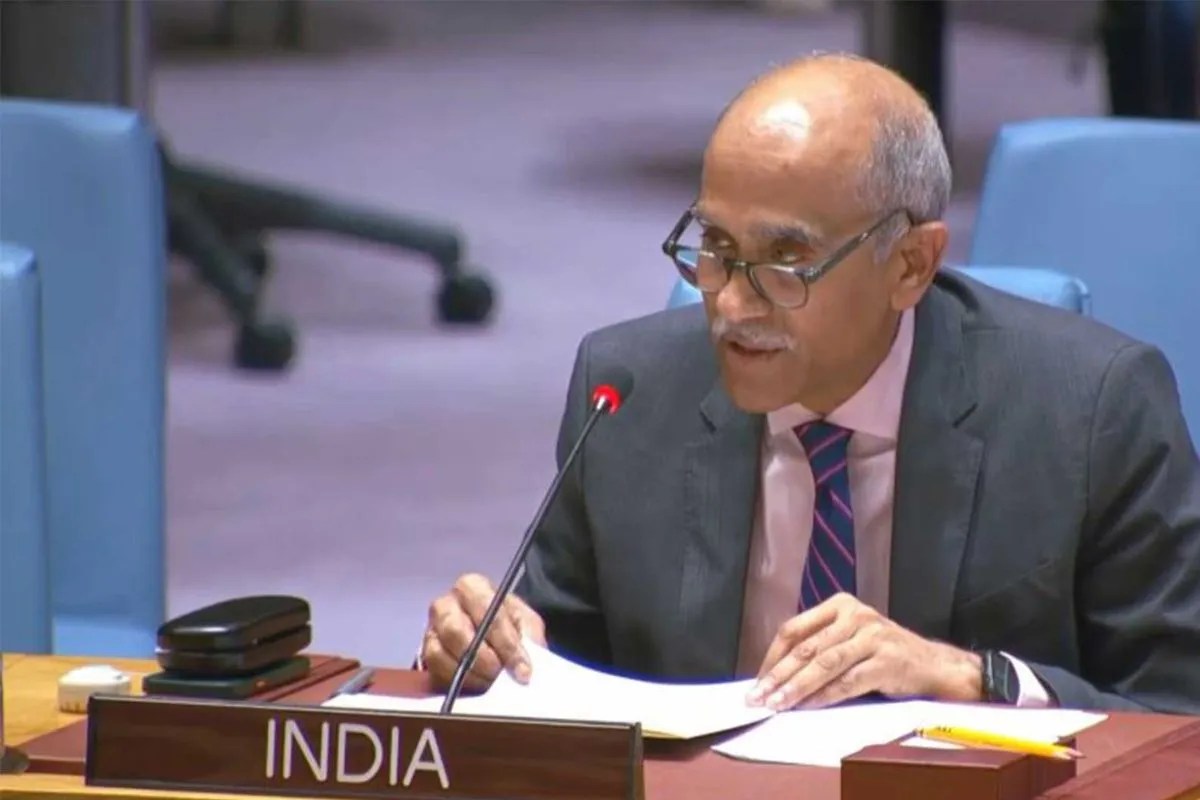
The marble halls of the United Nations headquarters in New York possess a deliberate, heavy stillness. Behind double-glazed glass, diplomats sit in curved green leather chairs, speaking into microphones that translate high-stakes geopolitics into measured, monochrome tones. It is a room designed to cool tempers. Yet, beneath the polished oak desks and formal pleasantries, the tension can be suffocating.
On a day when the agenda was meant to focus on broader regional stability, familiar rhetoric echoed across the chamber. A delegate from Pakistan took the floor, launching into a rehearsed critique of Jammu and Kashmir, invoking familiar grievances and repeating accusations that have played on loop in international forums for decades.
Then came the response.
India’s diplomatic representative did not offer a long, drawn-out counter-statement filled with bureaucratic fluff. The reply was crisp, surgical, and uncompromising. Put your own house in order, the Indian representative told the assembly, before pointing fingers at others or spreading falsehoods on the world stage.
The Choreography of Friction
To understand why this blunt exchange mattered, one must look past the formal jargon of diplomatic cables. International diplomacy often resembles a grand theatre where countries perform scripted roles for domestic audiences back home. For years, Islamabad’s foreign policy apparatus has relied heavily on bringing up Kashmir at every conceivable UN session, regardless of whether the meeting was about climate policy, maritime security, or peacekeeping budgets.
It is a strategy born of desperation. Back home, Pakistan faces a dizzying array of internal crises. Inflation has periodically surged to crippling highs, leaving millions struggling to afford basic staples like flour and fuel. Political volatility has turned governance into a game of musical chairs, while extremist networks continue to operate with terrifying freedom inside its borders.
Instead of addressing these structural fires burning through its own economy and society, the country's political elite frequently defaults to a reliable distraction: Jammu and Kashmir.
Consider a hypothetical family living in a home with a leaking roof, frayed wiring, and no groceries in the pantry. Instead of fixing the roof or buying food, the homeowner stands on the front porch with a megaphone, shouting about the neighbor's garden fence. At some point, the neighborhood stops listening to the megaphone and starts asking why the house behind it is crumbling.
That was precisely the point India drove home at the UNSC.
The Reality Grounded in Kashmir
While accusations flew across the carpeted floors of the Security Council, a dramatically different story was unfolding thousands of miles away in the valleys of Jammu and Kashmir.
For decades, the region was held hostage by foreign-backed cross-border terrorism. Normal life was routinely paralyzed by calls for shutdowns, violence, and fear. But the last few years have witnessed a tangible, irreversible shift. Infrastructure projects long stuck in bureaucratic limbo have roared to life. The world’s highest railway bridge now arches dramatically over the Chenab River, connecting remote districts to the national grid. Local elections have seen record voter turnouts, reflecting a population eager to exercise its democratic voice rather than yield to intimidation.
Tourists have flooded into Srinagar and Gulmarg in unprecedented numbers. Hotel owners, shikara drivers, and local artisans—people whose livelihoods were systematically destroyed by decades of instability—are earning honest livings without the constant shadow of strike calls or grenade attacks hanging over their heads.
When Pakistan brings up Kashmir at the UN, it deliberately ignores this reality. It attempts to project a narrative of oppression onto a region that is actively rebuilding its democratic and economic life.
India’s statement at the UN was not just a diplomatic rebuttal. It was a rejection of an outdated script that refuses to acknowledge progress.
The High Cost of Obsession
There is an invisible tragedy in Islamabad's diplomatic obsession. Every hour spent drafting hostile statements in foreign capitals is an hour not spent addressing the systemic poverty, educational deficits, and security challenges plaguing its own citizens.
By harboring terror outfits and using proxy groups as tools of statecraft, the Pakistani establishment created a Frankenstein monster that eventually turned on its creator. The internal terror attacks that regularly shatter cities like Peshawar and Quetta are the direct consequence of decades spent nurturing extremism for external geopolitical leverage.
When the Indian delegate told Pakistan to focus on its internal chaos, it was not merely an insult tossed across a committee room. It was a stark reminder of a failed strategy. You cannot build a stable nation on the foundation of hostility toward your neighbor.
The UN Security Council has far more pressing global crises to confront than repeated, groundless grievances aimed at scoring cheap political points. India’s message made it clear that the time for indulged distractions is over.
A delegation can bring a stack of fabricated claims to a microphone in New York. But facts on the ground do not yield to rhetoric, and no amount of noise in a foreign hall can fix a house falling apart from within.

/https://i.s3.glbimg.com/v1/AUTH_e84042ef78cb4708aeebdf1c68c6cbd6/internal_photos/bs/2026/g/B/3vpkvHQKizRKAfzDxjXA/vini-jr-antes-e-depois.jpg)