The current Ebola outbreak in the Democratic Republic of the Congo (DRC) has crossed a critical threshold, with the World Health Organization (WHO) reporting 600 confirmed deaths out of 1,759 confirmed cases. While mainstream reporting focuses heavily on this grim absolute tally, the raw numbers obscure the structural mechanics driving the crisis. This is not merely a recurrence of historical contagion; it is an epidemiological bottleneck shaped by a rare viral strain, saturated healthcare infrastructure, and volatile geopolitical friction. To understand why the outbreak expanded from 500 to 600 deaths in a matter of days, one must analyze the mathematical and operational variables underlying the transmission dynamics.
The Bundibugyo Variable: An Asymmetric Therapeutic Deficit
The primary driver of the current crisis is the specific pathogen responsible: the Bundibugyo virus species (Bundibugyo ebolavirus). Unlike the more common Zaire Ebola strain, which dominated the devastating 2018–2020 Kivu outbreak and has established countermeasures, the Bundibugyo strain lacks an approved, commercially available vaccine or definitive therapeutic protocol.
The structural impact of this biological reality manifests in three distinct operational challenges:
- Zero Preventative Immunization Wall: During past Zaire strain outbreaks, ring vaccination using Ervebo effectively created geographical containment barriers around confirmed cases. With the Bundibugyo strain, containment relies entirely on traditional physical isolation and behavioral intervention.
- Experimental Treatment Dependence: Clinical interventions are currently limited to an active clinical trial evaluating the monoclonal antibody MBP134 and the antiviral drug remdesivir, either alone or in combination. Because these therapies are in evaluation phases, standardized, high-throughput deployment is impossible.
- The Diagnostic Lag: While laboratory testing capacity has expanded from 30 tests per day in Kinshasa to over 2,000 decentralized daily tests in the affected provinces, early identification remains constrained by community resistance to post-mortem sampling and initial symptom confusion with endemic malaria or measles.
The calculated case fatality rate (CFR) currently hovers at 34.1% in the DRC ($600 \text{ deaths} / 1,759 \text{ confirmed cases}$). While lower than historical Zaire strain averages—which frequently exceed 50%—the absolute volume of infections is driven upward because the lack of a vaccine allows the virus to move unhindered through highly mobile populations.
Infrastructure Saturation and the Containment Boundary
An epidemic cannot be decoupled from the carrying capacity of the healthcare system inside the hot zone. The transition of this outbreak into an expansion phase is directly tied to a bottleneck in isolation and treatment logistics.
Data from the DRC health authorities indicates that there are roughly 700 available beds spread across 22 treatment centers in the region, with 750 patients currently in isolation or hospitalization. The overall bed occupancy rate sits at approximately 94%, with some specific triage centers operating at 90% capacity or higher.
[Total System Bed Capacity: ~700 Beds]
       ↓
[Active Patients in Isolation/Hospitalization: 750]
       ↓
[System Result: 94% average occupancy, causing regional distribution bottlenecks]
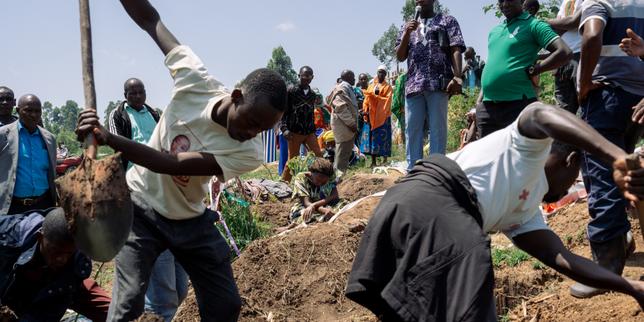
When bed occupancy passes the 90% threshold, operational efficiency degrades. Staff exhaustion increases the risk of nosocomial (healthcare-associated) transmission—a reality highlighted by early clusters of deaths among healthcare workers in the Ituri province. Furthermore, full wards force triage teams to delay the isolation of suspected cases, leaving infectious individuals within their communities during the highly contagious symptomatic phases.
The secondary operational failure occurs in contact tracing. Epidemiological modeling shows that controlling an Ebola outbreak requires a consistent contact follow-up rate of at least 95%. The current response infrastructure is monitoring more than 10,000 active contacts but maintaining a follow-up rate of only 82%. This 13% deficit represents hundreds of exposed individuals slipping outside the surveillance apparatus daily, fueling community transmission.
The Geopolitical Friction Coefficient
The geography of the epidemic presents a compounding challenge. The outbreak spans 37 health zones across three provinces: Ituri, North Kivu, and South Kivu, with two imported deaths recorded across the border in Kampala, Uganda.
Province       Confirmed Cases   Confirmed Deaths   CFR (%)
Ituri          1,601             511                31.9%
North Kivu     155               88                 56.8%
South Kivu     3                 1                  33.3%
Total (DRC)    1,759             600                34.1%
The data reveals a stark anomaly: North Kivu displays a significantly higher CFR (56.8%) than the epicenter in Ituri (31.9%). This disparity is directly explained by the security landscape.
Large swaths of North Kivu and South Kivu are active conflict zones involving the Congolese armed forces and the M23 armed group. Armed conflict introduces two severe variables into the epidemiological equation:
- Suppressed Surveillance and Extraction: Public health teams cannot safely enter rebel-controlled territories to trace contacts or extract symptomatic patients. This explains the lower recorded case numbers but vastly higher mortality rate in North Kivu; cases are only being counted when patients die or present to clinics at terminal stages.
- Forced Population Mobility: Escalating military clashes trigger sudden, unpredictable civilian displacements. When communities flee violence, they move across international borders or into dense urban areas like Bunia or Goma. This movement shatters contact-tracing lists, rendering the 82% follow-up rate even more unstable than the raw percentage suggests.
The Funding Mismatch
The final constraint is financial elasticity. The WHO has stated an immediate funding requirement of $115 million to scale up response mechanisms, construct an additional 300 beds, and close the contact-tracing gap. To date, international donors have provided only 32% of this requested capital.
This financial shortfall directly restricts the hiring of local surveillance staff, limits the procurement of personal protective equipment (PPE), and prevents the rapid deployment of decentralized molecular diagnostic tools to remote border zones.
The trajectory of the epidemic hinges entirely on reversing these operational deficits. If funding remains stalled at 32%, contact tracing will likely degrade further below the current 82% threshold, and bed occupancy will surpass 100% in core hubs. Mitigating this crisis requires an immediate shift from centralized containment to aggressive, localized stabilization units along displacement corridors, alongside the rapid scaling of the ongoing MBP134 and remdesivir therapeutic trials to drive down the net case fatality rate.