Dubai does not have the luxury of a slow supply chain. In a city where the desert sun pushes summer temperatures past 45°C, the window for moving leafy greens and soft fruits from a cargo hold to a temperature-controlled shelf is measured in hours, not days. While regional conflict and the threat of a wider Iran-Israel escalation have throttled maritime traffic through the Strait of Hormuz and the Bab al-Mandab, Dubai’s food security has not buckled. This resilience is not an accident of geography. It is the result of a ruthless, multi-billion-dollar pivot toward air-bridge logistics and domestic tech-farming that serves as a blueprint for high-import nations facing terminal geopolitical instability.
The traditional maritime routes that once fed the United Arab Emirates are under siege. Houthi strikes in the Red Sea and the looming threat of Iranian interference in the Persian Gulf have forced global shipping giants to rethink their approach to the Middle East. For most, this means rerouting around the Cape of Good Hope, adding weeks to transit times and millions to fuel bills. For a city that imports roughly 90% of its food, those extra weeks represent the difference between a stocked salad bar and a riot.
The Death Of The Traditional Shipping Route
Dependency on the sea has become a liability. Historically, the Port of Jebel Ali acted as the beating heart of Middle Eastern trade, but the "Just-in-Time" delivery model falls apart when container ships are playing a high-stakes game of hide-and-seek with drone swarms.
The strategy has shifted. Dubai is increasingly bypassing the water. By integrating DP World’s maritime infrastructure with the massive lift capacity of Emirates SkyCargo, the city has created a "Sea-to-Air" corridor. This allows perishable goods to arrive at deep-water ports in the southern UAE or Oman—safely outside the immediate Hormuz flashpoint—and move into the bellies of freighter jets within four hours. It is an expensive workaround. The cost per kilogram of air freight can be ten times that of sea freight, yet the Dubai government has opted to absorb these shocks through strategic subsidies and long-term contracts rather than letting the inflation hit the dinner table.
This isn't about charity. It is about maintaining the social contract. In a region where food price spikes have historically triggered political upheaval, ensuring that a head of lettuce remains affordable is a matter of national security.
The Ghost Acres Of The Desert
While the logistics of moving food are being rewritten, the more radical shift is happening in the sand itself. For decades, the UAE followed the "Virtual Water" theory—the idea that it is cheaper to import water-intensive crops like wheat and alfalfa than it is to grow them in a water-scarce environment. That theory died the moment global supply chains began to fracture during the 2020 pandemic and the subsequent invasion of Ukraine.
The new mandate is radical self-reliance through Controlled Environment Agriculture (CEA).
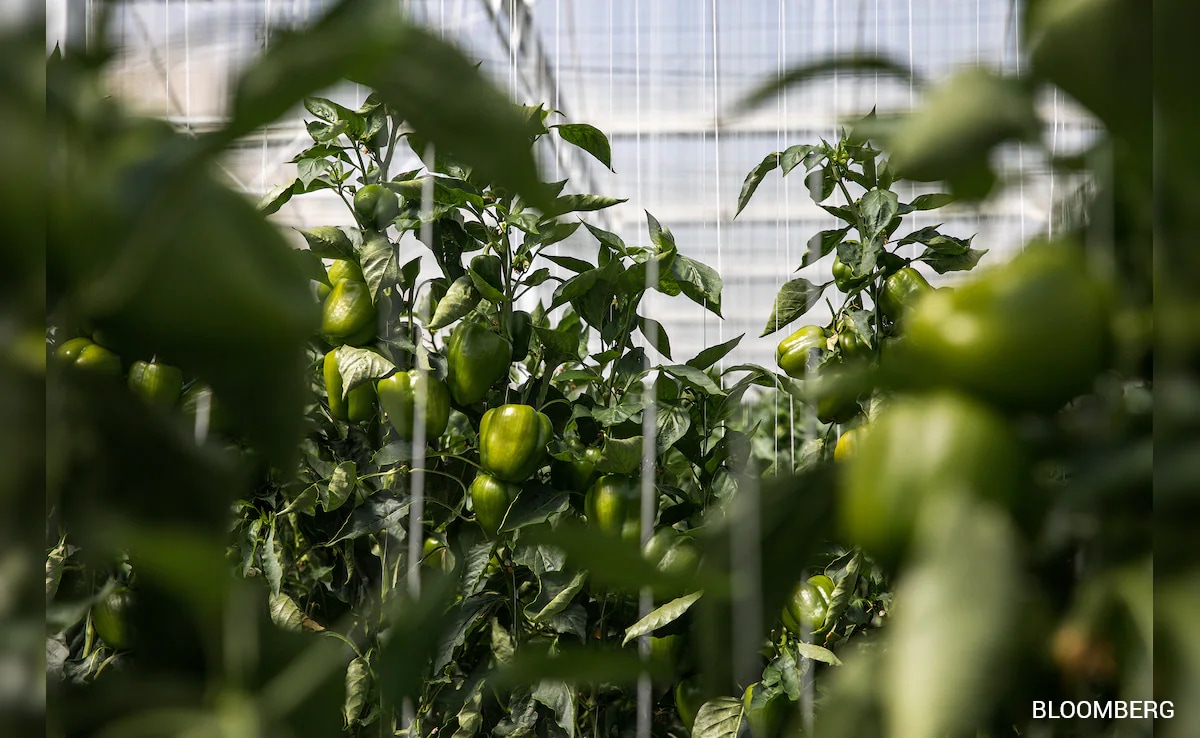
Walk into the industrial zones of Dubai South and you won't find traditional farmers. You find engineers. Facilities like Bustanica, the world’s largest vertical farm, are now producing over 1 million kilograms of leafy greens annually. These systems don't care about a drought in Europe or a missile in the Red Sea. They use 95% less water than traditional farming and operate in a closed-loop system that is immune to the external climate.
The shift is moving from "How do we buy it?" to "How do we make it here?"
The High Cost Of Domesticity
It is easy to point to a vertical farm and call it the future of food. It is harder to explain the energy bill. The sheer amount of electricity required to run a 330,000-square-foot indoor farm in the Middle East is staggering. Without the UAE’s massive investment in nuclear energy and the Mohammed bin Rashid Al Maktoum Solar Park, these facilities would be economically unviable.
The strategy is a trade-off. Dubai is swapping its dependency on foreign soil for a dependency on its own energy grid. In a world where the energy transition is moving faster than the geopolitical one, that is a gamble they are willing to take.
The Silk Road Through The Skies
The UAE’s pivot to air freight has fundamentally altered the economics of perishables in the region. Traditionally, air cargo was reserved for high-value, low-weight items like electronics or pharmaceuticals. Today, the belly of an Emirates A380 is just as likely to be filled with tomatoes from the Netherlands or cherries from Uzbekistan.
The Dubai Flower Centre at DXB has become the hub for more than just roses. Its cold-chain infrastructure is now the primary entry point for high-end organic produce. The goal is to make the transit time from the farm in Europe or Asia to the consumer in Dubai under 24 hours.
While the cost is higher, the waste is lower. Global food loss during transport can reach 30% in traditional sea freight. By cutting the transit time, the "Land-Air-Sea" multimodal model effectively pays for its own premium through reduced spoilage.
The Counter-Argument: A Fragile Oasis?
Critics and some regional analysts argue that this model is only as stable as the UAE’s relationship with its neighbors. If the Strait of Hormuz is completely shuttered, even the air-to-sea bridge becomes a bottleneck. The fuel for those planes and the electricity for those vertical farms still rely on a stable regional energy market.
There is also the question of caloric density. Vertical farms are great for lettuce, kale, and microgreens—the high-value crops that look good on a plate. They are not, however, a solution for the millions of tons of grain and rice the region requires.
Dubai’s true vulnerability remains in the staples. While the leafy greens are secured, the city is quietly building one of the world’s largest grain reserves. These aren't just silos; they are massive, climate-controlled strategic assets designed to feed the population for six months to a year without a single new shipment.
The Geopolitical Buffer
Beyond the tech and the planes, Dubai’s food security is anchored in its neutrality. By maintaining open diplomatic channels with both Iran and the West, the UAE has carved out a unique space where it can operate as a neutral logistics hub. This status is their most powerful shield.
Even in the height of regional tension, the flow of goods through Jebel Ali is rarely targeted directly. The port is too integrated into the global economy to be an easy target without triggering a worldwide financial catastrophe. The UAE has positioned itself as the "Necessary Middleman." If you block Dubai, you don't just block a city—you block a vital node in the global trade of 2.5 billion people.
The Shift To Diverse Sourcing
The reliance on any single region is being systematically dismantled. Historically, much of the UAE’s produce came through Iranian ports or European markets. Today, the supply chain is a global mosaic.
- East Africa: Massive investments in land and logistics in Ethiopia and Kenya provide a direct pipeline for fruits and vegetables.
- Central Asia: Agreements with Kazakhstan and Uzbekistan focus on grain and high-quality livestock.
- South Asia: India remains the primary source for rice and staple vegetables, with new "Food Corridors" that bypass traditional maritime bottlenecks via the Chabahar-Zاهدان rail link.
The Bottom Line For Business
For the private sector, the message from the Dubai government is clear: adaptation or extinction. The days of cheap, slow, maritime-led food imports are over. Companies that thrive in this new environment are those investing in their own cold-chain storage and vertical farming partnerships.
The volatility in the Red Sea isn't a temporary spike. It is a permanent feature of the new global trade reality. Dubai’s response—building a redundant, tech-heavy, and air-focused infrastructure—is the only way to ensure the desert continues to bloom.
The next time a crisis flares in the Persian Gulf, the world will look to the shelves of Dubai’s supermarkets. If they remain full, it won't be because of luck. It will be because they stopped betting on a peaceful sea long ago.
To understand the scale of this transformation, one only needs to look at the massive expansion of the Dubai Food Park, a $1.5 billion project designed specifically to aggregate these diverse supply chains under a single, tax-free roof. The future of food security isn't found in a field; it's found in a warehouse with a direct line to an airport runway.