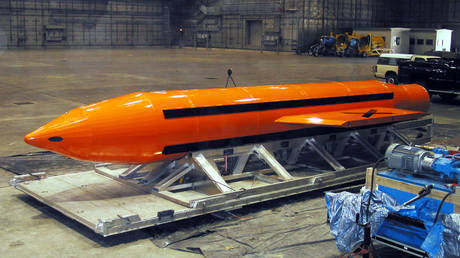
A 30-foot-long bomb falling out of the back of a cargo plane sounds like pure shock-and-awe theater. When reports surfaced that U.S. strike options against Iran include the GBU-43/B Massive Ordnance Air Blast—better known as the mother of all bombs—plenty of people immediately pictured a massive explosion wiping out Iran's hardest nuclear bunkers.
That picture is mostly wrong.
First, no final order to drop the weapon has been publicly confirmed as decided, and strike plans are fluid options rather than guarantees. Second, even if Washington pulls that trigger during the 2026 conflict, the MOAB wasn't built to crack deep underground mountains. It's a massive surface-area blast weapon designed to flatten wide swaths of terrain, collapse tunnel openings, and send an unmistakable political message.
If you're trying to figure out what this actually means for the war with Iran, oil markets, and regional escalation, you have to look past the nickname. Size alone doesn't solve deep-buried targets.
What the Mother of All Bombs Actually Does
Developed quickly ahead of the 2003 Iraq War by the U.S. Air Force Research Laboratory, the GBU-43/B weighs roughly 21,715 pounds (about 9.8 metric tons) and stretches just over 30 feet long. Inside sits a thin aluminum casing holding around 18,700 pounds of H-6 explosive—a mixture of RDX, TNT, and aluminum that packs roughly 1.35 times the punch of standard TNT and generates a blast yield equivalent to about 11 tons of TNT.
Notice that word: aluminum.
Bunker busters need thick, heavy steel casings to punch through rock and reinforced concrete before detonating. The MOAB skips heavy armor so it can carry more explosive and detonate near or above the surface, maximizing overpressure and blast wave across a wide footprint. Using GPS guidance and grid fins after extraction, it has been used in combat only once before—on April 13, 2017, against an ISIS-K cave and tunnel complex in Nangarhar Province, Afghanistan.
A weapon built for wide-area air blast and tunnel entrances isn't a magic key for facilities buried hundreds of feet under solid rock.
That distinction trips up a lot of commentators. People hear "biggest non-nuclear bomb" and assume it's the heaviest hammer in the toolbox for every hard target. In practice, military planners match munitions to target geometry, and the MOAB's geometry favors sprawling surface complexes, open staging areas, and portals rather than deep subterranean halls.
Why Deep Iranian Sites Pose a Different Problem
Iran's most sensitive nuclear work isn't sitting inside flimsy sheds. Facilities like Pickaxe Mountain (Kūh-e Kolang Gaz Lā) near Natanz sit deep beneath mountainous terrain—estimated at more than 300 feet (around 100 meters) underground.
Even dedicated penetrators face steep physics at those depths. The GBU-57 Massive Ordnance Penetrator (MOP), carried by stealth bombers like the B-2 Spirit, weighs roughly 30,000 pounds and uses a heavy-duty penetrator body designed to burrow through tens of meters of earth or concrete before exploding. Even the MOP has limits when rock cover is extreme or tunnel entrances are heavily reinforced.
A MOAB exploding near the surface can cave in access tunnels, wreck above-ground support buildings, and disrupt logistics around a site. What it won't reliably do on its own is obliterate a deep underground chamber hundreds of feet down.
In fact, analysts looking at strike options have pointed out that Iran's energy infrastructure—oil terminals, refineries, export hubs—fits the MOAB's wide-area blast profile far better than deep mountain tunnels. That's where the real strategic gamble starts.
Delivery Risks and Escalation Traps
Putting a 30-foot bomb on target isn't just about the warhead. Because of its length and shape, the MOAB doesn't fit inside standard bomber weapon bays; it rolls out of the rear cargo ramp of a C-130 family aircraft (such as an MC-130) on a cradle.
Cargo aircraft aren't stealth bombers. While U.S. and allied air campaigns in the 2026 conflict have heavily degraded Iran's air defenses and relied on electronic warfare and strike support, sending a large transport plane into contested airspace still carries risk and operational complexity. If air defenses or mobile threats aren't completely suppressed along the flight path, survivability becomes a serious concern.
There's also the political and economic fallout to weigh:
- Energy retaliation: Hitting Iranian energy sites with a massive bomb could trigger tit-for-tat strikes on Gulf oil and gas infrastructure, sending global energy prices spiking and rattling allies.
- Shipping chokepoints: With tensions already choking commercial traffic and naval blockades in play around the Strait of Hormuz, big escalatory moves risk turning a grinding campaign into an even wider regional shock.
- Signaling vs. leverage: Dropping a headline-grabbing munition projects resolve, yet history shows big bombs don't automatically force political concessions or end a war on favorable terms.
Personally, I think the biggest mistake people make with weapons like the MOAB is treating them as strategic answers rather than tactical tools. A huge fireball looks decisive on screen. Actual strategic outcomes depend on whether a strike changes the adversary's calculus without dragging everyone else deeper into the fire.
What You Should Watch Next
If you're tracking whether the U.S. actually deploys the mother of all bombs against Iran—or whether this stays a bargaining chip and pressure tactic—don't get lost in rumors. Focus on concrete indicators instead.
- Official posture and diplomatic movement: Watch whether talks stall completely or gain traction, and pay attention to whether Washington signals imminent action or holds fire around political timelines.
- Force protection and regional alerts: Diplomatic drawdowns, force shifts, or heightened alerts across Gulf bases often precede major escalations.
- Target sets in early strikes: Look at what gets hit first—air defenses and radar nodes versus energy facilities or fortified mountain sites—to gauge what mission planners are actually trying to achieve.
- Energy and shipping data: Track crude oil prices, insurance rates, and transit numbers near the Strait of Hormuz rather than relying on social media clips or unverified claims.
Stick to verified defense reporting, primary briefings, and market data so you can separate genuine operational shifts from noise.


