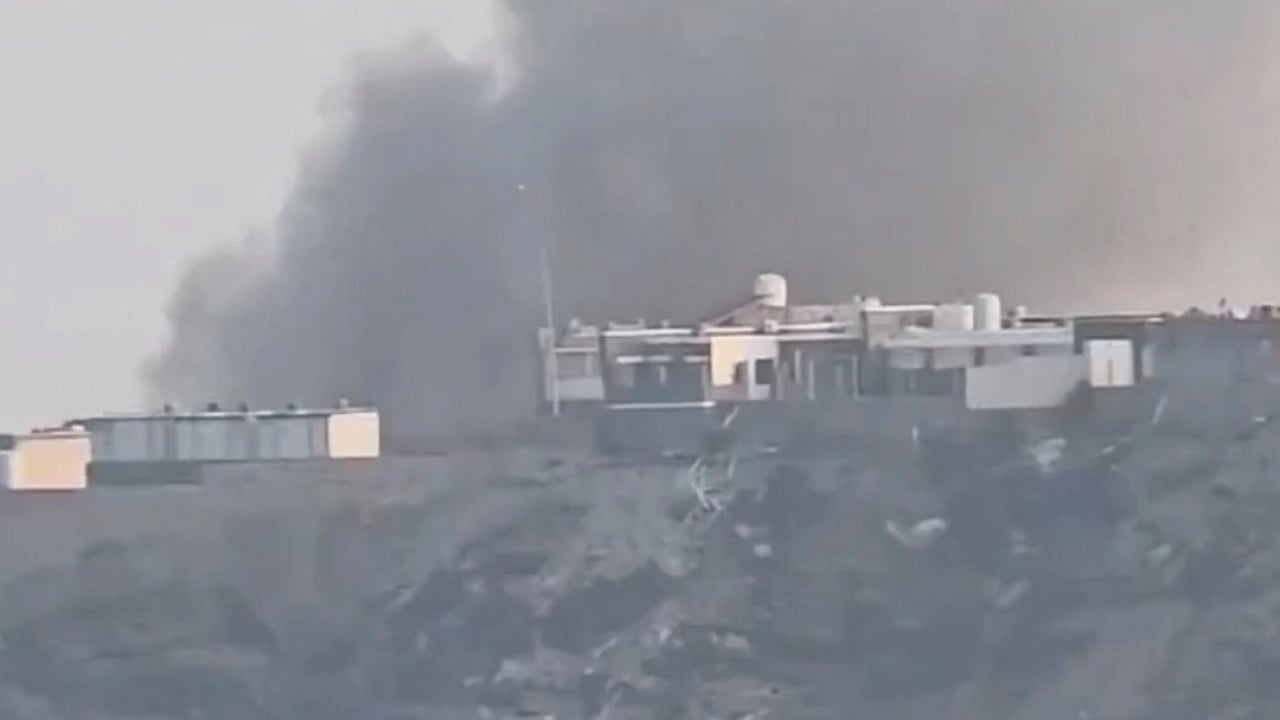
Bigger bomb. Faster exit. Sounds neat on a cable news graphic. It is also backward.
When reports circulate that Washington is weighing the GBU-43/B Massive Ordnance Air Blast—the "mother of all bombs"—against Iranian nuclear and energy sites while President Donald Trump looks for a way out of the conflict, standard commentary treats the weapon as a shortcut to an off-ramp. Drop something colossal. Declare victory. Pack up.
I have spent years watching defense analysts and political strategists confuse acoustic shock with strategic closure. I have seen war planners and executives alike burn capital on flashy, maximum-impact moves that look decisive in a briefing room and solve zero structural bottlenecks on the ground. A MOAB is an air-burst blast weapon carrying roughly 8.5 metric tons of high explosive, weighing around 21,000 to 22,000 pounds depending on configuration, pushed out the back of a special-operations MC-130 rather than carried inside a stealth bomber bay. That distinction matters. Air blast excels at flattening surface structures, collapsing shallow tunnels, and clearing wide swaths of terrain. It is not a deep earth-penetrator designed to crack deeply buried mountain complexes.
The Physics Trap Everyone Ignores
Here is the first thing the exit-by-MOAB narrative gets wrong: matching the wrong munition to the hardest target does not speed up a war's end. It extends it.
Even after prior strikes involving heavy bunker-busters like the GBU-57 on underground nuclear facilities, intelligence assessments have indicated that deep underground programs are notoriously hard to permanently erase from the air alone. When officials look at heavily fortified mountain sites such as Pickaxe Mountain, the core problem is depth and geology, not lack of drama. An air-burst weapon like the MOAB maximizes surface overpressure and blast radius; it does not magically burrow through tens or hundreds of meters of rock.
If you use a surface-blasting giant against a deeply buried target, you get a massive fireball, dramatic footage, and an intact core problem. Adversaries read that mismatch immediately. Instead of concluding the war is over, they conclude the attacker is reaching for optics because the hard engineering problem remains unsolved.
Imagine a scenario where a MOAB hits an Iranian energy or nuclear-adjacent site near populated or mixed-use infrastructure. Energy nodes—power grids, fuel terminals, industrial hubs—sit at the intersection of military utility and civilian life. Under international humanitarian law, commanders have to weigh military advantage against civilian harm and proportionality. A weapon with a massive blast footprint raises the stakes on collateral damage and legal scrutiny while risking retaliatory escalation against regional shipping in the Strait of Hormuz or U.S. personnel and allies across the Middle East.
You Are Asking the Wrong Question
Most coverage asks: Will Trump order a MOAB strike to force an exit?
That is the wrong question. A single dramatic strike does not create an exit when the underlying dispute centers on nuclear material, maritime choke points, sanctions relief, and political face-saving.
The real question is: What changes an adversary's cost-benefit calculation without trapping the exit strategy in a new cycle of retaliation?
Let's break down the common questions people ask around this story and strip away the polite hedging:
- Does the MOAB give the U.S. a "tiny nuclear" shortcut without crossing the nuclear threshold? No. Calling a 21,000-pound-class conventional blast bomb "like a tiny nuclear bomb" is rhetoric, not physics. It has no radiological fallout, no thermonuclear yield, and no deep-earth penetration advantage over specialized penetrators. Treating it as a magic lever ignores the real constraint: air strikes without ground occupation rarely dictate political surrender by themselves, especially when leaders have already staked survival on defiance.
- Can hitting energy infrastructure force a faster settlement? Energy pressure can squeeze revenue or strain logistics, yet broad strikes on energy networks carry sharp trade-offs. They spike global energy anxiety, complicate legal and humanitarian assessments when civilian grids overlap with military support, and give hardliners an excuse to harden their stance rather than concede.
- Why bring up the MOAB at all if it isn't a silver bullet? Signal value. Threatening an iconic, rarely used heavy munition reminds adversaries of American reach and willingness to escalate even when political pressure mounts at home. Threats can sometimes coerce; actually executing a low-yield-for-exit weapon can backfire if the strike fails to decisively resolve the target set.
Where My Contrarian View Can Go Wrong
Honesty cuts both ways. My argument rests on the premise that dramatic conventional escalation tends to complicate exits rather than simplify them. That thesis has real blind spots.
First, coercive signaling occasionally works when an adversary misreads political restraint as paralysis. If Tehran or another actor believes domestic political fatigue in Washington guarantees passivity, a credible display of force can reset expectations—at least temporarily.
Second, a strike does not have to permanently destroy an entire program in one afternoon to alter bargaining leverage; sometimes shock alters internal elite calculations in ways outside analysts fail to predict.
Third, relying on diplomatic or maritime leverage alone can drag out a stalemate for months or years, which carries its own heavy economic and political toll. Waiting for neat leverage is not cost-free either.
What Actually Works If You Want Leverage Without a Quagmire
If the goal is real leverage rather than a headline-grabbing explosion, discipline beats spectacle every time:
- Match the munition to the physics, not the headline. Never pick a weapon because its nickname sounds overwhelming. If a target is deep underground, surface blast is wasted energy. If a target is surface or shallow infrastructure, use proportional precision that minimizes collateral blowback instead of swinging a sledgehammer in a glass house.
- Tie any kinetic move to an explicit diplomatic off-ramp. Force without a clear political condition attached just invites tit-for-tat. Define the exact verifiable concession required to pause or step back before a single aircraft takes off.
- Protect the maritime and regional flank first. Shipping lanes, air defenses, and regional bases are where prolonged friction hurts immediately. Locking down those vulnerabilities gives policymakers room to maneuver; creating new escalatory flashpoints shrinks it.
- Separate domestic optics from operational exit criteria. Domestic political calendars tempt leaders toward dramatic gestures. An exit holds only when the core friction points—maritime security, nuclear stockpiles, and escalation chains—are addressed, not when a press release claims victory.
A loud explosion is easy to order. A clean exit takes discipline.