The World Health Organization just dropped a truth bomb about the latest Ebola outbreak in the Democratic Republic of the Congo. It didn't start in May when the first official cases surfaced. The virus was likely spreading through villages completely unnoticed since January.
That means the deadly pathogen had a five-month head start on global health officials.
When a disease as lethal as Ebola stays hidden for that long, the official numbers stop reflecting reality. Right now, the data shows 344 confirmed cases and 60 deaths in the DRC, alongside 15 cases in neighboring Uganda. But those numbers are just the tip of an iceberg. The slow response has left health workers scrambling to catch up with a crisis that grew deep roots before anyone even knew it existed.
The Stealth Strain in Ituri Province
This isn't the standard Ebola scenario you read about in textbooks. This time, the culprit is the Bundibugyo virus species. It tends to cause milder initial symptoms compared to the notorious Zaire strain, which explains how it flew under the radar for so long. People thought they had standard malaria or a nasty seasonal bug.
By the time health workers in Ituri province realized they were dealing with hemorrhagic fever, the damage was done. The outbreak had already established itself as a massive regional threat.
http://googleusercontent.com/image_content/251
The timeline gap reveals a glaring weakness in global health surveillance. For five months, infected individuals visited traditional healers, traveled across borders, and cared for sick relatives without any protective gear. Imperial College London researchers ran modeling that suggests the true size of this outbreak could easily be double what is currently on the books.
Blind Spots in the Response
You can't fight a virus if you don't know who has it. Contact tracing is the backbone of stopping Ebola. You find a sick person, figure out everyone they touched, and isolate them before they pass it on. To completely crush an outbreak, health teams need to track down at least 90% of those contacts.
Right now, responders are hitting a wall. They are only tracking about 45% of contacts in the affected zones.
The reasons for this failure are complex and deeply human. Ituri province is plagued by ongoing conflict and mass displacement. People are fleeing violence, making it impossible for contact tracers to follow up with them. There is also a massive wall of community mistrust. Decades of political instability have left locals suspicious of outside medical interventions. When health vans roll into a village, people vanish into the bush.
Testing backlogs have made everything worse. Last week, the DRC reported over 1,000 suspected cases. A sudden push to clear the laboratory backlog dropped that suspected number down to 116, but the delay in getting those results meant that hundreds of potentially infectious people were waiting in limbo for days.
Border Walls Are Making It Worse
Politicians love to close borders during a health crisis. It looks decisive. It makes voters feel safe. But WHO chief Dr. Tedros Adhanom Ghebreyesus made it clear that blanket travel restrictions imposed by wealthy nations like the US are actually crippling the medical response on the ground.
These travel bans disrupt critical supply chains. They stop specialized gear, experimental treatments, and expert personnel from getting to the front lines. The virus doesn't care about passport control; it crosses porous forest borders on foot. Stopping a cargo plane from landing in Kinshasa does nothing to stop a sick trader from walking across the border into Uganda.
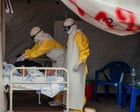
Frontline medics at the Evangelical Medical Center in Bunia are feeling this resource pinch right now. They lack basic personal protective equipment. When international politics chokes off logistics, the people risking their lives to bury bodies safely or place IV lines are left completely exposed.
Moving Faster Than the Virus
We need to shift from a reactive mindset to an aggressive defensive posture. Waiting for laboratory confirmation before treating a region as an active hot zone is a losing strategy. Health organizations must flood adjacent provinces with rapid diagnostic tests to find the true perimeter of the virus.
If you want to help or stay informed on how global health infrastructure adapts to these hidden outbreaks, look directly at organizations funding grassroots, trusted community networks rather than massive top-down bureaucracies. Medical response teams must hire local leaders, elders, and trusted community members to conduct contact tracing. If the face asking about your sick uncle is a neighbor rather than a foreign worker in a hazmat suit, the doors open.
Logistical hubs in neighboring countries must aggressively bypass political travel blocks to keep protective gear flowing to Bunia and surrounding medical centers. The virus had a five-month head start. The only way to close the gap is to drop the political theater and fund the frontline workers who are currently flying blind.