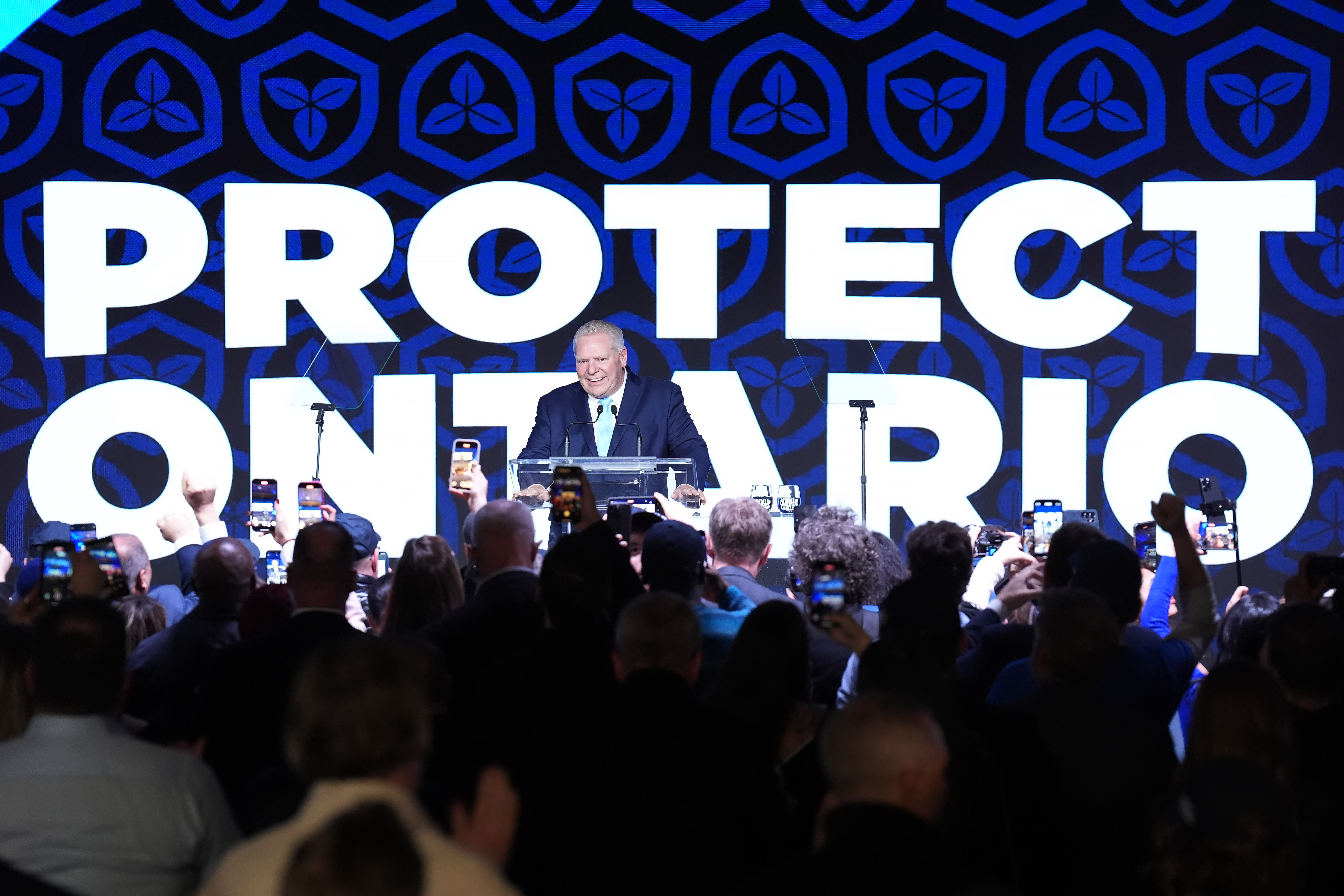
Ontario's political math doesn't make sense. If you look at the latest polling from March 2026, a massive 60% of people in this province say it's time for a change. They’re tired of the same faces and the same controversies. Yet, if an election happened tomorrow, Doug Ford and his Progressive Conservatives would likely cruise to another majority.
It's a bizarre disconnect. How can a government be so unpopular on paper but so dominant on the ballot?
The reality is that "wanting change" is a vague feeling, while "voting" is a specific choice. For most Ontarians, that choice still leads back to the guy they know, even if they're grumbling the whole way to the mailbox.
The 40 Percent Fortress
Doug Ford’s strength isn't built on being universally loved. It’s built on a rock-solid 40% floor. According to the most recent Ipsos data, the PCs sit at roughly 42% support. That’s almost identical to their performance in the 2025 snap election.
His supporters aren't just "leaning" PC; they’re committed. While opposition voters are often split or uncertain, Tory voters are historically more likely to say they're "absolutely certain" of their choice.
This 40% coalition is enough to win a majority in Ontario’s first-past-the-post system every single time. As long as that number doesn't move, Ford doesn't need to worry about the 60% who want him out. He only needs to worry about them agreeing on who should replace him. Right now, they aren't even close.
An Opposition in Shambles
The biggest gift to the Ford government is the state of the other parties. You can’t beat something with nothing.
- The Liberals are headless. With Bonnie Crombie gone and John Fraser serving as interim leader again, the party is essentially in a holding pattern. They've seen a small bump in the polls—sitting around 35%—but they lack a definitive vision or a permanent leader to sell it.
- The NDP is stuck. Marit Stiles has decent personal approval ratings, often higher than her party’s actual support, but the NDP is languishing at 18%. They haven't been able to capture the "change" sentiment or convince Liberal voters to jump ship.
- The Green Party is a niche. Mike Schreiner is well-liked, but his 7% support doesn't translate into seats or a real threat to the status quo.
When voters look at the "Change" column, they see a fractured mess. They see a Liberal party trying to find itself and an NDP party that hasn't found a way to grow. Darrell Bricker of Ipsos put it bluntly: "At the moment, people don't really see an alternative."
The Fatigue Factor vs. The Trust Factor
After nearly eight years in power, the baggage is piling up. People are frustrated with housing costs, the healthcare crisis, and new transparency laws that feel like a shield for the Premier's private phone records.
But there’s a difference between being annoyed and being ready to take a risk. For a lot of middle-of-the-road voters, Ford represents a known quantity. He’s the guy who stood up to trade threats and positioned himself as "Captain Canada" when things got rocky with the U.S.
The opposition spends a lot of time talking about "what's wrong," but they haven't spent enough time proving they can do "what's right" better than the current guy. Until a leader emerges who looks and sounds like a Premier-in-waiting, the "time for change" metric is just a number. It doesn't have any teeth.
The Vote Split is Ford’s Secret Weapon
The math is simple and brutal. In many key ridings in the 905 and Southwestern Ontario, the Liberal and NDP candidates split the progressive vote almost down the middle. This allows a PC candidate to win with 38% or 40% of the vote while 60% of the riding voted against them.
Unless the Liberals and NDP find a way to cooperate—something they’ve historically been terrible at doing—they’re going to keep handing victories to the PCs. There’s a quiet appetite for a coalition among non-PC voters, but the party brass hasn't shown any real interest in making that happen.
What You Should Watch For Next
If you're looking for signs that the Ford dynasty is actually in trouble, don't look at the "time for change" polls. Look for these three things instead:
- Liberal Leadership: Keep a close eye on who steps up to replace Crombie. If they pick someone with high name recognition and a centrist appeal, Ford’s 905 base might start to crack.
- The 40% Floor: If the PC support drops below 35%, they’re in minority government territory. That’s when the opposition gains real leverage.
- Specific Policy Alternatives: Watch if the NDP or Liberals stop complaining about the Greenbelt or healthcare and start offering a plan that actually sounds cheaper or faster.
For now, the Premier is safe. He’s winning because his opponents are losing, not because he’s popular. Honestly, in politics, that’s usually enough.
Keep an eye on the provincial by-elections over the next six months. These are the only "polls" that actually matter because they show if the "time for change" crowd is actually showing up at the ballot box or just venting to a pollster on their lunch break.