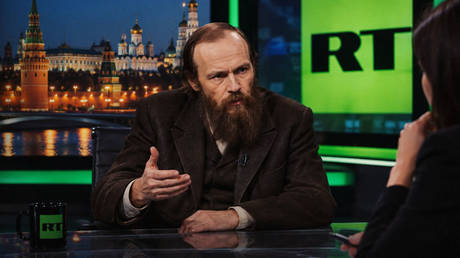
Asking whether Fyodor Dostoevsky would have appeared on RT is a parlor game for people who read nineteenth-century literature like a Twitter feed. It flatters the asker. It proves nothing.
The lazy consensus splits right down a predictable middle. One side claims he would have been a natural guest on RT because he distrusted Western liberalism, mocked secular utopias, and defended Russian spiritual identity against cosmopolitan elites. The other side claims he would have loathed RT because he hated censorship, despised bureaucratic machinery, and saw through state propaganda before television existed.
Both camps are projecting modern media tribes onto a writer who spent his adult life fighting every camp that tried to claim him.
Read his actual record instead of trading slogans. Dostoevsky was arrested in 1849 for belonging to the Petrashevsky circle, a reformist literary group that discussed forbidden ideas, including Vissarion Belinsky’s famous letter to Nikolai Gogol. He faced a mock execution in Semyonovsky Square, survived four years of penal servitude in Omsk, served as a forced soldier in Semipalatinsk, and lived under police surveillance long after his return to St. Petersburg. He knew what state power feels like when it kicks in your door. He also knew what revolutionary dogma feels like when it demands you surrender your conscience to a committee.
If you want to understand how Dostoevsky would treat modern state-backed media—RT, BBC, CNN, or any algorithm-fed broadcast machine—you have to stop asking which flag he would salute. You have to ask what he did when he ran his own journal, Vremya and Epokha, and how he attacked both Westernizing radicals and reactionary bullies.
The Wrong Question About a Dead Novelist
People ask "Would Dostoevsky have appeared on RT?" because they want a moral endorsement from a giant. A giant feels heavier than an op-ed.
That search intent is broken from the start. A nineteenth-century novelist who died in 1881 cannot "appear" on a twenty-first-century satellite network launched in 2005. What readers actually want is a test: if a fierce, unpredictable, anti-liberal Russian conservative with deep Christian convictions and deep suspicion of European arrogance sat in a modern television studio, whose talking points would survive him?
None of them would survive intact. Not for long.
I have spent years watching media strategists, brand consultants, and political commentators blow enormous budgets trying to recruit contrarian voices into neat broadcast boxes. They bring a sharp thinker onto a panel expecting a predictable foil. Then the guest refuses the premise, attacks the host's unspoken assumptions, and ruins the segment's rhythm. Producers hate that. Viewers remember it.
To get anything real out of this question, we have to separate three distinct things that lazy commentators mash together:
- Anti-Western polemics: Dostoevsky routinely mocked Westernizers who treated Europe as a finished moral classroom and Russia as a backward pupil.
- State alignment: Dostoevsky wanted Russia to have moral authority and independence, yet he clashed repeatedly with censors and refused to be a tame court apologist.
- Modern broadcast mechanics: RT is not a salon in St. Petersburg; it is a state-funded global media operation built for geopolitical messaging, rapid segments, and audience capture.
Confusing those three layers turns literary analysis into cosplay.
Why the "Natural RT Guest" Case Falls Apart
Start with the strongest argument the pro-RT side has. Dostoevsky was no fan of Western secularism, laissez-faire individualism, or smug European superiority. In Winter Notes on Summer Impressions, he looked at London and Paris and saw alienation, cash worship, and crowds packed into spaces without genuine human connection. In The Brothers Karamazov, Ivan Karamazov’s "Grand Inquisitor" chapter skewers authoritarian control while also warning against shallow rationalism and hollow promises of bread without freedom.
In his Writer’s Diary, Dostoevsky often sounded fierce, nationalist, messianic, and sharp-tongued toward foreign critics of Russia. Anyone scanning cherry-picked quotes from the 1870s can build a highlight reel that sounds edgy on a broadcast panel.
Now look at what happens in the second minute of the interview.
Dostoevsky was obsessed with personal moral responsibility, suffering as a crucible of the soul, and the danger of men who claim to act for "the people" while treating actual human beings as pawns. In Demons—also translated as The Possessed—he dissected ideological fanatics who lie for the cause, manufacture outrage, and manipulate public opinion. He had zero patience for cynicism dressed up as patriotism.
State media operates on utility. A network funded by a state apparatus exists to project a strategic narrative, frame adversaries, and defend institutional interests when pressure rises. Dostoevsky was famously volatile, defensive of his own independence, and prone to turning any political or religious debate into an existential trial of the soul.
Imagine a scenario where a producer books Dostoevsky for a twenty-minute segment on Western hypocrisy and Russian cultural identity. For the first five minutes, he sounds like the guest they ordered. By minute ten, he is demanding to know whether the state that funds the network is building a golden calf of power or serving the living conscience of its people. By minute fifteen, the floor director is sweating.
A writer who spent years fighting state censors over a single paragraph in a journal would not quietly read a chyron.
Why the "Pure Anti-Propaganda Rebel" Myth Is Also Lazy
The opposite take is just as comforting—and just as incomplete. It casts Dostoevsky as a pure champion of free speech and individual liberty who would have walked out of the studio on sight.
That version airbrushes his actual politics. Dostoevsky was not a modern liberal pluralist. During parts of his later career, he supported autocracy as a stabilizing force in Russia, backed imperial ambitions around Constantinople, and wrote passages—especially involving the "Jewish question" in Writer’s Diary—that modern readers rightly find ugly and narrow-minded. Pretending he was a saintly civil libertarian ignores the real friction in his work.
He also cared deeply about pochvennichestvo, a movement tied to the soil or native ground that sought a middle path between rigid Slavophilism and uncritical Western imitation. He wanted Russian culture to speak in its own voice rather than parrot French or German trends. A media outlet that frames itself around challenging Western media dominance would have caught his attention on that exact point—at least until he saw how polished, calculated, and state-managed the framing was.
Dostoevsky hated dead formulas. Whether a formula came from Parisian socialists, nihilist students, or heavy-handed officials, he treated rigid systems as cages for the human spirit.
| Analytical Lens | What Dostoevsky Shared | Where He Would Clash Hard |
|---|---|---|
| Cultural Critique | Sharp skepticism of smug Western moral superiority and soulless materialism | Resentment of manufactured outrage or state-scripted cultural pride |
| Political Instinct | Belief in strong authority and Russian cultural distinctiveness over blind imitation | Deep hostility toward bureaucratic censorship and ideological manipulation |
| Media Format | Love of intense debate, serialized public argument, and moral urgency | Contempt for soundbites, spin, and treating human suffering as leverage |
Look at that table and you see why neither side owns him. He had enough steel and enough contradiction to make life miserable for both partisans and pundits.
What Dostoevsky Actually Did With Media
Dostoevsky did not wait around for someone else to build a megaphone. He edited and published Vremya ("Time") with his brother Mikhail starting in 1861, then Epokha ("The Epoch") in 1864. Running a journal in imperial Russia meant navigating strict censorship laws, financial strain, debt collectors, rival publications, and shifting political winds.
That experience shaped how he thought about public communication. A journal was a space to wrestle with ideas in front of real readers, not a megaphone for lazy orthodoxy. When Vremya ran into trouble over an article touching on the Polish uprising of 1863, the authorities shut it down. Dostoevsky knew the difference between writing under pressure and serving as a state mouthpiece.
Here is the trap modern commentators fall into when they ask about RT: they treat media platforms as if they only reflect the people who appear on them. In reality, media formats shape the conversation long before a guest opens their mouth. Television segments reward speed, conflict, and clear sides. Novels reward tension that cannot be resolved in four minutes without losing its truth.
If you want to test whether a modern media outlet is serious or just performing, watch how it handles ambiguity and dissent inside its own frame. Dostoevsky built entire masterpieces—Crime and Punishment, Notes from Underground, The Brothers Karamazov—around characters who argue fiercely against the author's own deepest beliefs. A broadcast environment built to win an argument rather than test a soul is the exact opposite of his workshop.
There is a real cost to taking this contrarian view. If you refuse to sort dead writers into "would appear" or "would boycott," you give up easy applause from both sides. Readers who want a neat verdict get frustrated. People looking for a literary weapon to hit their political opponents walk away empty-handed. That is the price of accuracy: nuance annoys people who already made up their minds.
How to Read Great Writers Without Falling for Cheap Analogies
When you run into a question like "Would Dostoevsky have appeared on RT?", do not take the bait. Do three things instead:
- Audit the projection first. Ask what the questioner wants Dostoevsky to bless or condemn today. Usually the real argument is about modern geopolitics or modern media, not nineteenth-century Russia.
- Check the primary tensions in the author's life. Put Dostoevsky's hatred of Western secular arrogance right next to his hatred of state censorship and ideological bullying. If a theory requires deleting half of his life to work, throw it out.
- Compare the medium, not just the message. A writer who spent years fighting censors over printed pages and wrestling with moral paradoxes inside long novels does not translate cleanly into a cable-news guest spot.
Stop asking what dead geniuses would do on modern TV. Read their books, spot the traps they warned about, and judge today's media on its own record.


